
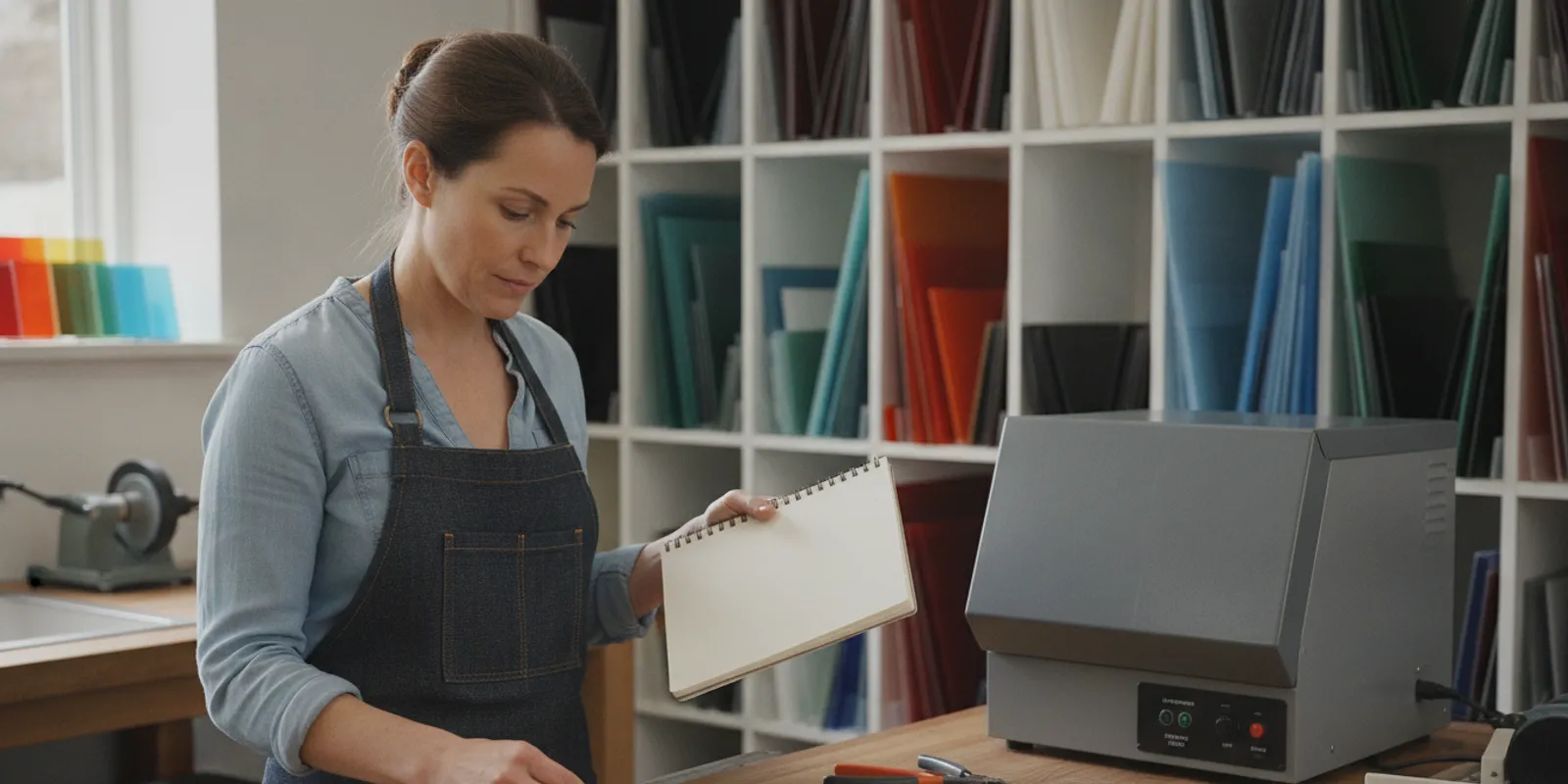
When you buy a kiln for a glass studio, begin with the work you plan to fire—not a model name or an old sale price. The right choice depends on process, project size, workspace, electrical service, and how often you expect to fire. Use the steps below to build a practical shortlist, then confirm the details for each exact model in current product information.
Start with the work you plan to fire
Write down the pieces you make now and the processes they require. Are you fusing flat glass, slumping a fired blank over a mold, casting glass in a mold, or working in another category? These are distinct techniques, not interchangeable labels. The first decision is whether a specific kiln is intended for your work. Do not assume that a listing is suitable just because it uses the word “kiln” or shows a temperature range.
For each process, note the typical project, the largest piece you expect to make, and how many pieces you want in a usual firing. A hobbyist who makes occasional small projects has different needs from a school, shared studio, or artist who expects to fire regularly. It can be sensible to consider likely growth, but buying the largest unit available is not automatically the best plan.
Separate firm requirements from hoped-for possibilities. For example, “fit the largest serving dish I make every month” is more useful than “leave room for anything I might make someday.” List a future technique only if it is a real part of your plans, and verify that the model supports it instead of assuming one kiln can serve every purpose.
Choose a kiln type that suits the process
ArtGlassSupplies.com carries kiln types for glass fusing, ceramic work, flame-working, and glass-blowing, with Skutt and Olympic among its kiln brands. Those categories serve different kinds of work. A ceramic kiln is not automatically a substitute for a glass-fusing kiln, and an equipment name alone does not tell you whether a model suits fusing, slumping, or casting.
If you have more than one process in mind, make a separate line for each. Ask whether the exact model is identified for that use, and check the manufacturer’s documentation for any limitations. Do not infer capability from another model in the same product family. Product pages such as this Olympic kiln listing are starting points for checking model-specific information, not a reason to generalize specifications across a brand.
For a fused-glass project, consider how the work is supported during firing. A glass fusing mold, for instance, can help you picture a particular project setup, but the mold itself does not establish which kiln is suitable. For casting or slumping, identify the mold or form you plan to use and verify its dimensions and firing instructions alongside the kiln’s usable chamber size.
Compare usable chamber size with your projects
The outside dimensions do not show how much room you have for work inside the kiln. Look for the usable chamber dimensions in the exact model’s documentation. Compare them with the full footprint of your project, including a mold or other firing furniture when relevant. Leave room for the loading arrangement required by the maker’s instructions; do not plan a fit so tight that the piece cannot be positioned as intended.
Think about both the largest object and the routine batch. One wide piece may fit in a chamber that is awkward for a group of smaller items. A round interior and a rectangular interior can also lead to different layouts even when a headline measurement seems similar. Sketching the shelf or chamber outline to scale and arranging paper shapes for your projects can make the comparison concrete.
Use three measurements to narrow the options:
- Largest project: Measure the piece and its support or mold, not just the glass blank.
- Typical batch: Estimate the number and layout of the pieces you regularly fire together.
- Available footprint: Measure the proposed kiln location and the route for moving equipment into the room.
Then compare those measurements with the listed interior dimensions. If a product page does not say how its chamber is measured, ask for clarification before ordering. Do not use a model number or exterior measurements as a substitute for usable capacity.
Check the studio before you settle on a model
A kiln must work in the planned studio, not only on a product page. Measure the location and access path, and review the manufacturer’s placement and clearance instructions for the exact unit. Consider what else needs to occupy the room and whether the intended setup allows you to follow those instructions. Requirements can differ by model, so do not borrow a clearance figure or installation assumption from another kiln.
Electrical service is an early checkpoint. Compare the model’s stated voltage, amperage, and connection details with the service available at the studio. If you are unsure how to interpret the requirements or whether the circuit is appropriate, consult a qualified electrician before purchase. Do not assume that a plug or circuit is standard across a brand or kiln size.
Include safe operation in your planning. Read the equipment instructions and consider the fire-safety requirements that apply to your workspace. The National Fire Protection Association provides fire-safety resources; consult applicable guidance along with the manufacturer’s instructions and local requirements. A sales listing is not an installation plan.
Plan around glass compatibility and firing behavior
For fusing, glass compatibility matters alongside the kiln. One important property is the Coefficient of Expansion (COE), which describes how much a material expands or contracts as temperature changes. If glass pieces with different expansion behavior are fused and then cool, they can contract differently and leave stress in the finished work. Matching COE is a useful starting point, but a number alone does not prove that two products are compatible. Use glass identified for compatible fusing and follow the maker’s technical information.
COE does not describe the entire firing process. As glass heats, its viscosity changes: it becomes less resistant to flow as temperature rises. Softening points and viscosity behavior help explain why glass can begin to round, move, or deform under heat. The schedule and setup need to suit the glass and the intended result. A kiln purchase cannot correct incompatible materials or an unsuitable firing schedule, so use the glass maker’s guidance and the kiln maker’s instructions.
When comparing material choices, check the stated glass details before combining pieces. ArtGlassSupplies.com lists distinct types such as COE90 streaky sheet glass and Oceanside glass sheets. These product examples are reminders to verify the specific material information; color or appearance alone does not establish compatibility.
Keep a firing log once you start. Record the glass type and COE, project arrangement, mold or shelf setup, schedule, and result. If a piece behaves differently than expected, those notes help you identify what changed and provide useful context when asking for technical guidance. They also make it easier to repeat a process that has worked for your own setup.
Compare controls with the way you work
Read the documentation for the exact controller and kiln model. Confirm the programming options, how the firing is monitored, and what steps the operator must take. Do not infer controller features from a series name or product photograph. If your work depends on particular firing segments or a familiar routine, write down those needs and check that the documented controls support them.
Consider who will operate the equipment. A solo artist may want a routine that is easy to document and repeat. A shared studio, classroom, or teaching space may need clear written procedures so each user understands the setup and records the firing consistently. Ask what operating documentation comes with the model and what details are available from its maker. Treat anything not stated in current product information as a question to resolve, not as a promised feature.
Firing frequency also shapes the comparison. Estimate how often you expect to fire and whether you work in occasional batches or a steady cycle. That estimate helps you weigh capacity against space and investment, but it does not identify a perfect model on its own. Compare your real schedule with the exact model’s documented capabilities.
Weigh compact options against the work
A compact kiln can suit a small workspace or a limited project range, but “compact” is not the same as “right for every studio.” ArtGlassSupplies.com offers compact Hot Shot kilns for smaller workspaces and microwave kilns presented as options for small projects. Check current product information to confirm the intended use and whether a candidate fits your process.
For example, someone planning occasional small pieces should compare the project dimensions and stated firing method with the product’s purpose. Someone preparing varied or recurring studio work should first list the different processes and batch sizes, then check whether a compact option meets those needs. Do not extrapolate from a small footprint or marketing category to a capability that is not documented.
Rank each requirement as must have, useful, or not needed. A must-have might be a chamber that accommodates a regular project. A useful feature might make a familiar process easier to manage. An unneeded feature should not steer the choice. This simple ranking helps you compare a compact model with a larger or differently designed option without assuming that bigger is always better.
Set a realistic equipment budget
Set a budget range before choosing a model, and distinguish the kiln price from the total project cost. Depending on your setup, you may need to account for site preparation, electrical work, molds, shelves, or other supplies. Confirm which items are included and which are separate. Do not assume delivery, installation, warranty, or return terms; check the current terms that apply to the exact item.
Prices and availability can change. The catalog information available for this guide includes promotional prices captured during an earlier crawl, so those figures should not be treated as current or fixed. Check the live product listing for current details. ArtGlassSupplies.com’s catalog includes a range of kiln models, but the number of options does not establish which one fits your work or what it costs today.
Rather than comparing two headline prices alone, make a side-by-side worksheet. Record the exact model, intended process, chamber dimensions, electrical requirements, control information, included items, and any open questions. The site does not document a side-by-side comparison tool, so a simple personal checklist can keep details straight. Verify each entry against current product or manufacturer information before you decide.
| Decision area | What to compare | Question to answer |
|---|---|---|
| Process | Fusing, slumping, casting, ceramic, flame-working, or glass-blowing | Is this exact model intended for my work? |
| Capacity | Usable chamber dimensions and project layout | Will it fit my largest project and routine batch with the required setup? |
| Installation | Room, access, electrical service, and placement directions | Can the planned studio meet the model’s stated requirements? |
| Operation | Controls, documentation, and firing workflow | Can I operate it as my work requires? |
| Budget | Current price, included items, and potential preparation costs | What is included, and what costs still need confirmation? |
| Support | Product details and unanswered technical questions | Who can verify the details before I order? |
Build a shortlist using documented facts
Start with two or three candidates after removing any that do not match your process, room, or electrical service. Compare the same facts for each model. If a specification is missing, mark it “unconfirmed” instead of filling the gap from a different model’s listing. This is especially important when comparing kilns with similar names or from the same series.
For each candidate, make a note of the questions still open: chamber measurement, what is included, operating documentation, and any installation detail. Then direct each question to the source best positioned to answer it. Product documentation can clarify listed specifications; an electrician can assess electrical service; local authorities can clarify applicable site requirements.
ArtGlassSupplies.com lists Skutt and Olympic among its kiln brands. When evaluating any specific model, including a Skutt model such as the KM1222-3, verify the current listing and maker documentation for specifications, intended use, price, and availability. The model name by itself does not confirm any of those details. For a project context, compare your intended setup with the dimensions of the relevant glass casting mold or slumping mold, as appropriate, without assuming that any particular kiln accommodates it.
A slumping form or a casting mold can make a planned piece more concrete while you compare dimensions. These links are examples of project forms, not recommendations for a model or confirmation of firing compatibility. Likewise, the glass fusing reference book is a product example for readers organizing their process information; use current technical guidance from the makers of your materials and equipment.
Use a pre-purchase checklist
Before ordering, put the following information in one place. This sequence helps catch a mismatch while you are still comparing options:
- Name the process. Write down the techniques the kiln must support now. Separate definite requirements from possible future work.
- Measure the projects. Record the largest piece, typical batch, mold or firing furniture, and usable area required.
- Check the room. Measure the location and access route, then review the exact model’s placement instructions.
- Confirm electrical service. Compare the stated model requirements with the studio’s available service, using a qualified electrician if needed.
- Record material details. Note the glass type and COE, and keep compatible material information with the firing plan.
- Compare documented features. Review intended use, chamber, controls, included items, and current price for each exact model.
- Resolve open questions. Ask the seller, manufacturer, electrician, or relevant local authority about the facts they can verify.
- Save your notes. Keep the product information and answers used in your choice for reference during setup and operation.
At this point, a suitable shortlist should contain models that meet your essential requirements, not just the ones with the most appealing names or photographs. If no candidate satisfies a must-have, revisit the process or workspace assumptions rather than lowering a safety or compatibility requirement.
Review a kiln listing and compare its details
Frequently asked questions
Can one kiln handle every kind of glass work?
Do not assume that it can. Fusing, slumping, casting, and glass-blowing are different processes, and equipment is not automatically interchangeable. Check the intended use and capabilities of the exact model in its current documentation.
Does a temperature rating tell me whether two glasses are compatible?
No. A temperature rating does not establish compatibility. Check the glass’s Coefficient of Expansion (COE), maker information, and firing guidance. Viscosity and softening behavior also affect how glass moves as it heats, so the schedule and setup must suit the materials and intended result.
Should I buy the largest kiln I can afford?
Not automatically. Compare the usable chamber with your largest planned project and typical batch, then weigh that capacity against the room, electrical service, budget, and likely firing volume. A larger unit only helps if it fits your actual work and studio.
What if the product listing does not answer a question?
Write down the missing detail and ask the seller or manufacturer before ordering. For electrical or site questions, consult the appropriate qualified professional or local authority. Do not treat another model’s specifications as a substitute for missing information.
Choose a kiln around the studio you have
A sound choice starts with a clearly defined process, measured projects, a suitable workspace, and verified model information. Compare candidates against those needs, resolve the unknowns, and choose equipment that fits the work you genuinely plan to do.