
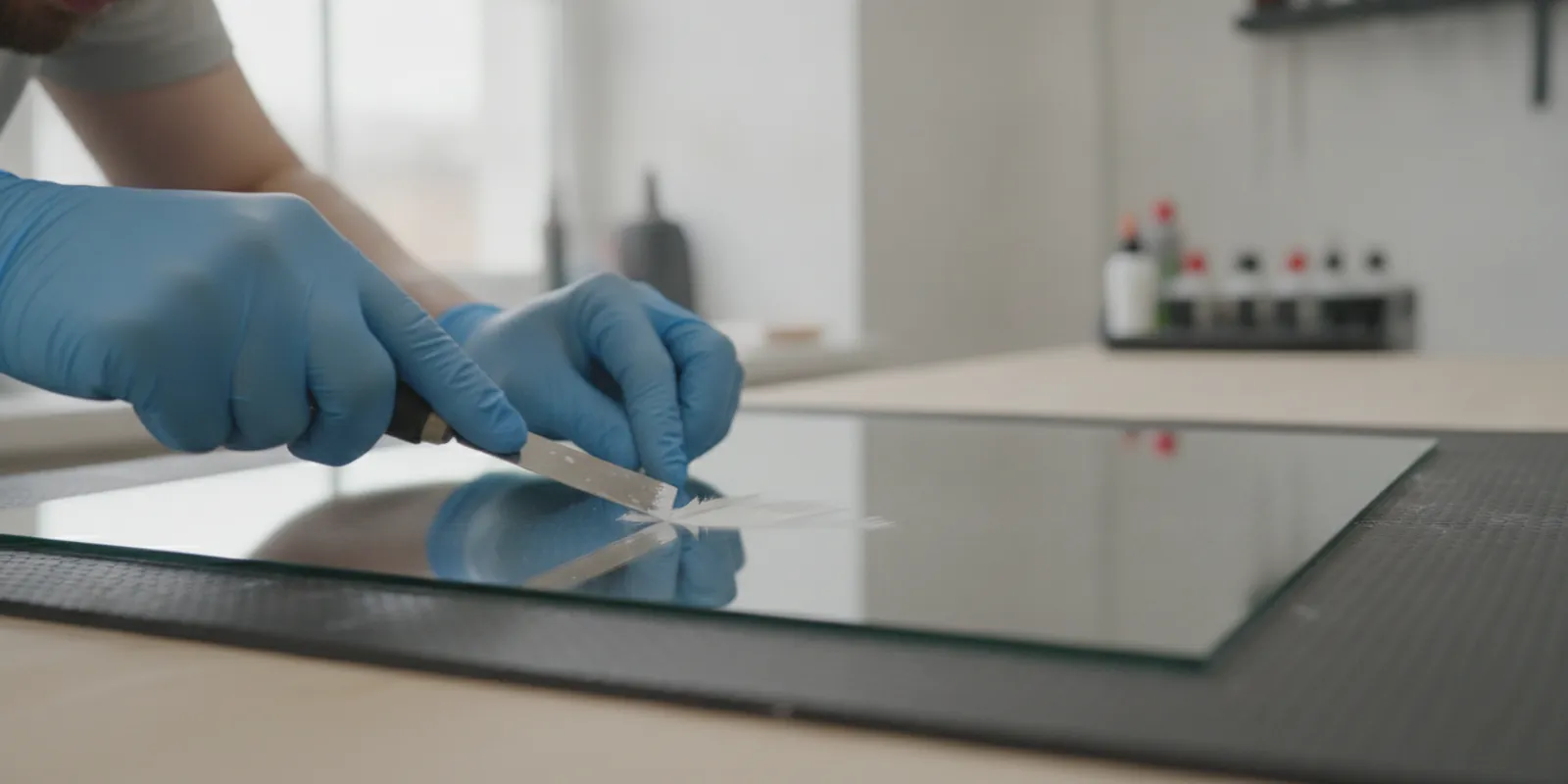
To remove spray paint from glass, first identify whether the surface is plain, uncoated glass or has a decorative finish, film, frame, or painted detail. Start with the least aggressive method: wet the paint, lift it with a plastic scraper, and move to a glass-safe solvent only if needed. Test any method in a hidden spot, protect surrounding materials, and stop if the surface changes.
Explore glass paint information
How to remove spray paint from glass without damaging the surface
Spray paint can cling to glass because its binder dries into a thin film. The glass itself is hard and nonporous, but the thing called “glass” may have a coating, printed pattern, applied film, softened edge, sealant, or neighboring material that reacts very differently to scraping and solvents. Choose a removal method for the whole object, not just the visible paint spot.
For an uncoated, flat pane, moisture and careful mechanical lifting are usually the best first steps. For a painted glass-art piece, a mirror, a window with a film, or anything with a frame, assume the finish may be vulnerable until you know otherwise. If the object is valuable, antique, or difficult to replace, consult a conservator or qualified glass professional before using a blade or solvent.
Before you start, identify the glass and the overspray
Look closely at the affected area in good light. Is the paint on a broad, smooth pane, or on a textured, etched, mirrored, coated, or decorated surface? Check both sides if possible. Overspray on plain glass is a different problem from paint on a film or a delicate decoration that only looks like bare glass.
- Plain, flat glass: Often tolerates careful wet scraping, but still test first and keep grit away from the blade.
- Textured, etched, or patterned glass: Paint can sit in recesses. A blade may catch edges or damage decoration, so favor a soft cloth and a compatible product.
- Mirrors and coated glass: Protect the back coating, edges, and any surface treatment. Do not let solvent run behind the glass or under a film.
- Glass in a frame: Identify the frame material, glazing putty, sealant, gaskets, and nearby paint. A solvent safe for glass may harm these adjacent parts.
- Glass art: Consider whether a colored or reflective area is an intentional finish. Etched dichroic designs, for example, are not loose paint to be scraped away; see this etched glass pattern as one kind of decorative surface.
Also assess the paint. Fresh, thin overspray may lift more easily than a thick, fully cured layer. If the coating is unknown, do not assume that a household cleaner will dissolve it. Avoid mixing products or applying a second chemical before the first one has been removed and the area has been ventilated.
If you know which paint was used, read its label or technical directions before choosing a remover. Check whether the manufacturer names a compatible cleanup product and whether it limits use on plastics, coatings, or finished surfaces. If the label is missing, take clear photos of the paint and glass, note whether the paint feels dry or tacky without touching it with bare skin, and ask the manufacturer or a glass professional for advice. A small, controlled test is more useful than treating the entire pane based on a guess. Keep children and pets away from the work area while you assess the materials.
Gather tools and protect the work area
For a small job, prepare a bowl of warm water with a little dish soap, clean microfiber cloths, a plastic scraper or old plastic card, and a soft sponge. Keep a dedicated glass scraper or razor blade for plain, flat glass only. Have gloves and eye protection available. If you use a solvent, read its label and safety directions first, use suitable ventilation, and keep it away from flames, sparks, children, and pets.
Put a towel or other protective layer beneath a removable pane, and secure it so it cannot slide. Do not work over a hard surface where a dropped pane could break. For a window or a framed object, mask or cover the frame and nearby finishes with a material that will not leave adhesive on the glass. Do not put tape over a painted edge that may lift when the tape is removed.
Keep blades sharp, clean, and under control. A nicked edge or trapped grit can scratch glass. Never scrape toward your hand, and do not press hard enough to flex a thin pane. If you cannot keep a blade flat and stable, skip it.
Start with water, soap, and a plastic scraper
For loose paint or light overspray, begin gently. Dampen a cloth with warm soapy water and hold it against the paint for several minutes. This may not dissolve cured spray paint, but it can soften surface dirt and reduce friction while you test the coating. Wipe once with a clean section of cloth, then try to lift an edge with a plastic scraper held at a shallow angle.
- Wet the painted area and let it sit briefly. Keep the glass damp while working.
- Place the plastic edge almost flat against the glass. Push slowly beneath a loose paint edge rather than digging down at it.
- Wipe away lifted paint immediately so particles do not get dragged across the pane.
- Repeat in small sections. Rinse the cloth often and use clean water if the loosened paint smears.
Stop if the surface becomes cloudy, colored, tacky, or scratched, or if the paint does not release with light pressure. More force is not a reliable solution. It can spread the paint, damage an applied finish, or break a pane that is already stressed.
Use a razor scraper only on suitable flat glass
A sharp glass scraper can remove stubborn paint from plain, uncoated flat glass. It is not a universal tool for glass objects. Do not use a razor on textured, etched, coated, mirrored, filmed, curved, cracked, or decorative glass, or where the blade could touch a seal, frame, or painted detail. If the surface type is uncertain, use a plastic scraper or seek expert advice.
For a suitable pane, wet the area generously with soapy water. Hold a clean blade at a shallow angle, keep it flat, and make short, controlled strokes in one direction. Lift the blade to reset it rather than scrubbing back and forth. Wipe away residue, and check the blade for grit or damage often. A dry blade, a steep angle, a dirty edge, or forceful repeated strokes raises the risk of scratching.
Use a purpose-made scraper with a secure handle rather than holding a loose razor blade. Keep fingers behind the cutting edge, and store the blade safely between passes. If paint remains in a corner or against a gasket, do not force the blade into that joint; use a more controlled method or leave that area to a professional.
When should you try a solvent?
If gentle lifting does not remove the coating, a solvent may soften the paint binder. Mineral spirits and acetone are among the solvents commonly discussed for paint removal from glass; a University of New Mexico resource on spray-paint removal mentions both approaches. That does not mean either product is safe for every object. A solvent can affect plastic, varnish, adhesives, printed designs, sealants, painted frames, or protective coatings even when the underlying glass is unaffected.
Read the container label before use and confirm that the product is appropriate for your specific job. Work with ventilation, wear protective equipment specified on the label, and keep the container closed when not in use. Do not use solvent near an ignition source. Never mix cleaners or solvents. Use a small amount on a cloth or cotton swab rather than pouring liquid onto the pane, and keep it away from edges, joints, and the reverse side of mirrors.
Test in an inconspicuous spot first. Apply the smallest practical amount, wait only as directed by the product label, and wipe it away. Check the test area for clouding, color transfer, tackiness, softening, or changes to a coating. If anything changes, stop, remove residue according to the label, and do not proceed over the visible area.
When the test passes, work in small sections. Dab or wipe the solvent onto the paint, allow the label-directed contact time, then lift softened paint with a cloth or plastic scraper. Do not soak the glass or let solvent pool at the perimeter. Dispose of used cloths as directed by the product label and local rules; some solvent-soaked materials require special handling. Wash the glass afterward only if the label allows it, and avoid using a second product until all solvent residue is gone.
Solvents are not interchangeable. The University of New Mexico spray-paint guidance describes mineral spirits as a common option and also mentions acetone, but the paint formula and surrounding materials matter. If you are unsure whether a product is suitable, contact its manufacturer or choose a professional who can assess the surface. Do not rely on a general online recipe for a valuable or coated piece.
Compare removal methods before choosing
| Method | Best fit | Main caution | How to begin |
|---|---|---|---|
| Warm soapy water and cloth | Loose overspray, surface dirt, first test | May not loosen cured paint | Dampen, wait briefly, wipe gently |
| Plastic scraper | Paint with an accessible edge on a delicate or uncertain surface | Can still damage a fragile finish if forced | Keep the area wet and lift at a shallow angle |
| Glass scraper or razor | Plain, uncoated, flat glass only | Scratches, cuts, or damage to coatings and nearby materials | Use a clean blade, lubricant, and controlled one-way strokes |
| Compatible solvent | Stubborn paint after a successful hidden-area test | May harm frames, films, adhesives, or decoration; fumes and flammability | Read the label, ventilate, use a small amount, and protect edges |
| Professional assessment | Valuable, coated, antique, framed, or uncertain glass | Requires time and an appropriate specialist | Share photos and explain what the paint and glass may be |
Protect glass art, coatings, and frames
Glass art surfaces often have details that are easy to mistake for residue. A reflective layer, fired-on color, decal, or etched design may be part of the intended work. Do not scrape or solvent-test such an area until you know what the finish is. The same caution applies to stained-glass panels: paint can sit near solder lines, copper foil, came, or cement, and an aggressive liquid or tool can affect those materials. For a project involving stained glass, consider how the panel is assembled before choosing a cleanup method.
Fused glass can also have deliberate surface treatments. A sheet with a dichroic coating or an etched pattern should not be treated like plain window glass. If spray paint has landed on an art piece and you cannot identify the surface, stop before escalating from a damp cloth to scraping or solvent. The product category for dichroic glass sheets illustrates why visual appearance alone may not tell you whether a surface is bare glass.
For framed windows, use a cloth or swab to control liquid and keep it from running into joints. Check whether the frame is wood, painted metal, plastic, or another material. A solvent that releases paint may also soften a finish or loosen a seal. If the overspray crosses from the pane onto the frame, treat each material separately and test the frame with its own appropriate guidance.
What if the paint will not come off?
Do not increase pressure indefinitely. If the paint does not soften or lift after a cautious test, it may be a particularly durable coating, or the surface may not be plain glass. Repeated scraping can produce fine scratches, and repeated solvent applications can expose the object to more chemical contact without solving the problem. Stop if you see a change in sheen, color, texture, or transparency.
Take a photo and note what you have tried, including the product name and approximate contact time. Ask the coating or glass manufacturer for instructions when identifiable. A glass professional or conservator can help assess a mirror, antique, framed pane, or art object. If the glass is cracked, loose, or difficult to handle safely, do not remove it just to reach the paint.
For inexpensive, replaceable plain glass, replacement may be the safer and simpler choice than trying stronger chemicals. If replacing a glass-art component, first identify the type and intended use of the original. For example, COE90 streaky glass and Oceanside Baroque glass sheets are different product options, not universal substitutes. Likewise, COE96 Youghiogheny glass is a specific material choice. Match replacement material to the project requirements rather than selecting by appearance alone.
Clean up after removal
Once the paint is gone, remove any remaining residue using only a cleaning method compatible with the glass and product label. Wipe with a fresh cloth rather than the one used to lift paint. Check the pane in angled light for smears, scratches, or coating changes. Do not immediately apply a new finish or paint until the surface is fully dry and free of any incompatible residue.
Keep used blades in a sharps container or other secure disposal method. Follow the solvent label and local rules for leftover product and contaminated cloths. Store chemicals in their original containers, away from heat and children. If you plan to decorate the glass later, choose a coating specifically intended for that application and follow its preparation and curing directions. The glass paint selection is a useful starting point for comparing products, while glass etching cream creates a different kind of surface effect and is not a paint-removal product.
Before treating a broad area, make a written plan: identify the pane, list nearby materials, choose the least aggressive method, and set a clear stop point. If the test changes the surface or the paint resists gentle removal, pause rather than escalating blindly. That careful approach helps preserve the glass and whatever makes the object worth keeping.
Compare glass paint options for a future project
Frequently asked questions
Does vinegar remove spray paint from glass?
Vinegar is not a dependable choice for every cured spray paint. It may help with light residue or general cleaning, but do not assume it will dissolve a durable coating. Start with water and a plastic scraper, then follow the paint or product manufacturer’s instructions. Test any cleaner in a hidden area.
Can I use a razor blade on a window?
Only consider a clean, sharp glass scraper on plain, flat, uncoated glass, with the surface wet and the blade held at a shallow angle. Avoid blades on textured, filmed, coated, mirrored, etched, cracked, or decorative glass and near frames or seals. If the glass type is uncertain, do not scrape.
Will acetone damage glass?
The glass pane may tolerate a solvent that the surrounding object does not. Acetone can harm some plastics, finishes, adhesives, and coatings. Check the product label and the glass object’s other materials, test a hidden spot, and keep the solvent away from edges and joints. Stop if the test area changes.
What should I do if paint is on a mirror or stained-glass panel?
Avoid broad scraping or soaking. Protect the mirror backing, frame, solder lines, and any decorative surface. Use a damp cloth for an initial gentle test, then get qualified advice if the paint remains or the object is valuable. Do not assume a method suitable for a plain pane will be safe for an assembled piece.
Choose the next coating with the surface in mind
Explore glass paint options for your next project
Successful removal depends less on finding the strongest cleaner than on knowing what is beneath the paint. Begin gently, test before treating a visible area, and keep tools and liquids away from vulnerable edges and finishes. When you are ready to decorate glass, select a product for the surface and follow its directions from the start.