
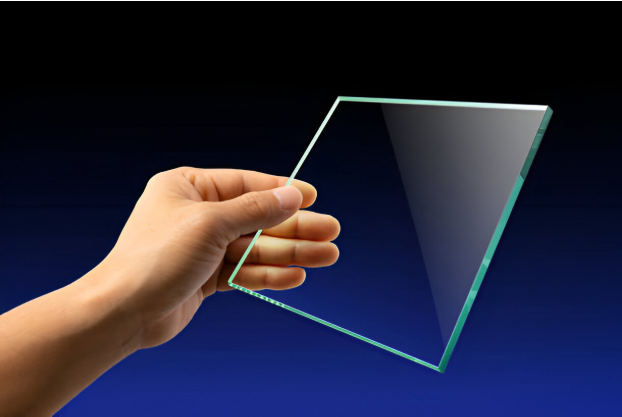
Every glass artist knows the sinking feeling of hearing a “ping” from a cooling kiln, signaling a crack from thermal shock. We invest so much time and material into our work, and seeing it fail due to stress is frustrating. While COE90 and COE96 glasses are fantastic, some projects demand a higher level of durability and resilience. There is a material, born from scientific labs, that is specifically engineered to resist these extreme temperature changes. A borosilicate glass sheet offers a solution for creating stronger, more stable fused pieces. This guide will explain its unique properties, how to adapt your studio practices for its higher firing temperatures, and the artistic advantages of its incredible clarity and strength.
In the world of fused glass art, choosing the right material is as critical as mastering technique. While many artists rely on soda-lime and COE90 glass, another type—borosilicate glass—is making its mark among those seeking clarity, strength, and precision. But what exactly is borosilicate glass sheet, and why are more artists incorporating it into their fusing projects? Let’s explore the science, the applications, and the reasons borosilicate glass sheets deserve a place in your studio.
The Science Behind Borosilicate Glass
Borosilicate glass, unlike traditional soda-lime glass, is composed of silica and boron trioxide, which give it exceptional thermal and chemical stability. This glass is commonly used in laboratories, cookware, and high-stress environments because it resists cracking under rapid temperature changes. This property, known as low thermal expansion, makes it especially useful in glass fusing, where temperature fluctuations are part of the process.The structure of borosilicate glass is denser and more tightly bonded than soda-lime alternatives, contributing to its strength and clarity. It’s less likely to suffer from internal stresses during heating and cooling cycles, an advantage that fused glass artists deeply appreciate.
The Building Blocks: Chemical Composition
So, what makes borosilicate glass so different from the standard soda-lime glass many artists use? It all comes down to its unique recipe. While most glass starts with silica (sand), borosilicate introduces a key ingredient that completely changes its behavior. This specific formula is what gives the glass its signature strength and ability to withstand extreme temperature shifts without cracking. For artists, this means more freedom and less worry about thermal shock, whether you’re working with a torch or programming complex firing schedules in your kiln. Understanding this basic chemistry helps you appreciate why this material can handle such demanding applications in both science and art.
Chemical Makeup
The secret to borosilicate’s stability lies in its precise chemical makeup. According to materials supplier Goodfellow, it consists of about “81% Silicon Dioxide (SiO₂), 13% Boron Trioxide (B₂O₃), and 4% Sodium Oxide (Na₂O).” While Silicon Dioxide is the primary glass-forming ingredient in most glass types, it’s the Boron Trioxide that works the magic here. This compound replaces many of the fluxing agents found in soda-lime glass, creating a much stronger molecular structure. This is why borosilicate glass is so clear and resilient, allowing artists to create intricate, durable pieces that would be difficult to achieve with other types of glass.
Key Physical Properties
The chemical recipe directly translates into some impressive physical traits. The most important one for glass artists is its incredibly low thermal expansion. This means the glass “changes size very little when heated or cooled (about 3.3 × 10⁻⁶/°C).” This stability is why you can take a borosilicate dish from the oven and place it on a cool counter without it shattering. For fusing, this property is a game-changer. It allows for more aggressive heating and cooling schedules in your kiln, reducing the risk of stress fractures. It also has a density of 2.23 gcm⁻³, making it lighter than many leaded glasses but still feeling substantial and durable in a finished piece.
Built for Extremes: Temperature and Pressure Resistance
Borosilicate glass isn’t just strong; it’s built to perform under serious stress. Its ability to handle extreme conditions is why it’s trusted in scientific labs and industrial settings. According to industrial supplier McMaster-Carr, it can withstand a massive temperature range, “from very cold (down to -415° F) to very hot (over 500° F).” While you won’t be pushing those limits in your studio, this demonstrates its incredible resistance to thermal shock. This toughness also extends to physical force, as some forms of borosilicate glass can handle “pressures of 250 psi or more.” For an artist, this translates to creating work that is not only beautiful but also exceptionally durable and long-lasting, capable of withstanding daily wear and tear.
What Makes It Different from Standard Fusing Glass?
Most fused glass projects are made with COE90 or COE96 glass, referring to the Coefficient of Expansion. This number indicates how much the glass expands when heated. Borosilicate glass has a much lower COE, typically around 33. That means it expands and contracts significantly less than standard fusing glass, reducing the risk of thermal shock. This lower COE also means you can’t mix borosilicate with COE90 or COE96 glass in the same piece—doing so would almost certainly result in breakage. However, when you work entirely within the borosilicate system, the results are stunning. The glass fuses smoothly, resists cracking, and offers brilliant clarity and definition.
Exploring Borosilicate Forms and Finishes
When you start working with borosilicate glass, you’ll quickly discover it’s not a one-size-fits-all material. Its versatility is one of its greatest strengths, offering a wide range of forms and finishes that can accommodate nearly any creative vision. Unlike standard fusing glass that primarily comes in sheets, borosilicate is available in various shapes designed for different applications, from intricate sculptural work to precise architectural pieces. Understanding these options is the first step in figuring out how this unique glass can fit into your artistic practice. Let’s look at the different forms you can find and the specifications that matter most when planning your next project.
More Than Just Sheets: Other Boro Forms
While sheets are a common starting point for many fused glass artists, borosilicate glass is also produced in several other forms that open up a world of creative possibilities. You can find it as rods, tubes, discs, bars, and even small balls, each suited for different techniques and artistic styles. Rods are a favorite among lampworkers for creating detailed sculptures, beads, and decorative elements that can be incorporated into larger fused pieces. Tubes are perfect for crafting hollow forms, vessels, or structural components in more complex projects. This variety allows you to choose the perfect starting shape for your project, often reducing the amount of cutting and coldworking required and letting you jump straight into the creative flow.
A Closer Look at Sheet Specifications
If you decide to work with borosilicate sheets, paying attention to the technical specifications is key to achieving predictable and professional results. Details like thickness and tolerance might seem minor, but they have a major impact on how the glass behaves in the kiln and how the final piece looks and feels. Manufacturers produce borosilicate sheets with a high degree of precision, which is one of the reasons it’s favored for scientific and industrial applications. For artists, this precision translates to greater control over the creative process, ensuring that your designs come to life exactly as you imagined them without any unwelcome surprises during firing.
Sheet Sizes and Thicknesses
Borosilicate sheets are available in a wide range of thicknesses, giving you the flexibility to select the right material for your specific needs. You can find sheets as thin as 0.10 mm, which is incredibly delicate, all the way up to 1.10 mm and beyond for more substantial projects. This variety allows you to work with everything from thin, almost ethereal layers to more durable, structural panels. Thinner sheets are ideal for creating intricate, layered designs without adding too much bulk or weight, while thicker sheets provide structural integrity for larger or self-supporting pieces. Knowing the available options helps you plan your projects more effectively from the very beginning.
Understanding Thickness Tolerance
When you purchase borosilicate sheets, you’ll notice they come with a specified thickness tolerance, usually a tiny measurement around ±0.015 mm to ±0.05 mm. This number indicates the maximum expected variation in the sheet’s thickness from one point to another. While it may seem insignificant, this level of precision is crucial for artists who layer multiple pieces of glass in their work. A consistent thickness ensures that your layers fuse evenly without unexpected gaps, bubbles, or uneven surfaces. This reliability is a significant advantage of working with borosilicate, as it removes some of the guesswork from the fusing process and allows you to focus more on the creative aspects of your work.
Customization: From Tempered to Finished Edges
Beyond the standard forms and sizes, you can often find borosilicate glass with custom finishes and treatments that tailor it to your project. Two common options are annealed and tempered glass. Annealed glass has been slowly cooled to relieve internal stresses, making it the standard choice for artists who plan to cut, shape, or fuse it. Tempered glass, on the other hand, is rapidly cooled to create a much stronger, more durable surface, but it cannot be cut or heated again without shattering into small pieces. You can also sometimes specify the edge finish on sheets, choosing between a standard straight cut or an angled, beveled edge for a more polished look. These customizations allow you to order glass that is perfectly suited to your project’s requirements from the start.
Working with Borosilicate Glass Sheets in the Studio
Using borosilicate sheets in fusing projects does require some adaptations. The firing temperature for borosilicate is higher than for soda-lime glass. Whereas COE90 might fuse well at around 1450°F, borosilicate often needs to reach upwards of 1650°F or more. This means artists must have kilns capable of reaching and sustaining those higher temperatures. Firing schedules should be carefully planned with slower ramp-ups and longer holds, especially during annealing. At Art Glass Supplies, we recommend giving borosilicate ample time to cool uniformly to prevent internal stress—especially in thicker pieces. Rushing this process could compromise both the strength and long-term stability of your final work. Despite these technical differences, many artists find that the visual and structural quality of the results more than justifies the added effort.
Artistic Advantages of Borosilicate Glass Sheets
Beyond durability, borosilicate glass sheets offer advantages in both form and function. One of the most attractive features is optical clarity. Because borosilicate contains less iron than soda-lime glass, it has a more transparent and color-neutral appearance. This is ideal for pieces where light plays a role—whether through backlighting, layering, or kiln carving. This clarity makes borosilicate particularly popular among artists creating sculptural glass, wearable art, or functional pieces like fused glass lighting, kitchenware, and architectural elements. The clean finish and sleek lines it produces elevate the aesthetic of any project. The durability of the glass also means that fused pieces are less prone to scratching, chipping, or breaking during cold working or post-processing. Whether you’re cutting, engraving, or sandblasting, borosilicate tends to respond more predictably than softer soda-lime glasses.
The Role of Dichroic Borosilicate in Creative Projects
One exciting development in the art glass community is the rise of dichroic borosilicate glass sheets. These combine the toughness of borosilicate with the shimmering, color-shifting appeal of dichroic coatings. Artists now have access to a material that not only performs well in the kiln but also adds vivid, metallic effects without compromising durability. Dichroic borosilicate is popular in high-end jewelry, mixed media sculpture, and fused wall art. Its color-changing nature gives artists a new dimension of expression. Since both the base glass and the coating can withstand the high fusing temperatures, artists don’t need to worry about fading or peeling during firing.
COE Considerations: Why It Matters in Boro Fusing
If you’re transitioning to borosilicate from COE90 or COE96, one of the most critical lessons is understanding glass compatibility. Mixing glasses with different coefficients of expansion—even slightly—can cause stress fractures during cooling. This is particularly dangerous with functional pieces like platters or pendants. Because borosilicate glass has a COE of 33, all components used in a project must match this number. That includes not just other sheets, but rods, frit, stringers, and embellishments. The upside is that once you commit to working in borosilicate exclusively, you’ll experience fewer issues with devitrification or cracking, assuming your process is dialed in.
Where Artists Use Borosilicate Sheets
Borosilicate glass sheets are incredibly versatile. Some artists use them as a canvas—applying powdered enamels, decals, or inclusions between layers. Others shape them into slumped forms like trays, bowls, or sconces. Because of their strength, these sheets are particularly useful for structural applications, such as fused installations or display pieces in commercial or outdoor spaces. Artists specializing in lampworking often integrate flat borosilicate panels into their 3D constructions, giving their work depth and architectural appeal. Others experiment with layering to create multi-dimensional kiln-carved textures. The possibilities are limited only by the artist’s imagination—and the capabilities of their kiln.
Beyond the Studio: Industrial and Scientific Uses
The same properties that make borosilicate a powerhouse in your studio also make it a go-to material for scientists and engineers. Its incredible thermal and chemical stability means it won’t crack under rapid temperature changes or corrode when exposed to harsh substances. This is why you’ll find it in laboratory glassware like beakers and test tubes, where it has to withstand constant heating and cooling cycles. Its low thermal expansion is the key—it simply doesn’t expand or contract as much as other glass types. This durability extends to high-pressure and high-stress environments, proving just how resilient this material is. So, the next time you pull a perfectly fused, crystal-clear piece from your kiln, you can appreciate that it shares its strength with equipment used in cutting-edge scientific research.
Challenges & Considerations
Despite its benefits, borosilicate glass does come with some learning curve. First and foremost is the cost. Borosilicate sheets are generally more expensive than soda-lime or COE90 equivalents. That makes material waste a bigger concern, particularly for beginners. Second is the need for accurate tools and firing programs. Because the glass fuses at higher temperatures, artists need reliable pyrometers, programmable controllers, and heat-tolerant kiln furniture. You’ll also need to plan for extended annealing times, especially when working with thick panels or stacked designs. Finally, because it’s less common in the fused glass community than COE90, there are fewer commercial tutorials and pre-made components available. That said, artists who commit to working with borosilicate often discover a loyal community of specialists who are eager to share advice and encouragement.
Sourcing Borosilicate Glass for Your Projects
What to Look for in a Supplier
Finding a reliable supplier is the first step to successfully working with borosilicate glass. Look for a company that offers a diverse inventory, as this gives you the creative freedom to explore different techniques. A great supplier will provide borosilicate not just in sheets, but also in various forms like rods and tubes, allowing you to expand your projects beyond flat panels. For example, some industrial suppliers stock a wide range of shapes and sizes, which can be a fantastic resource for artists who need specific dimensions for sculptural or mixed-media work. Consistency is also key; you want a supplier who maintains quality across their product line so you can trust that each order will perform as expected in the kiln.
Understanding Quality Standards and Tech Sheets
When you’re investing in a premium material like borosilicate, quality is non-negotiable. Reputable suppliers should be transparent about their products by providing detailed technical sheets, often called “tech sheets.” These documents are incredibly valuable because they outline the glass’s exact chemical composition and physical properties. For instance, a tech sheet might specify that the glass contains 81% Silicon Dioxide and 13% Boron Trioxide, which confirms you’re getting true borosilicate. This information helps you verify the material’s COE and predict its behavior at high temperatures, ensuring compatibility and preventing costly failures in your projects. Always check for this documentation before making a purchase.
Related Products and Accessories
A great glass supplier often provides more than just the glass itself. It’s incredibly convenient to find a single source for all your studio needs, especially when working with high-temperature materials. Look for suppliers who also carry accessories compatible with borosilicate fusing, such as durable kiln furniture and specialized tools. Some vendors even cater to niche artistic needs by offering specialty products like ultra-thin borosilicate sheets used in delicate applications. While you’re sourcing your boro sheets, remember you’ll also need a reliable kiln that can handle the higher firing temperatures. At Art Glass Supplies, we carry a wide selection of high-performance kilns and heat-resistant molds perfect for artists working with any type of glass, from COE90 to borosilicate.
Why Glass Artists Are Turning to Boro
For many artists, borosilicate is not just a material—it’s a new way to approach fused glass as a medium. The strength and clarity of borosilicate give finished works a professional, even industrial feel. This makes it ideal for artists pursuing gallery representation, large commissions, or functional products that require exceptional performance. It also opens up opportunities to bridge the gap between scientific and creative applications. Some artists use borosilicate to create fused microscope slides, scientific installations, or even wearable pieces that draw inspiration from molecular structures. As the demand for more durable and precise glasswork increases—particularly in commercial, architectural, and jewelry markets—borosilicate will likely continue to grow in popularity.
Final Thoughts
Borosilicate glass sheets offer a fascinating combination of science and artistry. With their unmatched durability, superior optical properties, and resilience under heat, they provide a compelling alternative to traditional fusing glasses. Though they demand more precision and specialized equipment, the rewards are well worth the effort. For glass artists willing to embrace its learning curve, borosilicate opens the door to new creative potential and technical mastery. Whether you’re building structural installations, wearable art, or minimalist sculpture, this material invites you to think differently—and fuse with confidence. contact us today to get expert guidance or place a custom order.
Frequently Asked Questions (FAQs)
1. Can I fuse borosilicate with COE90 glass?
No, you cannot. The difference in their expansion rates will cause stress fractures during heating and cooling. All glass used in a fused piece must have the same COE for stability. Borosilicate has a COE of 33, while COE90 is incompatible.
2. What firing temperature is required for borosilicate fusing?
Borosilicate glass generally requires higher fusing temperatures, typically between 1650°F and 1750°F. The exact temperature depends on the desired result, project thickness, and kiln design. Careful ramp-up and annealing are essential for success.
3. Is borosilicate glass good for beginners?
While borosilicate offers amazing results, it may be better suited for artists with experience in kiln work. Beginners can still use it successfully with practice and proper equipment, but starting with soda-lime glass can be a more forgiving introduction.
4. Why is borosilicate more expensive?
Its complex production process, superior material properties, and niche demand contribute to its higher price. However, its durability and performance often justify the cost, especially in functional or high-end artwork.
5. What types of projects benefit most from borosilicate sheets?
Borosilicate is perfect for sculpture, jewelry, lighting, outdoor installations, and any application requiring strength and thermal resistance. Its optical clarity also makes it ideal for layered designs or light-reactive projects.
Key Takeaways
- Choose Borosilicate for Unmatched Durability: With a low thermal expansion (COE 33), this glass is incredibly resistant to cracking from temperature changes, making it the ideal choice for creating strong, long-lasting functional art, jewelry, and sculptures.
- Adapt Your Firing Process for Higher Heat: To fuse borosilicate successfully, you’ll need a kiln that can reach higher temperatures (1650°F+) and must commit to using only COE 33 compatible glass and accessories to prevent stress fractures.
- Take Advantage of Its Superior Optical Clarity: Borosilicate’s crystal-clear quality provides a pure, color-neutral canvas that enhances layered designs and is perfect for projects like lighting or sculptures where light transmission is a key feature.