
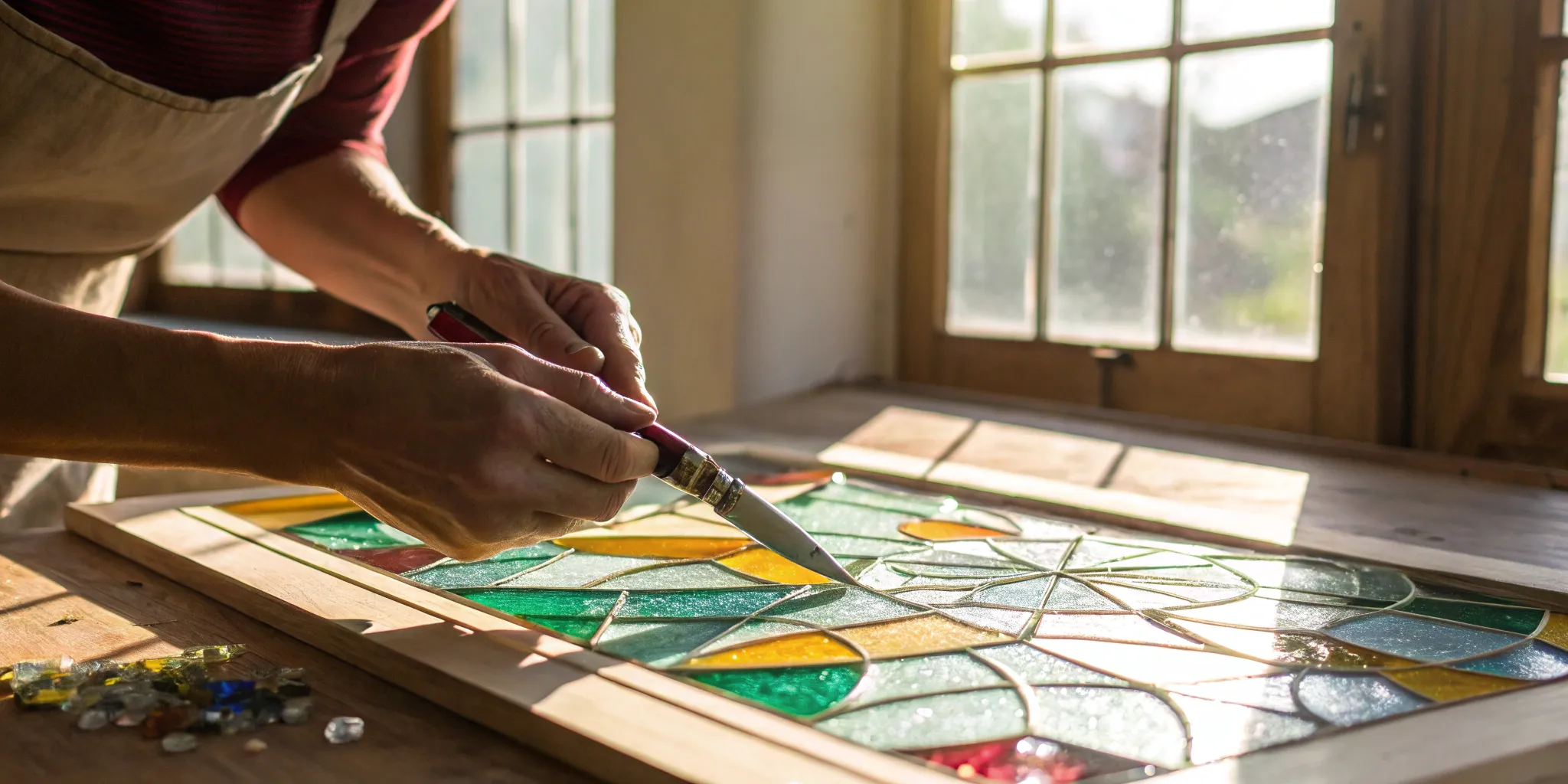
The sound of a glass cutter gliding across a fresh sheet is one of the most satisfying parts of the craft—when it goes right. When it goes wrong, it can be one of the most frustrating. A jagged edge, a break that veers off course, or a piece that shatters can make you want to pack it all in. The good news is that a perfect cut isn’t magic; it’s the result of a few key techniques. Understanding how to use a glass cutter tool properly is the difference between wasted glass and flawless pieces. We’ll walk you through the entire process, from applying the right pressure to avoiding common mistakes, so you can cut with confidence.
Key Takeaways
- Focus on a Single, Confident Score: Aim for a barely-visible line made with light, consistent pressure in one smooth motion. Re-scoring a line dulls your cutter and guarantees a messy break, so commit to your first pass and break the glass right away.
- Set Up for Success and Safety: Before you start, always put on your safety glasses and gloves. Working on a clean, flat surface with a straightedge as your guide prevents slips and ensures your cuts are precise from the get-go.
- Use the Right Breaking Technique: A perfect score needs a proper break. Use running pliers for controlled snaps on narrow pieces and the two-handed method for larger ones, applying firm, even pressure to split the glass cleanly along your line.
What Is a Glass Cutter and How Does It Work?
Let’s clear up a common misconception right away: a glass cutter doesn’t actually cut through glass like scissors through paper. Instead, it creates a precise, controlled weakness on the surface called a “score line.” This score gives you a perfect path to follow, allowing you to snap the glass cleanly exactly where you want it. Think of it as telling the glass where to break. Mastering this process is the foundation of creating beautiful stained glass pieces, and it all starts with understanding your tool and how it interacts with the glass.
The Anatomy of Your Glass Cutter
At first glance, a glass cutter looks simple, but its design is brilliant. The main components are the handle (for grip), the head (which holds the wheel), and the tiny cutting wheel itself. This little wheel, often made of steel or carbide, is the star of the show. As you draw the cutter across the glass, the wheel creates that all-important score line. While many cutters look similar, quality matters. Brands like Toyo and Fletcher are popular for a reason—they provide a smoother roll and a more reliable score, which makes your job much easier and your cuts more accurate.
Understanding the Scoring Process
Scoring is the art of applying just the right amount of pressure to create a clean line. You’ll want to press down firmly and evenly as you roll the cutter from one edge of the glass to the other in a single, smooth motion. A good score looks like a faint, hair-thin scratch on the surface. You’ll know you’ve got it right when you hear a sound like tearing velcro—a satisfying little zip! You should also be able to feel the line with your fingernail. Always use a cutting oil or lubricant; it protects your glass cutter and helps you get a much smoother score.
Gather Your Glass Cutting Tools and Supplies
Before you make that first satisfying score on a beautiful sheet of stained glass, let’s talk about setting yourself up for success. Just like a chef preps their ingredients before cooking, getting your tools and workspace in order makes the entire glass cutting process smoother, safer, and much more enjoyable. Having everything you need within arm’s reach means you can focus on your technique and creativity. Let’s walk through exactly what you’ll need to get started.
Your Essential Cutting Kit
Think of this as your glass cutting starter pack. You don’t need a ton of fancy equipment, just a few key items that will do the job right. First and foremost is a quality glass cutter; this is your most important tool, so choose one that feels comfortable in your hand. You’ll also need cutting oil to lubricate the wheel for a clean score and to prolong the life of your cutter. Grab a straightedge or ruler for guiding those perfectly straight lines, a measuring tape, and a marker to plan your cuts. Finally, keep a damp cloth and some window cleaner handy to keep your glass surface pristine and ready for cutting.
Must-Have Safety Gear
This part is non-negotiable, but thankfully, it’s simple. Working with glass means you need to protect yourself, and the right gear makes all the difference. Always, always wear safety glasses. Tiny shards of glass can fly off during scoring and breaking, and your eyes are too precious to risk. A good pair of cut-resistant gloves will give you the confidence to handle glass edges without fear of nicks and cuts. It’s also a great idea to wear a long-sleeved shirt and closed-toe shoes as an extra layer of protection. Taking these small steps ensures you can focus on your art safely.
How to Prep Your Workspace
Creating a dedicated space for your glass work helps you get in the zone. You need a flat, sturdy surface that won’t wobble while you’re applying pressure. Good lighting is also key—make sure you can clearly see your markings and score lines. Clear away any clutter to give yourself plenty of room to work and to prevent accidents. One pro tip: check your workbench height. If it’s too low, you might strain your back, and if it’s too high, you won’t be able to apply even pressure. Having a broom and dustpan nearby makes cleanup a breeze once you’re finished creating.
Prepare Your Glass for a Perfect Cut
A little prep work goes a long way in the world of glass art. Before you even think about making that first score, taking a few minutes to set up your glass and workspace properly can be the difference between a crisp, clean break and a frustratingly jagged edge. Think of it like prepping your ingredients before you start cooking—it makes the entire process smoother and much more enjoyable. These simple steps will set you up for a perfect cut every time, ensuring your project starts on the right foot.
Clean the Glass Surface
First things first, let’s get that glass sparkling clean. Any specks of dust, dirt, or oil on the surface can interfere with your cutting wheel, causing it to skip or create a weak score line. This can lead to a messy break, and nobody wants that. Simply spray a bit of glass cleaner onto a lint-free cloth (not directly onto the glass) and wipe it down thoroughly. Make sure the surface is completely dry before you move on. This simple step ensures your cutter has a perfectly smooth path to follow, giving you a much better chance at a flawless cut on your beautiful sheet of stained glass.
Measure and Mark Your Lines
You’ve heard it before: measure twice, cut once. This advice is especially true for glass cutting, since there’s no undo button. Take your time to measure your project’s dimensions carefully. Use a quality straightedge and a fine-tip permanent marker to draw a clear, thin line directly on the glass where you plan to cut. This line is your guide, so make it precise. A wobbly or thick line can throw off your score. Getting this step right is crucial, whether you’re working with a large piece of COE90 glass for a fusing project or a small piece for a mosaic.
Position Your Glass for Cutting
Now that your glass is clean and marked, it’s time to get it in position. Always work on a flat, stable surface that won’t wobble. A sturdy workbench or table is ideal. Good lighting is also key, as it helps you see your marked line clearly. For extra stability, you can place your glass on a cutting mat or even a slightly damp, folded cloth. This helps prevent the glass from slipping while you apply pressure with the cutter. A secure setup gives you the control you need to make a confident and accurate score on your COE96 glass and helps keep you safe during the process.
How to Score Glass: The Right Technique
Scoring is the most important step in cutting glass. It’s not about cutting through the glass, but creating a controlled weakness or a “fissure” that tells the glass exactly where to break. Think of it like perforating paper. A good score is the foundation for a clean, crisp break. Getting the technique right takes a little practice, but once you master these four key elements, you’ll be cutting glass with confidence and precision.
Find Your Perfect Grip
How you hold your glass cutter directly impacts your control. For a pencil-grip cutter, hold it between your thumb and middle finger, with your index finger resting on top to apply pressure. If you’re using a pistol-grip cutter, hold it in your fist with your thumb on the side for stability. The goal is to find a grip that feels comfortable and allows you to keep your wrist straight and your arm steady. A proper grip ensures you can apply even pressure from your shoulder, not just your wrist, which is key for a smooth score. This Delphi Glass tutorial offers great visuals on how to hold different types of cutters.
Apply Consistent Pressure and Speed
The perfect score requires consistent pressure from start to finish. You’re not trying to push the wheel through the glass; you’re just creating a shallow line. A good score is often called a “whisper score” because it’s barely visible—like a tiny scratch or a strand of hair on the surface. As you move the cutter across the glass, listen for a gentle, continuous zipping sound. If you hear a loud, gritty crunch, you’re pressing too hard. If you don’t hear anything, you’re likely not pressing hard enough. The speed should be steady and deliberate, like you’re drawing a line with a pen.
Score in One Smooth, Continuous Motion
This is the golden rule of glass cutting: only score a line once. Going over a score line a second time will not make it better; in fact, it will ruin the cut. Re-scoring creates tiny chips and fractures along the line, which prevents the glass from breaking cleanly. It also dulls your cutting wheel very quickly. Start your score just off one edge of the glass, roll smoothly across the entire surface in one fluid motion, and roll off the opposite edge. This ensures the fissure extends completely from one side to the other, setting you up for a successful break.
Use a Straightedge for Clean Lines
For perfectly straight cuts, always use a guide. A cork-backed metal ruler is an excellent choice because the cork helps prevent it from slipping on the smooth glass surface. Before you score, use a fine-tip permanent marker to draw your cut line. Place your straightedge alongside the line, leaving just enough space for the cutting wheel to follow the mark. Hold the straightedge down firmly with your non-dominant hand, keeping your fingers safely away from the cutting path. This simple step is the most reliable way to achieve precise cuts for your stained glass or fusing projects.
How to Break Glass Along the Score Line
You’ve made a perfect score line—now what? The break is the moment of truth, and a clean snap is just as important as the initial score. A good break follows your score line precisely, giving you the exact shape you planned for your project. A bad break, on the other hand, can ruin your piece of glass and all the careful work you just put in. The key is to apply firm, even pressure directly along the line you created, encouraging the glass to separate exactly where you want it to. There are a few trusted methods to get that satisfying snap, and the one you choose will depend on the size of your glass and the type of cut you’ve made. Let’s walk through the most effective techniques, from using your hands for simple breaks to grabbing a trusty pair of pliers for more delicate work. Mastering these will give you the confidence to tackle any cut, whether it’s a simple straight line on a large sheet of stained glass or a tricky curve for a complex fusing project. Getting this part right is what separates frustrating attempts from beautiful, finished pieces, so let’s make sure you have the skills to get it right every time.
The Two-Handed Break
For straight cuts on pieces of glass that are large enough to grip securely, the two-handed break is a fundamental skill. It’s quick, efficient, and requires no tools beyond your own hands. Start by holding the glass with the score line facing up. Position your hands on either side of the line, close to the edge. Make loose fists and place your thumbs on the top surface of the glass, with your pointer fingers tucked underneath, directly below the score. To make the break, apply gentle, upward pressure with your pointer fingers while simultaneously pushing down and outward with your thumbs. Think of it like snapping a chocolate bar. This motion concentrates the force right where you need it, encouraging the glass to split cleanly along your score.
Using Breaker and Running Pliers
When you’re working with thinner strips of glass or cuts that are too close to the edge for a comfortable hand grip, running pliers are your best friend. These specialized pliers are designed to apply pressure evenly on both sides of a score. To use them, hold the pliers so the adjustment screw is facing up. You’ll see a small line or mark on the center of the top jaw—align this mark directly over your score line, about a quarter-inch in from the edge of the glass. The curved bottom jaw should be underneath. Gently squeeze the handles. The pliers will do the work for you, creating a clean break right along your line. They are an essential tool for achieving precise results with minimal effort.
Tapping Out Stubborn Cuts
Sometimes, a score line needs a little extra encouragement to separate, especially with complex curves or inside cuts. This is where tapping comes in. Turn your glass cutter over and use the metal ball on the end of the handle. With the glass held firmly, lightly tap the underside of the glass directly beneath the score line. You should see a faint line, or “run,” begin to form as the fissure travels along the score. Work your way along the entire length of the cut with gentle taps. This technique helps release the tension created by the score, making the glass much easier to break by hand or with pliers. It’s a great trick for those stubborn pieces that just don’t want to cooperate.
Why You Should Break Glass Immediately
One of the most important habits to develop is breaking your glass immediately after you score it. Glass has something of a short-term memory. When you score it, you create a weak point, but this fissure can begin to “heal” or lose its integrity if left for too long. If you score a piece and set it aside to break later, you risk an uneven or unpredictable snap. The break may veer off your intended line or refuse to run at all, forcing you to discard the piece. To get the cleanest, most accurate results every time, make it a seamless part of your process: score the glass, and then break it right away. This simple step will save you a lot of frustration and wasted material.
Stay Safe While Cutting Glass
Working with glass is an incredibly rewarding process, but it’s important to remember that you’re handling a material that can be sharp and unpredictable. Putting safety first isn’t about being fearful; it’s about being smart. When you establish good safety habits from the start, you can relax and pour all your energy into the creative side of your work. A few simple precautions will protect you from cuts and stray shards, ensuring your studio remains a place of inspiration, not injury. Think of these steps as part of the craft itself—just as essential as a good score line.
Your Personal Protective Equipment (PPE)
Before you even think about making your first score, you need to gear up. Your personal protective equipment is non-negotiable. Always wear proper safety glasses to protect your eyes from tiny chips or shards that can fly up during scoring and breaking. A pair of cut-resistant gloves is also a must-have to protect your hands from sharp edges. It’s also wise to wear a long-sleeved shirt and closed-toe shoes to shield your skin from accidental contact with glass pieces. This simple setup is your first line of defense and makes the entire process much safer, letting you focus on your art with confidence.
Handle and Break Glass Safely
Once you’ve scored your glass, handling it correctly is key to a clean break and your personal safety. Freshly scored edges are incredibly sharp, so be mindful of how you hold the piece, even when wearing gloves. A great way to separate the glass is to place a small dowel or even the wooden end of your cutter directly under the score line. With your palms on either side of the line, apply firm, even downward pressure to snap the glass. This method keeps your fingers away from the edge as it separates. For more controlled breaks, especially on curves, a pair of running pliers can be your best friend.
Clean Up and Dispose of Scraps Properly
A clean workspace is a safe workspace. Glass shards and dust can accumulate quickly, so it’s important to clean as you go. Keep a bench brush and dustpan nearby to sweep up scraps and splinters between cuts. When you need to trim small pieces, always use your nippers over a dedicated container and point them downward to prevent tiny bits from flying across the room. Have a separate, clearly labeled bin just for glass scraps. This prevents sharp pieces from accidentally ending up in your regular trash can, protecting you and anyone else who might handle the garbage.
Avoid These Common Glass Cutting Mistakes
Everyone makes mistakes while learning a new skill, and glass cutting is no different. The good news is that most errors are easy to fix once you know what to look for. Let’s cover the most common hurdles so you can clear them with confidence and save yourself a lot of frustration (and glass!).
Applying the Wrong Amount of Pressure
It’s tempting to press hard, but your goal is just to score the surface, not cut through it. If you’re pushing with all your might, you’re overdoing it. A great rule of thumb is, “If you see a white line from two feet away, you’re pressing too hard.” That flaky line means you’re crushing the glass. Instead, aim for light, consistent pressure that creates a sound like ripping fabric. It should be a clean, barely-visible line that allows for a perfect break every time. With a little practice, you’ll get a feel for exactly how much pressure is just right.
The Pitfall of Re-Scoring a Line
Resist the urge to go over a score line a second time. You should “never cut over the same line twice.” Re-scoring won’t make the break cleaner; it does the opposite. It creates tiny glass chips, dulls your cutting wheel, and makes the glass much more likely to break unpredictably. A single, confident score is all you need. It’s also best to break the glass immediately after you score it. Letting a scored piece sit can make it harder to get that clean snap you’re looking for. Commit to your line and follow through right away for the best results.
Using Improper Breaking Techniques
A perfect score can be ruined by a bad break. While you might see people tapping the glass with the ball end of their cutter, this should be a last resort. Tapping often creates sharp, jagged edges and should be done as little as possible. A cleaner and safer way to separate the glass is to use running pliers or the two-handed breaking method. These techniques apply even pressure along the score line, encouraging a clean snap. Investing in the right breaking tools will give you more control and lead to much better results, especially on curved or tricky cuts.
Cutting Too Close to the Edge
When you’re trying to maximize a beautiful sheet of stained glass, it’s easy to plan cuts too close to the edge. This can cause the thin strip along the side to crumble as you apply pressure. To avoid this, always plan your pattern to be at least a half-inch away from the glass edge. This buffer zone gives the score line enough support to break cleanly without compromising the edge. It’s a simple step that makes a huge difference in reducing waste and ensuring your pieces come out exactly as you planned.
Care for Your Glass Cutter
Think of your glass cutter like any other precision tool in your studio—it needs a little TLC to perform its best. Taking a few simple steps to care for your cutter will not only extend its life but also save you from the frustration of a bad score. A well-maintained tool is your best partner for achieving those crisp, clean breaks every single time. Proper care ensures your cuts are smooth and predictable, protecting your beautiful glass from chips and cracks.
Keep It Clean and Oiled
A clean, lubricated wheel is the secret to a perfect score. As you work, tiny glass particles can get stuck on the cutting wheel, which can cause it to skip or drag on your next cut. To prevent this, get into the habit of wiping the wheel on a paper towel soaked in cutting oil after every few passes. This simple action keeps the wheel clean and running smoothly. Using a quality cutting fluid is essential, as it reduces friction, minimizes chipping, and helps the score run deeper with less pressure.
Know When to Replace the Cutting Wheel
Even with the best care, your cutting wheel will eventually wear out. If you notice you have to press harder to make a score, or if the line looks inconsistent and flaky, it’s probably time for a replacement. Continuing to use a dull cutter is a recipe for disaster—it can lead to rough breaks and ruined glass. It’s far more cost-effective to invest in a new cutting head than to waste a beautiful sheet of COE90 glass. Carbide steel wheels cost a bit more upfront but last significantly longer and make scoring feel almost effortless.
Store Your Tool Properly
Your glass cutter’s wheel is delicate, and dropping it can easily chip or misalign it, rendering it useless. Always store your cutter in a safe place where it won’t get knocked around. A dedicated drawer, a tool stand, or even a simple cup can keep it protected. While you’re thinking about protecting your tools, consider your workspace ergonomics, too. A workbench that’s too low can cause back strain, while one that’s too high makes it difficult to apply the steady, even pressure needed for a good score. A comfortable setup protects both you and your tools.
Related Articles
- Toyo Neon Comfort Grip Supercutter | Art Glass Supplies – Tools
- Toyo Custom Grip TC21 Supercutter | Art Glass Supplies – Tools
- Running Pliers Replacement Tips – Tools
- Slit Hole Scrap Master Casting Mold | Art Glass Supplies – Casting Molds
- 8″ Mini Square Casting Mold| Art Glass Supplies – Pot & Screen Melts
Frequently Asked Questions
What’s the difference between a pencil grip and a pistol grip cutter? The main difference comes down to comfort and how you apply pressure. A pencil grip cutter is held just like its name suggests, offering a lot of fine control that feels natural if you’re used to drawing. A pistol grip cutter fits into your palm and can help reduce hand and wrist fatigue during longer cutting sessions. There’s no right or wrong answer—the best one is whichever feels most comfortable and gives you the most control over your score line.
Why do my score lines look flaky and white? A flaky, white line is a classic sign that you’re pressing down too hard. When you see that, it means you’re actually crushing the glass surface instead of creating a clean score. This makes the glass much more likely to break unpredictably. You should aim for a score that is so fine it looks like a tiny hair on the glass. Listen for a gentle zipping sound as you cut, which is a much better indicator of good pressure than a loud, grinding crunch.
My glass isn’t breaking cleanly along the line. What’s going on? This is a common frustration, and it usually points to one of a few things. First, check your pressure to make sure it was consistent from one edge to the other. Second, make sure you only scored the line once, as going over it again will ruin the break. Finally, remember that glass has a short memory. You should always break your glass immediately after you score it. If you wait too long, the score line starts to lose its integrity, and the glass won’t want to snap where you told it to.
Do I really need to use cutting oil? Yes, absolutely. Using cutting oil is a non-negotiable step for getting professional results. The oil lubricates the cutting wheel, which allows it to roll smoothly across the glass and create a deeper, cleaner score with less pressure. This not only makes your breaks much more reliable but also protects your tool by preventing the wheel from dulling prematurely. It’s a small step that makes a huge difference in the quality of your cuts.
Is it harder to cut curves than straight lines? Cutting curves definitely requires a bit more practice, but the same core principles apply. The goal is still to create one smooth, continuous score with even pressure. Instead of moving just your wrist, try to move your entire arm in a fluid arc to create the curve. It’s a great idea to practice on some scrap glass first to get a feel for the motion before you try it on a piece for your main project. With a little practice, cutting curves will feel just as natural as cutting straight lines.