
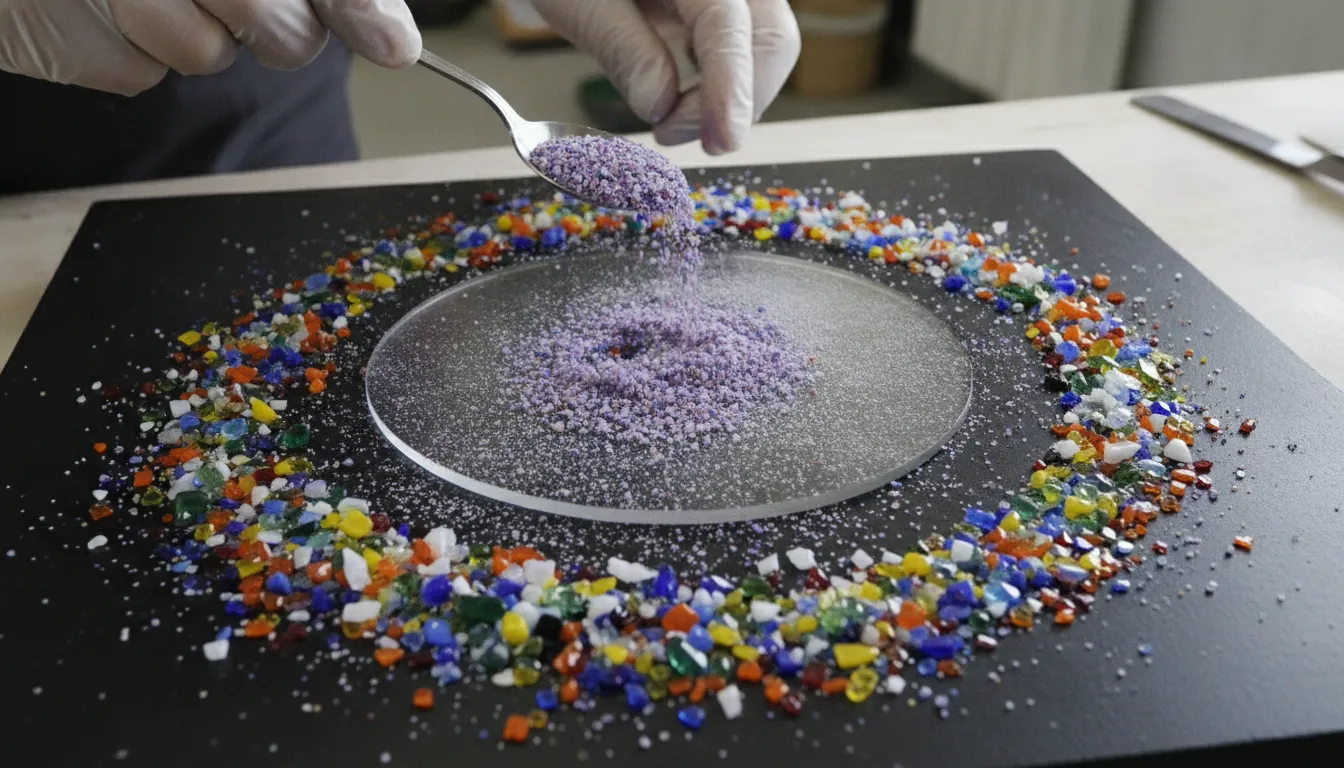
Adding texture, fine details, and painterly shading to kiln-formed art requires more than standard sheet glass. To paint with light and color, artists rely on crushed granules that offer endless ways to create.
Glass frit for fusing is crushed, screened glass that fusers use to create texture, gradients, and custom patterns in kiln-formed work. This versatile material is made from compatible sheet glass that is ground down and sorted into precise grain sizes, ranging from fine powders to coarse chunks. As noted by Lisa J. Vogt, using these different sizes offers limitless design options, which helps fusers paint with glass, fill molds, and build dimensional surfaces. To avoid cracking, artists must match the Coefficient of Expansion (COE) of their frit to their base glass. You can explore how this material fits into your studio setup by reading our full glass fusing guide.
Explore our full selection of premium glass frit for fusing at Art Glass Supplies today!
New fusers often wonder how this unique material behaves in the kiln and how manufacturers make it. Understanding the basics of its production is the first step toward design success. The path begins with What Is Glass Frit and How Is It Made.
What Is Glass Frit and How Is It Made?
What is glass frit?
Glass frit is ground or crushed glass. It is made to a controlled particle size so artists can add color, shading, and fine detail to their work. Instead of melting large glass chunks, you can use these small grains to paint or fill molds. Frit behaves just like the sheet glass it matches. It melts at the same temperature and has the same Coefficient of Expansion (COE). You can find more helpful concepts in our main glass fusing guides. This compatibility is vital to prevent cracks in finished art.
Many educational programs use glass frit in their classes to teach students the basics of glass art design. It is a key material for both beginners and experts because of its flexibility. Using these small grains allows you to create patterns that are hard to get with sheet glass alone. Students can learn to make simple designs before moving to complex projects.
How frit is made
The manufacturing process starts with compatible sheet glass. Workers break clean glass sheets into smaller pieces. Then, they use heavy crushers or steel grinders to reduce the glass into tiny grains. This grinding step creates a wide range of glass particles and fine dust. Using clean glass of a known expansion ensures the frit is safe to use.
To sort the grains, the manufacturer passes the mix through a series of metal sieves. Each sieve has a specific mesh size. These screens separate the glass into distinct grades, from coarse chunks to fine powder. This careful grading ensures that each jar of frit has a consistent size range. Finally, the glass is washed and magnetic tools remove any metal dust from the grinders.
Find the tools and materials you need with our guide to glass frit for fusing and other studio essentials.
Why artists choose frit
Frit is a popular choice for artists because of its design options. You can use it to create smooth color blends or sharp lines. Artists often sprinkle these grains onto sheet glass to add texture. Because of its small size, you can place it exactly where you want it. This allows for rich surface designs that are hard to get with standard sheet glass. Grains are also great for filling small spaces between cut glass pieces. Some techniques, like pate de verre, use frit to build delicate, hollow shapes. Even advanced techniques like glass casting with frit rely on this material to make complex shapes. This wide range of uses makes the material a must-have in any warm glass studio.
Frit Grain Sizes: Fine, Medium, Coarse, and Powder
When choosing glass frit for fusing, you must know how different sizes act in the kiln. Frit is crushed glass that comes in several sizes. For instance, Oceanside Compatible frit comes in 5 grain sizes: powder, fine, medium, coarse, and mosaic. Each size reacts to heat in its own way, which changes the look of your art.
How particle size changes melt behavior
Smaller glass pieces have more surface area. They absorb heat quickly, round out, and melt sooner than larger grains. Fine powder can even fire to a smooth, satin surface at lower heat. But larger pieces need more heat to melt, holding their shape longer and trapping air.
You can use these traits to create textures like a tack fuse, where raised edges catch the light. A full fuse melts all the grains into a single flat layer. To get bright and vivid colors, you must fill the space between cut glass pieces to a depth of about 1/8 inch. This thickness stops the glass from pulling back during the firing process.
An overview of the five size categories
Each size has its own use. Powder is like fine flour and works well for drawing, painting, or stenciling. Fine frit is like white sugar, which makes it perfect for small details and crisp lines.
Medium frit is the most common size, perfect for filling gaps and making solid color zones. Coarse frit features chunks that look like sea salt, while mosaic frit has large shards. These larger grains add bold texture and organic patterns to your glass designs.
Mosaic frit, also called cullet, consists of rough glass pieces that are much larger than coarse grains. These pieces are ideal to cover space fast or to create bold, random accents in abstract designs. Many artists keep a stock of all these sizes on hand to mix and match. Having a range of sizes lets you blend smooth color shifts with big chunks of color in a single kiln run.
Choosing sizes for texture and depth
You can combine different sizes to build depth in your work. For example, the pate de verre method relies on using glass frit to make complex shapes and varied surface textures. This classic casting technique shows how grain size controls detail. By picking the right grains, you can control how light moves through your finished piece.
For those starting out, learning about the types of glass frit for fusing is a key step. Each size needs unique heat and timing to get the best results. For example, fine powder melts much faster than thick coarse shards in a standard kiln. Knowing how these sizes behave helps you plan your projects and avoid common mistakes like trapping too much air.
How Do You Use Frit in Glass Fusing Projects?
Working with glass frit for fusing allows you to add unique details to your art. You can build soft backgrounds, sharp lines, or complex images that are hard to make with sheet glass alone. Knowing the best methods for using and firing these grains will help you get the best results.
Techniques for Placement and Design
You can use several basic methods when using glass frit in your designs. One common method is sprinkling the glass grains straight onto a shelf or base glass to create a speckled pattern. You can also use a sifter to dust the glass onto your project. Sifting helps you create smooth color blends or subtle shades across your work.
Another technique is using frit to fill the gaps between cut sheet glass. To achieve bright and vivid color results, you must fill the empty space to a depth of about 1/8 inch. This depth ensures the color remains strong after the glass melts and spreads. You can also pile the glass high to build thick, raised surfaces that add dimension to your art.
Follow these simple steps to place frit for a clean, controlled design:
- Clean your base glass thoroughly so no dust or fingerprints affect the fuse.
- Spread or sift an even layer of frit onto the shelf, mold, or base glass.
- Fill any gaps between cut pieces to about 1/8 inch for strong, bright color.
- Check that your frit and base glass share the same COE before you fire.
- Fire to a tack or full fuse and let the piece anneal slowly as it cools.
Encasing and Layering Frit
Layering glass frit allows you to build visual depth in your fused art. Placing a layer of clear sheet glass over your frit design is called encasing. This method protects the design and traps the colors inside. You can also mix frit with binders to mold and sculpt 3D shapes. The classic pate de verre method is a casting technique that uses frit to make detailed glass shapes with fine textures.
When you layer frit, you must think about air bubbles. Because frit is made of tiny crushed glass pieces, air will get trapped between the grains. As the glass heats and starts to melt, these small pockets of air form tiny bubbles. Using larger coarse frit can help decrease the number of bubbles because the bigger pieces pack together with fewer gaps.
Firing Rules for Frit
Firing frit requires careful heat control to avoid common issues like devitrification. This problem occurs when the glass surface forms a cloudy, dull layer of crystals during heating. Frit is prone to this issue because its crushed grains have a large surface area. To prevent devitrification, you should avoid holding the glass at high temperatures for too long.
Frit is highly forgiving when you use different firing ranges. A tack-fuse firing will keep the texture of the single grains. A full-fuse firing will melt the frit into a flat, glossy sheet of glass. A common firing schedule for frit designs involves heating the kiln to 1470 degrees Fahrenheit, followed by a 15-minute hold. This schedule allows the glass pieces to melt together fully while keeping the colors crisp.
Browse our complete guide to glass fusing techniques to master frit and more.
COE90 vs COE96 Frit Compatibility Rules
Choosing the right glass frit for fusing requires a strict knowledge of glass compatibility. Understanding material compatibility, mainly the Coefficient of Expansion (COE), is needed when choosing and using compatibility when choosing glass frit to prevent breakage. If you mix unmatched elements, your project will break during or after the firing cycle.
What is Coefficient of Expansion?
Glass expands when heated and shrinks when cooled. The rate of this real change is the Coefficient of Expansion, or COE. Every piece of glass in a fusing project must share the same COE rate. Your glass frit for fusing must match your base sheet glass perfectly.
Both viscosity and expansion matching prevent cracking during the key cooling phase. Viscosity describes how thick liquid glass is as it flows. When you heat glass, it softens at a specific rate based on its recipe. If you use a frit with a different viscosity than your base sheet, the two glasses will pull against each other as they cool. This clash creates micro-fractures that will in time break the piece.
When the glass cools down, unmatched rates of expansion create high internal stress. Viscosity and expansion differences can also lead to devitrification. This process leaves a cloudy, dull film on the surface of your finished art. You can avoid this ruin by keeping your glass in the same family.
Comparing the Two Major Systems
In the glass art world, there are two main systems for fusing. The first system is COE 90, which is the standard for Bullseye glass. The second is COE 96, which includes Oceanside Compatible glass. You must never mix these systems in a single project. Even a tiny pinch of unmatched frit will ruin your work.
You cannot see a COE clash with the naked eye when the glass is hot. The project may even look perfect when it first comes out of the kiln. Hiding inside the glass, the stress is always there. You can see this tension by placing the cooled piece between two sheets of polarizing film. This simple test reveals bright halos of light around the unmatched frit, showing a high risk of failure.
While distinct techniques like kiln casting and pate de verre use frit to build fine shapes, they still require single-COE setups to prevent deep cracks. Art Glass Supplies stocks both COE 90 and COE 96 frit. This wide selection means you can always find the correct match for your studio projects.
| Glass System. | Brand Example. | Melt Temp Range. | Mixing Warning. |
|---|---|---|---|
| COE 90. | Bullseye Glass. | 1425 to 1480 F. | Do not mix with COE 96. |
| COE 96. | Oceanside Compatible. | 1400 to 1460 F. | Do not mix with COE 90. |
Where to Buy Glass Frit for Your Projects
Finding a reliable source for your glass materials is key to the success of your fusing projects. From correct COE ratings to specialized colors, where you buy your supplies matters just as much as how you use them.
What to look for in glass frit
When you shop for glass frit for fusing, always check three key factors. First, check the COE of the glass. The maker must confirm this number so your glass does not crack during cooling.
Second, look for a consistent size and grade of the glass grains. If the grains are not even, your designs may melt at different rates in the kiln. Third, buy frit in sealed jars or bags. Sealed packaging keeps dust and dirt out of the glass. This helps prevent cloudiness and other flaws in your finished pieces. Using clean materials is a simple way to keep your glass clear and bright.
Color kits versus single jars
How you buy your colors depends on your project goals. If you are just starting out, a per-color kit is a great option. These kits give you a wide range of shades in small amounts. You can test different styles without spending too much.
But if you work on large pieces, you should buy single, larger jars of individual colors. It is also good to buy specialty options like stardust or glitter powders. These fine grains add a unique shimmer to your work. Always check your glass compatibility when choosing glass frit, as mixing different brands can lead to breaks.
The value of specialty glass shops
Buying your supplies from a specialty glass retailer is always the best choice. Fusing glass needs expert knowledge and careful storage. Big box stores do not know the science behind warm glass. They cannot guide you on firing schedules or compatibility. A dedicated shop knows how to handle and package these delicate grains. Many schools and colleges with glass art programs, such as SUNY Broome Community College, buy from specialty stores. This helps ensure their students have the right materials.
Art Glass Supplies is proud to support this community. We carry a large inventory of Bullseye COE 90 and Oceanside COE 96 frit. We supply these top-grade materials to professional studios, local hobbyists, and schools. Whether you need a small amount of fine stardust or several pounds of coarse grain, we have you covered. Our team can help you find the right grain size for any design.
To find the right materials for your next project, explore our storefront COE 90 frit collection to get the exact supplies you need today.
Frequently Asked Questions
What is the difference between glass frit and cullet?
Glass frit and cullet are both crushed glass, but they have different sizes. Cullet refers to large, random chunks of waste glass from a studio or factory. Frit is made of cleaned glass that is crushed and screened into exact grain sizes. Artists use glass frit for fusing because the graded sizes help them control their designs.
How thick should glass frit be for bright colors?
To get bright and bold colors, you must pile your frit deep enough in your design. According to expert Lisa J. Vogt, you should fill the space between your cut glass pieces to a depth of about one-eighth of an inch. If you paint or scatter the frit too thin, the color will look light and washed out after you fire it in the kiln.
What is the standard firing temperature for glass frit?
There is no single firing temperature for all frit because different sizes melt in different ways. However, a common schedule used by many fusers heats the kiln at full speed to 1470 degrees Fahrenheit. You then hold that heat for 15 minutes to let the glass fuse. Larger frit designs or thick pieces may need a slower heat ramp.
Can you mix different brands of glass frit for fusing?
You should not mix different brands of glass frit unless they share the same rate of expansion. You must verify compatibility when choosing glass frit to prevent stress in the glass. If you mix glass with different expansion rates, your fused piece will crack as it cools down. Always check the label of each bag before you start.
Ready to shop the best glass frit for fusing today?
Using the wrong glass frit can ruin your art in the kiln, which wastes both your hard work and your good studio time and effort. If you do not check the COE of your glass before you fire it, your finished pieces may crack as they cool down and break. You can prevent these costly errors by choosing our tested glass frit now so you do not have to restart your art work later on.
Ready to shop glass frit for fusing? Contact Art Glass Supplies to shop glass frit for fusing. Getting the right colors and sizes for your studio has never been easier, and our team is here to help you choose.
Shop the full glass frit for fusing collection at Art Glass Supplies today.