
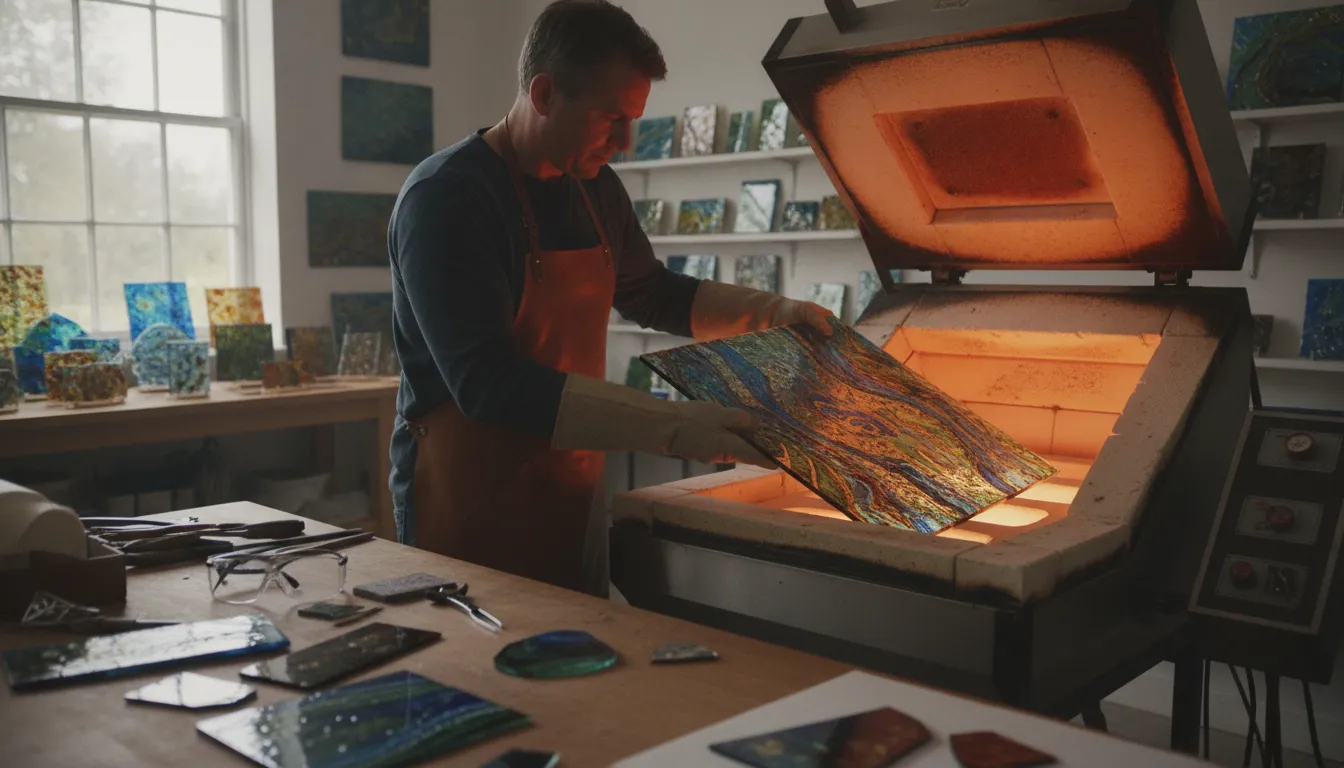
Choosing a new kiln is one of the most critical decisions you will make for your studio. A tiny chamber can halt your progress as a glass artist within a single season.
Our glass fusing kiln size guide helps you find the perfect chamber dimensions for your studio. We base these recommendations on your largest projects, firing frequency, and future growth plans. Small units with six-inch depths work well for basic jewelry making. However, serious artists who slump glass or make large panels need wider shelf areas to avoid outgrowing their setup within months. You must also check your home electrical service with an expert. Larger studio units need dedicated high-amperage lines that standard home outlets cannot support. By balancing your current workspace layout with your long-term goals, you can select a reliable model that matches your creative vision. This careful planning ensures you get a machine that handles your work and supports your artistic journey for many years.
If you are still learning the basics of glass fusing, planning your physical layout is a major step. You want to make sure your new machinery fits your workspace and supports your long-term creative plans. The sections below break down the exact chamber size you need for jewelry, panels, and production work, then compare the top Skutt models side by side.
Your Glass Fusing Kiln Size Guide for Choosing a Studio Kiln
Choosing the right chamber size is a big step in setting up your workspace. This glass fusing kiln size guide will help you understand the dimensions you need. Your choice must match your project sizes, firing plans, power lines, and plans for growth.
Factors that dictate kiln size
To find your ideal kiln size, look at three key factors. First, look at the width and length of the largest piece you plan to make. Second, think about whether you want to fire pieces on more than one shelf at once. Third, think about how your work will grow over the next five years.
- Max Project Size: Your kiln must be at least two inches wider than your largest mold or glass piece to allow even heat flow.
- Multi-Level Firing: Fusing flat items like jewelry or small tiles lets you stack shelves, which doubles your output per run.
- Future Growth: Buying a unit that is slightly larger than your current needs prevents you from outgrowing it in a single season.
Starter limits and studio depth
Many new artists start with small kilns. Basic starter models often have a chamber depth of about six inches. This is enough for flat work and small items, but it limits deeper shapes. If you want to make bowls or deep vases, you will need more room.
When you learn glass fusing basics, a small model is fine. But keen artists who want to move past simple projects must choose a deeper unit. If you plan to do slumping or tack fusing, you need more shelf space and depth. This ensures you do not have to buy a new kiln when your skills grow.
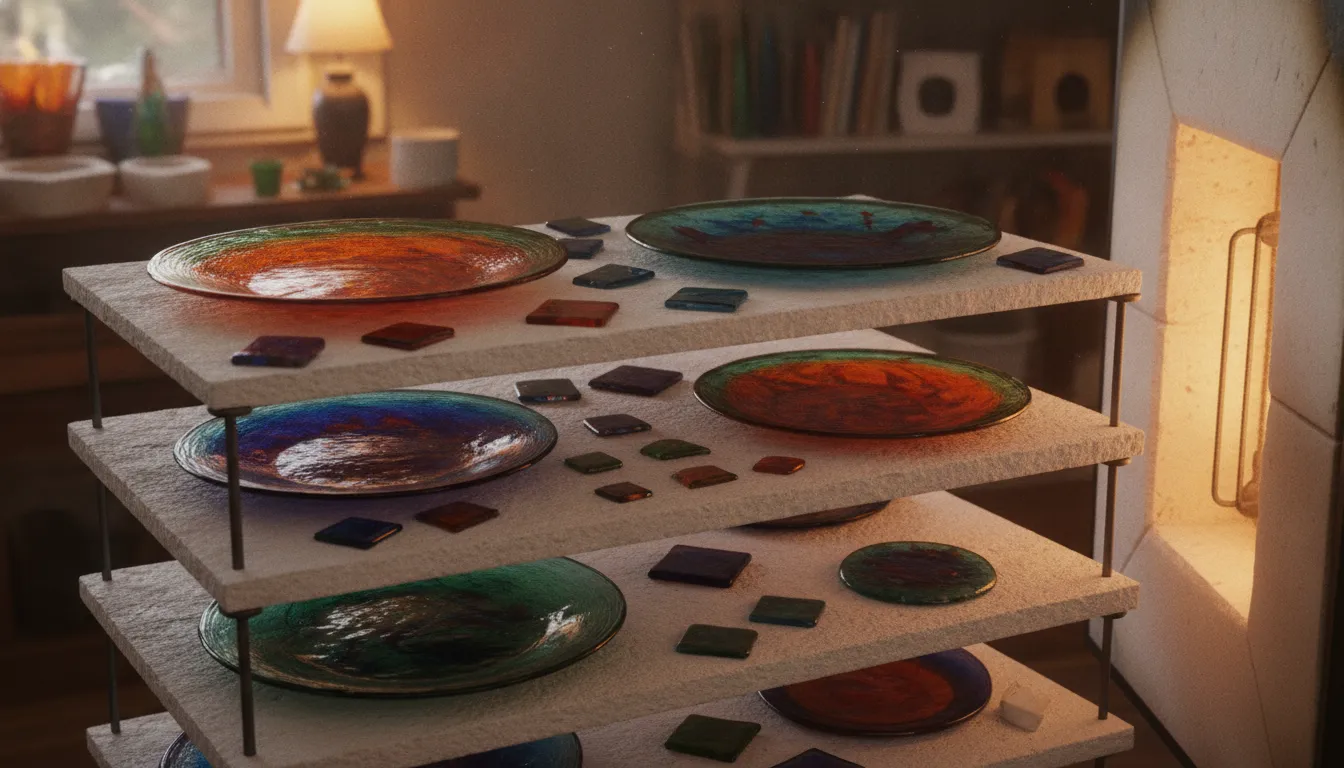
Chamber styles and workflow options
Kiln styles also affect how you use your space. You can choose from top loaders, front loaders, or clamshell designs. Top loaders are common and hold heat well. Front loaders make it easy to slide shelves in and out. Clamshell models let you lift the lid to access the entire bed.
When choosing a kiln size, you must also think about how heat stress affects glass. High heat can lead to cracks or broken glass if your pieces sit too close to the coils. Leaving enough room in your kiln chamber protects your art from these hot zones and lets heat flow evenly around every piece.
Before you make a final choice, plan for your future needs. Buying a kiln that fits larger projects now will save you time and money later.
Browse Our Full Selection of Skutt Glass Kilns
Small Kilns for Jewelry and Hobby Work
Are you ready to start your glass art journey at home? Small kilns are the best choice for makers who want to create jewelry, small cabochons, and tiny plates. These units run on home power and fit on any work bench. They help you learn glass fusing basics without a large space.
You can make beautiful glass art without spending a fortune. Jewelry makers love these small machines because they heat up fast. You can complete a firing project in just a few hours. This makes them perfect for quick tests and small production runs.
Chamber depth and shelf area
Most small starter kilns have a chamber depth of about 6 inches. This depth works well for flat work. But serious hobbyists who want to tack fuse or slump glass need more room. You must have enough depth and shelf area to make sure you do not outgrow your kiln in one season.
With a larger shelf, you can fire many small pieces at the same time. This is helpful when you make gifts or sell your work at local crafts fairs. When you look at a glass fusing kiln size guide, always check the exact shelf space. A few extra inches can make a huge difference in your daily workflow.
Small kilns heat up and cool down quickly because they have less mass. You need to follow a steady cooling step, called annealing, so your glass does not crack from thermal stress. Always set a slow cool-down rate that matches the size of your chamber.
Lid durability and maintenance
Small kilns come in three design styles, which include top loaders, front loaders, and clamshell designs. Each style has its own pros for your workspace. Many small kilns use fiber lids because they are light and heat up fast. These fiber lids can last for about 10 years if you take good care of them.
To keep your fiber lid in top shape, avoid hitting it with heavy tools. Dust it gently to keep fiber pieces from falling onto your hot glass. If you keep the chamber clean, your lid will serve your studio for many years. Choosing a top loader or clamshell style can also make cleaning much easier.
Starter series models
If you want a reliable starter kiln, look at Skutt models. The FireBox 8 is a top option for home artists because it runs on standard wall outlets and heats up fast. If you need slightly more space, the FireBox 8×6 is another great choice. It gives you extra room for taller molds while keeping a small footprint.
Browse our full collection of Skutt glass kilns today to find the perfect size for your studio.
What Can a Mid-Size Kiln Handle, Such as Panels and Plates
As your skills grow, you will want to make more than small test pieces or jewelry. Serious artists often move from small tests to larger plates and panels. If you want to try slumping or tack fusing, you will need more space. Picking enough chamber depth and shelf area now prevents you from needing a new kiln in your first year.
A mid-size kiln often has a shelf size between twelve and sixteen inches. This size is ideal for plates, bowls, and medium home decor projects. It allows you to create art without worrying about tight space. You can also explore complex heat profiles without stress.
Moving beyond small experiments
When using a glass fusing kiln size guide, knowing about thermal stress is key. As your chamber grows, heating and cooling become slower and more even, so you must manage your ramp rates with care. You can find correct rates in a kiln firing temperatures guide to keep your plates from breaking.
When making bowls or deep plates, you need a mold because slumping glass takes up both width and height. A shallow kiln will not fit your molds. Mid-size kilns give you about nine to thirteen inches of depth. This room is perfect for most common molds.
Chamber dimensions for plates and bowls
You can look at these models to see how they fit your workspace. The Skutt FireBox 14 is a popular option. It offers a wide, square shelf that is perfect for square plates and panels. Another great choice is the Skutt GM814, which has a round chamber for bowls.
These kilns run on standard household power or simple twenty-amp lines. This makes them easy to set up in a home studio. You get the space you need without expensive power upgrades. They also heat up and cool down faster than massive production units.
Design styles for creative studios
Glass kilns come in many shapes and door styles. You can choose from three main design styles: top loaders, front loaders, and clamshell designs. Each style has unique benefits for your workspace, but top loaders are common and tend to cost less. They are easy to pack but can be hard on your back when lifting heavy molds.
Front loaders let you slide shelves in and out like an oven. This is helpful for heavy molds or when you want to check your progress. Clamshell kilns have a lid that lifts clean out of the way, giving you full access to the shelf from all sides. Your choice should match your daily workflow and space.
Large Studio Kilns for Production Work
Running a busy studio needs a kiln that can keep up with your goals. When your work shifts to high-volume pieces, smaller hobby kilns will limit your craft. You must understand the balance between project scale, how often you fire, and studio power limits. Knowing this balance is key to choosing a model for glass fusing that supports your plans without needing a quick change.
Chamber Size and Plans for Growth
When you scale up your studio, choosing the right size is the most vital step. Your kiln size should depend on three main factors:
- The width and length of your largest piece
- The choice to fire on more than one level
- How your business needs will grow over five years
Choosing a high-volume kiln keeps you from outgrowing your tools after just one season. For instance, a larger chamber lets you tack fuse deep bowls or slump big plates. Large models like the Skutt GM818 give you the room you need for daily work. If you plan to make very large panels or teach big classes, the Skutt GM1018 gives you even more shelf space.
Power and Electrical Needs
Production kilns need ample power to run constant firing schedules. Before you buy a large kiln, you must check your building’s electrical service. This check must show your voltage, amps, and phase. Checking these electrical details with a licensed electrician prevents costly installation issues. Follow these three steps to confirm your studio is ready:
- Confirm your panel capacity. Ask an electrician whether your service panel has a spare circuit and enough amperage for the kiln’s rated draw.
- Check voltage and phase. Match the kiln to your home’s supply, since large units often need 240-volt, single-phase wiring rather than a standard outlet.
- Run a dedicated circuit. Give the kiln its own line from the breaker panel so it never competes with other studio equipment.
Running a large kiln on the wrong line can damage your tools or trip breakers. Standard home outlets cannot handle this heavy load. A licensed electrician can tell you if your panel has enough space for your firing schedule. If you do not have enough power, you must upgrade your service or choose a smaller model.
Safety and Viewport Rules
High-volume firing puts constant heat stress on all parts of your kiln. If your machine has a glass viewing window, you must make sure the viewport is mounted safely. Research from the National Institute of Standards and Technology (NIST) shows that direct glass-to-metal contact can cause stress that leads to structural breaks. High-quality production kilns use safe mounting to prevent these window stresses.
Before starting your first big batch, review the glass fusing fundamentals in our kilns guide to keep your workflow safe. Keeping your kiln clean and checking elements for wear will prevent costly downtime. With the right power setup and safety checks, you can run a productive studio for years.
Ready to find the perfect production kiln for your studio? Browse our full range of Skutt glass fusing kilns and reach out to our team today to get started.
Glass Kiln vs Ceramic Kiln: Can You Fuse Glass in a Ceramic Kiln
Can you use a ceramic kiln to fuse glass? The short answer is yes, but it is not ideal. A ceramic kiln can easily reach the heat needed to melt glass. But these units are built to heat clay, not glass. To learn the glass fusing basics, a true glass kiln gives you much better results. This glass fusing kiln size guide shows why the right tool makes a big difference.
How heating elements affect glass
Glass is highly sensitive to thermal stress. Research by the National Institute of Standards and Technology (NIST) shows that stress causes glass to fail. In a kiln, uneven heat can easily crack your project. A ceramic kiln heats from the sides. This makes the shelf edges heat faster than the middle. This heat difference causes heavy stress, which often cracks the glass before it fuses.
Glass kilns use heating elements in the lid. This design heats the glass evenly from above, which is key for even heat flow. Glass fusing is a low-fire process that runs between 1450 and 1675 degrees Fahrenheit. Because firing glass rarely exceeds 1699 degrees Fahrenheit, you do not need the ultra-high heat of a clay kiln. You need even heat across a flat surface, which a lid element provides.
Chamber shape and shelf layout
The chamber shape also limits what you can make. Ceramic kilns are tall and deep. They are built for stacking shelves of cups and pots. This tall layout makes loading flat glass hard. Fusing requires a wide, shallow space for large flat sheets or molds. It is also hard to look inside a deep kiln to check your glass as it melts.
Glass kilns come in several styles to fit your workspace. The three main designs are top loaders, front loaders, and clamshells. Top loaders are great for small studios. Clamshell models lift up to give you full access to the flat shelf, which makes laying out complex glass work simple. Front loaders let you slide shelves in and out with ease.
Precise ramp control differences
The way a kiln controls heat is just as key as how it heats. Glass must be heated and cooled slowly to prevent thermal shock. Knowing the right kiln firing temperatures is key to getting the results you want. Glass controllers use precise programs to ramp the heat up and down in small steps. This slow cooling is called annealing.
Most ceramic kilns do not have these fine-grained cooling controls. They are built to heat up to high temps and then cool down slowly on their own. If a kiln cools too fast, the glass will crack from internal stress. While you can sometimes use manual steps to slow down a ceramic kiln, it is hard to get steady results. Buying a glass kiln is the best path to avoid ruined projects.
| Kiln Type | Temperature Range | Heating Method | Chamber Shape | Ideal Use |
|---|---|---|---|---|
| Glass Kiln | Up to 1700 degrees Fahrenheit for low-fire projects | Heated from the lid to distribute warmth evenly from above | Wide and shallow to fit flat glass shelves and molds | Fusing, slumping, casting, and annealing glass art |
| Ceramic Kiln | Up to 2300 degrees Fahrenheit for high-fire clay | Heated from the sides which can create uneven hot spots | Tall and deep to allow stacking of vertical pottery pieces | Firing clay, bisque, stoneware, and porcelain pieces |
Top Skutt Glass Kiln Models Compared by Size
Selecting a kiln is a major step for any glass artist. Skutt is a leading name in the industry, making great kilns for every level. We carry a wide range of Skutt glass kilns to meet your needs. This section of our glass fusing kiln size guide compares these top models by size to help you choose.
Starter and Tabletop Kilns
Small kilns are perfect for jewelry makers and hobbyists with limited space. The Skutt FireBox 8 is a popular tabletop model. It is small, plugs into standard home outlets, and heats up quickly.
If you need a bit more depth, the FireBox 8×6 offers extra room for small slumping projects. These compact models let you learn the basics without a large space commitment. But their small shelf area means you cannot fuse wide bowls or large plates.
Mid-Size Studio Kilns
As your skills grow, you will want to make larger panels and functional bowls. Mid-size studio models offer a great balance of space and physical footprint. The Skutt FireBox 14 and the GM814 are excellent choices for active studios.
These models provide more shelf area, letting you load many pieces at once. Fusing larger batches helps save energy and time. They also handle the precise kiln firing temperatures needed for complex projects. These kilns often need special power circuits, so plan your studio space carefully before buying.
High-Capacity Production Kilns
For high-volume production or very large projects, you need a larger kiln. The Skutt GM1018 is built for busy studios and heavy use. When choosing a large model, you must think about your goals for the next five years.
Base your choice on the size of your largest planned piece and your desire for multi-level firing. Large kilns let you stack shelves to fire many pieces at the same time. This boosts your output and keeps your work moving fast.
Before you buy a large production kiln, you must confirm your building’s power supply. You must check the voltage, amperage, and phase with a licensed electrician. Many larger models need a special power setup that standard homes do not have.
Some of these big kilns also feature built-in viewing windows. If you choose a model with a window, make sure the viewport is mounted so it does not touch metal directly. Poorly mounted glass-to-metal contact creates stress points that can crack the viewport under repeated heating and cooling.
Explore our full selection of Skutt glass kilns to find the perfect fit for your studio.
Frequently Asked Questions
What size kiln is best for fused glass beginners?
A small kiln with an 8-inch to 12-inch wide chamber is best for beginners who make jewelry, coasters, or small dishes. As noted by Art Glass Supplies, starter kilns often have a 6-inch chamber depth. This size works well for flat glass work but limits your ability to make deep bowls or tall slumped shapes as you learn.
Does kiln size affect glass fusing firing schedules?
Yes, kiln size affects how fast the chamber heats and cools. Small kilns heat and cool very fast because they have less mass. Large kilns hold heat much longer, which means you need slower ramp times and longer cooling phases to prevent glass cracking. Always adjust your glass fusing firing schedules to match the exact behavior of your kiln size.
What is the best microwave kiln size for glass fusing?
The best microwave kiln size for glass fusing is the large model with a 4.5-inch inner diameter. Standard models have a tiny 3-inch chamber, which limits your work to small earrings. While the larger size fits small pendants, these units are meant only for small hobby crafts and cannot replace the control of a real studio kiln.
How do you choose a kiln size if you plan to grow your glass studio?
To plan for the future, choose a kiln size based on the largest piece you want to make. Also think about whether you want to fire on more than one level at once. As advised in the Skutt selection guide, you should think about how your studio needs will grow over the next five years. Buying a slightly larger kiln now avoids the high cost of replacing it later.
Find the Right Glass Fusing Kiln for Your Studio
Choosing the right kiln size is the single most important decision for a growing fusing studio. A chamber that is too small limits your project options, while one that is oversized wastes energy and floor space you may not have. Studio capacity, element placement, venting, and temperature control all matter, but usable shelf size should anchor your pick. A kiln with room to spare lets you fire larger panels and batch multiple pieces, which pays off in both efficiency and creativity.
We carry a range of Skutt fusing kilns sized for hobbyists, studio artists, and production shops. If you still have questions about chamber dimensions or power requirements. Reach out with your studio’s details and we will help you match a model to the work you actually create.