
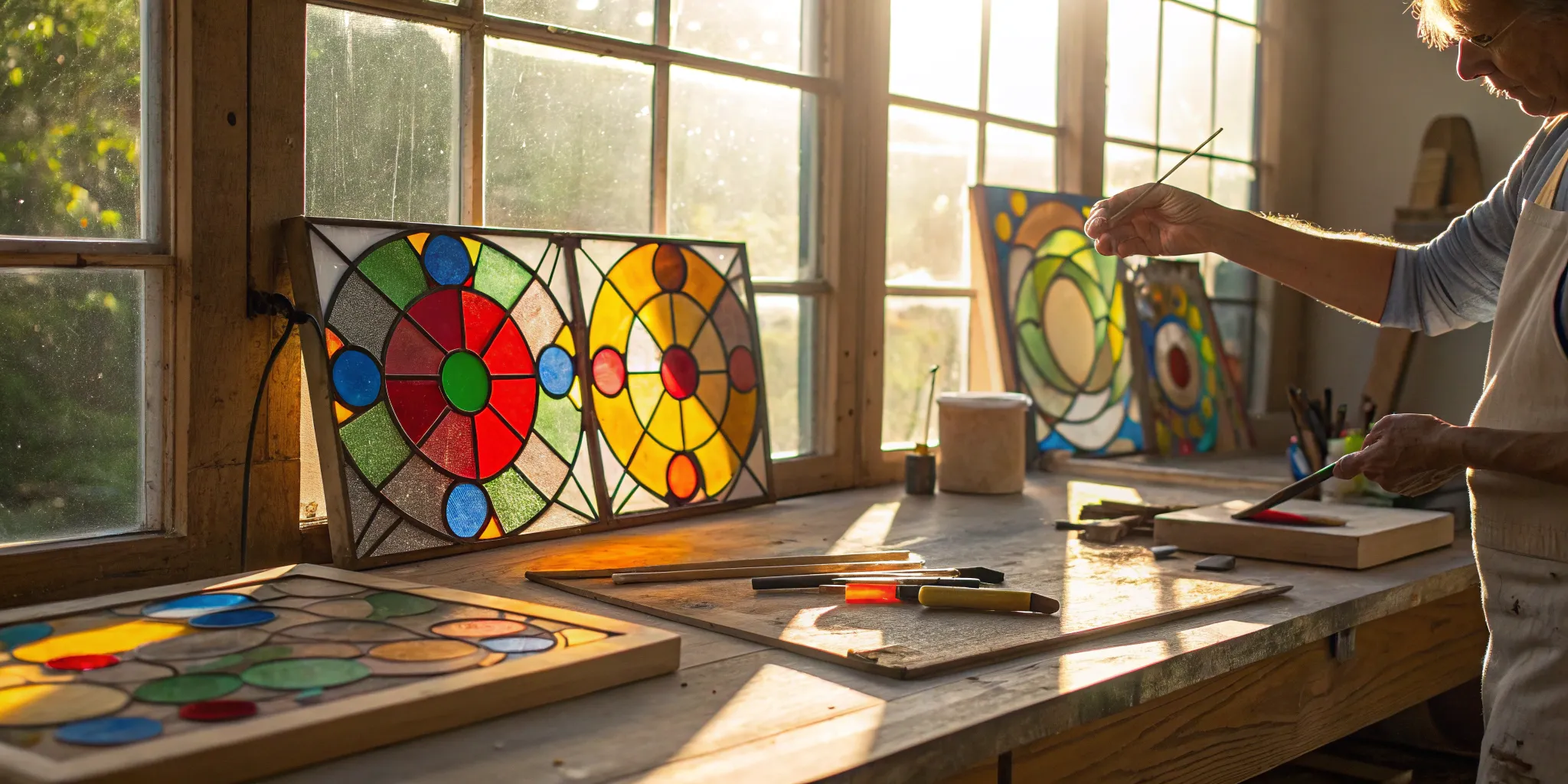
If you’ve ever pulled a beautiful piece from the kiln only to hear the dreaded tink of a stress crack hours later, you know the frustration. That heartbreaking moment is exactly what Bullseye COE 90 glass was designed to prevent. This isn’t just a brand; it’s a tested-compatible system. Every sheet, stringer, and frit is formulated to fuse together perfectly, removing the guesswork so you can focus on your art. We’ll explore this reliable system, the incredible variety of products, and how to find the right coe 90 glass suppliers offering quality bullseye glass coe 90 for sale.
Key Takeaways
- Stick to the Bullseye System: For strong, crack-free results, only fuse Bullseye COE 90 glass with other Bullseye products. Mixing brands, even those labeled COE 90, creates internal stress that can ruin your work.
- Master Your Kiln with a Firing Log: Treat published firing schedules as starting points, not rules. The key to consistent results is to test your glass and keep a detailed log of your schedules and outcomes to develop a process that works for you.
- Use Different Glass Forms for Specific Effects: Move beyond basic sheets to add depth and detail to your art. Use frit for texture and shading, stringers for drawing fine lines, and specialty glasses to create unique reactive or iridescent effects.
What Is Bullseye COE 90 Glass?
If you’ve spent any time in the world of glass fusing, you’ve definitely heard of Bullseye glass. Think of it as a trusted, go-to material for artists who melt and shape glass in a kiln. Bullseye COE 90 is a specific line of glass made by the Bullseye Glass Company, and it’s designed to be fusible. This means you can take different pieces of Bullseye glass, stack them, and fire them in a kiln to create a single, seamless piece of art. The most important thing to understand is that Bullseye glass is a “tested compatible” system. This means any piece of fusible glass from their COE 90 line will work perfectly with any other piece from that same line.
This compatibility is a huge deal because it takes the guesswork and risk out of fusing. You can mix and match colors and forms with confidence, knowing your final piece won’t crack from stress later on. It’s a closed system, however, so it’s crucial to remember that Bullseye’s compatibility guarantee is only for their own products. You shouldn’t mix it with other brands, even if they are also labeled COE 90. Small, unnoticeable differences in their chemical makeup can cause them to expand and contract at slightly different rates, which is enough to ruin a project. Sticking with one system ensures your work is strong and stable.
What Does COE Mean in Glass Fusing?
Let’s break down that acronym: COE stands for Coefficient of Expansion. In simple terms, it’s a measurement of how much the glass expands when it gets hot and shrinks as it cools down. Every piece of glass you use in a single fusing project needs to have the same COE. If you try to fuse glass with different COEs, they’ll fight against each other inside the kiln as the temperature changes. This creates a massive amount of stress in the glass, which almost always leads to cracks or even a complete break in your finished artwork. That’s why sticking to a single, compatible system like Bullseye COE 90 glass is so important for success.
What Makes Bullseye Glass So Special?
Bullseye has become a staple for glass fusers for a reason. The company offers an incredible range of options that give you total creative freedom. You can find it in large sheets of every color imaginable, which act as the canvas for your piece. It’s also available crushed into powdery frit for adding texture and shading, or drawn into thin rods and stringers for creating fine lines and intricate details. This variety means you can achieve almost any look you can dream up, from bold, graphic patterns to subtle, painterly blends. Whether you’re creating jewelry, plates, or large-scale wall art, there’s a Bullseye product that’s perfect for your project.
Why Do Artists Love Bullseye Glass?
Artists value reliability, and Bullseye delivers just that. When you’re investing your time, energy, and materials into a piece, the last thing you want is for it to fail because of incompatible glass. Using the Bullseye system removes that variable, letting you focus entirely on the creative side of things. The company’s consistency and quality control mean you can trust the colors will be true from batch to batch and that the glass will behave predictably in the kiln. This dependability, combined with the sheer variety of colors and styles available, is why so many artists—from beginners to seasoned professionals—build their studios around Bullseye glass.
Your Guide to Bullseye COE 90 Glass Types
One of the best things about working with Bullseye glass is the incredible variety of forms it comes in. Beyond the beautiful sheets of color, you’ll find powders, stringers, and specialty glasses that open up a whole new world of creative possibilities. Understanding these different types is the first step in planning your projects and achieving the exact look you’re going for. Whether you want to paint with light, draw fine lines, or create stunning chemical reactions in the kiln, there’s a form of Bullseye glass made for the job. Let’s look at the main types you’ll find and how you can use them.
Sheet Glass: The Foundation of Your Art
Sheet glass is the foundation of most glass art, and it’s likely what comes to mind when you think of COE 90 glass. It serves as the base for fusing projects, the main component in stained glass, and the building block for mosaics. Bullseye offers an amazing spectrum of colors, from transparent to opaque, and a variety of textures. No matter what kind of project you’re working on, from kilnforming to mosaics, Bullseye has the art glass sheets you need. You can use them as a solid background, cut them into intricate shapes, or layer them to create depth and new colors. This is your canvas, ready for you to bring your vision to life.
Understanding Glass Finishes: Opal, Tint, and Striker
As you explore Bullseye sheet glass, you’ll come across different finishes that describe how the glass interacts with light. “Opal” glass is opaque, meaning you can’t see through it, which makes it perfect for creating solid fields of color or a strong base for your design. “Transparent” glass is completely see-through, while “Tint” glass is also transparent but has a light, delicate wash of color. These are fantastic for layering to create new hues and add a sense of depth. Then there’s “Striker” glass, which is a bit like magic. It’s a type of glass that changes color when fired in a kiln. For example, a pale amber sheet might fire to a deep, rich red. Strikers require a bit of testing to master, but they produce some of the most vibrant and stunning colors available.
Common Colors and Styles
The color palette offered by Bullseye is truly impressive, giving you endless options for your work. You can find just about any shade you can imagine, each with its own personality. In the blues, you’ll see everything from a light Aqua Blue Tint to a deep Cobalt Blue Opal. The greens range from the sparkly Aventurine Green Transparent to a rich Dark Forest Green Opal. The warm tones are where strikers really shine, with options like Burnt Orange and Canary Yellow that transform in the heat, alongside stable colors like Cranberry Pink. And of course, you have your essential neutrals like Black, White, and Clear. This is just a glimpse of the COE90 glass available, and exploring the full range is the best way to find the perfect colors for your next piece.
Adding Texture with Frit and Powder
If you want to add texture, shading, or painterly effects to your work, frit and powder are your best friends. Frit is simply crushed glass, sorted into different sizes, from coarse chunks to fine powder. Think of it as pigment for your glass art. It has a wide range of uses in many different techniques, including kiln fusing, torchwork, and even glassblowing. Sprinkling a fine layer of powder can create soft gradients, while using coarse frit can produce a chunky, textured surface. It’s perfect for creating detailed images, adding subtle color shifts, or giving your piece a unique, tactile quality.
Stringers and Rods: Create Fine Lines
For crisp lines and delicate details, turn to stringers and rods. Stringers are thin, spaghetti-like strands of glass, while rods are thicker, like pencil lead. Both are perfect for drawing directly onto your glass. You can use them to outline shapes, write words, create geometric patterns, or add fine details like blades of grass or animal whiskers. Because Bullseye is so committed to quality, you can trust that these elements are fully compatible with their sheet glass, ensuring your projects are strong and stable. They are incredibly easy to use—just nip them to the length you need and place them on your base glass before firing.
Creating Unique Effects with Specialty Glass
This is where the real magic happens. Bullseye’s specialty glasses are designed to create unique and often surprising effects in the kiln. Reactive glass, for example, changes color where it touches certain other glasses, producing beautiful, unpredictable halos and outlines. There are also iridescent and dichroic coatings that add a metallic shimmer or a stunning color-shifting effect to your work. These glasses are formulated and tested to withstand multiple firings, making them reliable for complex projects. If you want to add an element of wonder to your art, experimenting with specialty glass is a fantastic place to start.
Finishing Touches: Design Elements & Accessories
Beyond the basics, Bullseye offers a range of design elements that can add flair and save you time. Confetti consists of paper-thin shards of glass that are great for adding light, abstract layers of color. Billets are thick blocks of glass perfect for casting or creating substantial sculptural elements. You can also find pre-cut shapes and other accessories. These components are ideal for adding design features on top of your base glass to enhance the overall look of your projects. They allow you to build complexity and visual interest quickly, letting you focus more on the creative composition of your piece.
Murrine and Millefiori
For adding incredibly detailed patterns to your work, nothing beats Murrine. These are small, decorative cross-sections of glass cane that feature intricate designs like flowers, snowflakes, stars, and even tiny ladybugs. The most famous type is Millefiori, which is Italian for “a thousand flowers,” and it’s exactly what it sounds like—canes filled with beautiful floral patterns. By placing these tiny slices into your fusing projects, you can incorporate complex imagery without having to build it from scratch. They are perfect for creating focal points in jewelry, adding whimsical details to plates, or making your pieces truly one-of-a-kind. They fuse flat, becoming a seamless part of your design.
Precut Glass Shapes and Bails
Sometimes you need a perfect circle or a specific shape without the hassle of cutting it yourself. That’s where precut glass shapes come in. Available in basic forms like circles and squares or fun seasonal shapes like Christmas trees, these pieces save you time and ensure consistency in your designs. They are a fantastic shortcut for creating jewelry sets, ornaments, or any project that requires repeated, uniform elements. To make finishing even easier, you can use glass bails. These are small, fusible glass loops that you can fire directly onto your piece, creating a clean and strong hanger for pendants and ornaments without any gluing required.
Glass Dots, Frit Balls, and Striped Cane
The smallest details can often make the biggest impact, and that’s where elements like glass dots and frit balls shine. Glass dots are small, flat discs of color that are perfect for adding polka dots or creating tiny mosaics. Frit balls are tiny spheres of glass that can add texture and pops of color to your surface. For linear designs, striped glass cane offers a simple way to incorporate multi-colored lines into your work. These components give you a huge palette for adding texture, color, and fine detail, allowing you to express your creativity with precision and flair in all your COE 90 glass projects.
Where to Find COE 90 Glass Suppliers
Once you’re ready to start a project, the big question is: where do you get your glass? Finding a reliable supplier is just as important as mastering your firing schedule. You need a partner who not only has a great selection but also understands the unique needs of glass artists—like careful packing and knowledgeable customer service. Your supplier can make or break your project, so it’s worth taking the time to find one you trust. Whether you’re buying a single sheet for a weekend project or stocking a professional studio, knowing where to look will help you get the best materials for your work.
Find Bullseye Glass COE 90 for Sale Here
When you’re looking for a one-stop shop, starting here is your best bet. We’ve curated an extensive collection of Bullseye COE 90 glass because we know how important it is to have the right materials at your fingertips. You can find everything from vibrant sheet glass and delicate stringers to frit for adding texture. Our goal is to make it easy for you to find exactly what you need without having to jump between different websites. We stock a huge variety of colors and styles, so you can spend less time searching for supplies and more time bringing your creative vision to life in the studio.
How to Vet Other Glass Retailers
While we’d love to be your only stop, we know that sometimes you need to shop around. When looking for other retailers, seek out specialists who live and breathe glass art. A good supplier will have a solid reputation in the artist community. Check online forums and local guilds for recommendations. Look for retailers who provide detailed product descriptions and are transparent about their stock. A company that focuses specifically on fusible glass, like Northwest Art Glass, is often a better choice than a general craft store, as they’ll have the expertise and specific inventory you need for your work.
Finding Discontinued Bullseye Glass
It’s a sinking feeling when you discover your favorite, go-to color has been discontinued. Suddenly, that perfect shade of blue you’ve built an entire series around is gone. When this happens, don’t panic. Your first move should be to check with dedicated glass suppliers. Many retailers will purchase the remaining stock of a discontinued color, making it available long after it’s gone from the factory. This is where having a relationship with a well-stocked supplier pays off, as you can often find these rare sheets listed as “limited” or “special production.” It’s also a good practice to buy a little extra of any color you absolutely can’t live without, just in case it gets retired.
Artist Support and Workshops
The best glass suppliers are more than just stores; they’re active members of the art glass community. They understand that their success is tied to yours. Many see themselves as full-service partners, offering workshops and classes to help artists grow their skills and keep the craft thriving. While you might not find a classroom in every warehouse, a great supplier provides another crucial resource: expert support. They can answer your technical questions, help you troubleshoot a tricky project, or guide you to the right materials. This kind of partnership is invaluable, turning a simple transaction into a supportive relationship that helps you create your best work.
Comparing Prices and Shipping Costs
As you browse for glass, remember to look at the total cost, not just the price per sheet. Shipping glass requires special care, and the costs can vary significantly between suppliers. A lower price on a sheet of glass might be offset by high shipping fees or poor packaging that leads to breakage. Look for clear shipping policies and check if the supplier offers insurance. For reference, a single sheet of Bullseye glass can range from around $25 to over $55, so be sure to factor shipping into your budget to avoid any surprises at checkout.
Should You Buy Your Glass in Bulk?
If you’re running a small business, teaching classes, or planning a large-scale installation, buying in bulk is a smart move. Many suppliers offer volume discounts that can lead to substantial savings over time. Don’t be afraid to reach out to a supplier’s customer service team to ask about their pricing for bulk orders. Some, like Potekglass, have programs specifically for schools and institutions. Stocking up on your most-used colors and supplies not only saves you money but also ensures you won’t run out of a key material mid-project.
Don’t Forget to Ask About Discounts
Are you a student or an educator? If so, you might be eligible for a discount. Many art supply companies are passionate about supporting the next generation of artists and offer special pricing for those in education. It’s always worth asking a retailer if they have an educational discount program. These savings can apply to a wide range of supplies, from the glass itself to big-ticket items like tools and kilns. A simple email or phone call could help you stretch your budget further and invest in higher-quality materials for your classroom or studio.
Your Essential Bullseye Glass Toolkit
Working with Bullseye glass is a dream, but having the right tools is what turns that dream into a reality. Just like a chef needs a good set of knives, a glass artist needs a reliable toolkit to cut, shape, and fire their creations. Setting up your studio with the right equipment from the start makes the entire process smoother and lets you focus on your art. Whether you’re just beginning or expanding your skills, these are the tools and supplies that will help you accomplish your creative goals with COE90 glass.
Must-Have Tools for Every Glass Artist
To get started, you don’t need a studio full of expensive gear. Focus on acquiring a few high-quality basics that will serve you well. First on the list is a self-oiling glass cutter for making clean, precise scores. You’ll also need running pliers to snap the glass along your score lines and grozing pliers to nip away any stubborn edges. Always wear safety glasses—this is non-negotiable. Finally, you’ll need kiln shelf paper or wash to protect your kiln shelves from sticking to the glass during firing. These essentials form the foundation of any glass fusing practice.
Ready for More? Advanced Fusing Equipment
When you’re ready to tackle more intricate designs, it’s time to expand your toolkit. Bullseye glass is specially formulated to withstand multiple firings, making it perfect for complex projects. A programmable digital kiln is a game-changer, giving you precise control over firing schedules for techniques like slumping and draping. Speaking of which, investing in a variety of molds will allow you to create three-dimensional pieces like bowls, plates, and sculptures. For detailed shaping and finishing, a glass grinder will become your best friend, and a ring saw can help you cut incredibly complex curves and shapes that are impossible with a standard cutter.
Your Studio Safety Gear Checklist
Creativity thrives in a safe environment. Before you even think about turning on your kiln, make sure you have the right safety gear. A good pair of safety glasses is the most important tool you’ll own. Keep heat-resistant gloves nearby for handling hot items or loading your kiln. When working with glass powders or doing any grinding, a dust mask or respirator is essential to protect your lungs from fine glass particles. And remember, a key part of safety is ensuring your equipment is working correctly. Always make sure your kiln is calibrated for temperature accuracy to prevent unexpected results and ensure safe firing.
How to Organize Your Glass and Tools
An organized studio is an efficient studio. Storing your glass properly not only protects your investment but also streamlines your workflow. Use a vertical storage rack for your sheet glass to prevent scratches and make it easy to see your color palette at a glance. Label everything meticulously, especially if you work with different COEs, to avoid accidentally mixing incompatible glass. For frits, powders, and stringers, clear, airtight containers keep them organized, dry, and easy to identify. A clean, well-organized space is also a safer space, with less risk of stray shards or misplaced tools.
Working with Bullseye COE 90 Glass
Working with Bullseye glass is a fantastic experience, known for its reliability and stunning range of colors. But like any specialized material, it has its own set of rules for getting the best results. Once you understand the fundamentals of compatibility, color choice, and firing, you’ll be able to bring your creative ideas to life with confidence. Think of these guidelines not as limitations, but as a clear path to success in your studio. From picking the right sheets to programming your kiln, every step plays a role in the final outcome. Getting these basics right from the start will save you time, materials, and the heartache of a beautiful piece cracking in the kiln.
The key is to be methodical. Before you even turn on your kiln, you’ll want to make sure your glass is compatible, your colors will work well together, and you have a solid firing plan. A little preparation goes a long way in glass fusing and prevents frustrating cracks or unexpected color shifts. We’ll walk through the most important things you need to know to make your next Bullseye project your best one yet. This includes understanding why you can’t mix brands, how to predict color changes, and the basics of creating a firing schedule that works for your specific setup. By taking a thoughtful approach, you can consistently create beautiful, durable glass art that you’re proud of.
Is Bullseye Glass Right for Your Project?
First things first: compatibility is everything in glass fusing. The most important rule to remember is that Bullseye glass is only guaranteed to be compatible with other Bullseye fusible glass. You can’t mix it with other brands of COE90 glass, and you definitely can’t mix it with glass of a different COE. This is because different types of glass expand and contract at different rates when heated and cooled. Fusing incompatible glasses together will create stress in the final piece, leading to cracks—sometimes hours or even days after it comes out of the kiln. So, before you start a project, double-check that every piece of glass you plan to use is Bullseye fusible.
How to Choose the Perfect Color Palette
One of the joys of Bullseye glass is its incredible color selection. When planning your design, think about how you’ll layer your glass. You can use thinner sheets for a base and add thicker glass or design elements on top for dimension. Keep in mind that some colors, known as “strikers,” will change dramatically once fired to the correct temperature. Other colors can create a chemical reaction when placed next to each other, resulting in a dark line between them. It’s always a great idea to create small test tiles of your color combinations to see how they interact in your kiln before you commit to a larger piece.
Getting Your Kiln Temperature Just Right
Every kiln behaves a little differently, but a good starting point for a full fuse with Bullseye glass is a process soak at 1490°F (810°C) with a 10-minute hold time. This “soak” or “hold” gives the glass enough time at its top temperature to melt smoothly and fuse completely. You’ll need a reliable firing schedule that controls how quickly the glass heats up and, just as importantly, how slowly it cools down (anneals). Keeping a detailed log of your firing schedules and the results will help you perfect your process and achieve consistent outcomes with your kilns. This record becomes an invaluable tool for replicating successes.
Mastering Different Firing Techniques
A full fuse is just the beginning. You can also explore tack fusing, where the glass layers stick together but retain their individual shapes, creating texture and dimension. Another popular technique is slumping, where you fire a fused piece a second time over a form to shape it into a bowl, plate, or sculpture. To get predictable results, you should always test your glass under your specific firing conditions. Firing small test pieces will show you exactly how the glass will behave, so you can move forward on your main project with confidence. Using different molds can open up a whole new world of three-dimensional possibilities for your work.
Project Ideas for Bullseye Glass
The versatility of Bullseye COE 90 is what makes it a favorite among so many artists. Its reliability makes it perfect for a wide range of applications, from kiln fusing and torchworking to glassblowing. You can create anything from delicate jewelry and intricate mosaics to functional art like plates, bowls, and decorative tiles. Many artists also use Bullseye glass to create stunning sculptural pieces and vibrant components for larger stained glass windows. Whether you’re making small pendants or large-scale architectural installations, Bullseye provides the quality and consistency you need to execute your vision.
Getting Started with Bullseye Glass
Getting started with a new material can feel like a big step, but working with Bullseye glass is incredibly rewarding. It’s known for its consistency and vibrant colors, making it a favorite for artists at every level. Let’s walk through some foundational steps to help you begin your journey with confidence and create beautiful fused glass art from your very first piece.
Our Top Tips for Glass Fusing Beginners
When you’re just starting, it helps to have a reliable baseline. For many Bullseye Glass projects, a great starting point for a process soak is 1490° F (810° C) with a 10-minute hold time. This schedule is a solid foundation for ensuring your glass fuses properly without being overcooked. More importantly, get to know your equipment. Every kiln has its own personality, so make sure yours is tested for temperature accuracy. Paying close attention to how your specific kiln controls heat will save you a lot of guesswork down the road. Think of these first firings as experiments—take notes, see what works, and don’t be afraid to adjust.
Understanding Basic Kiln Control
Once you’re comfortable with a basic schedule, you can start refining it. Your goal is to manage the heat work—the combination of time and temperature—to get the exact result you want. For example, after your glass has soaked at 1240° F, it’s well past its strain point. This means you can often shorten long holds and increase the heating rate without risking thermal shock. Understanding these principles helps you create more efficient firing schedules and gives you greater control over the final look of your piece. Always remember to test new schedules with small pieces of glass before committing a large project to the kiln.
How to Safely Store and Handle Your Glass
Treating your glass well before it even enters the kiln is key to a great result. Store your COE90 glass sheets vertically in labeled slots to prevent scratching and make it easy to find what you need. Always handle glass with care to avoid chipping the edges. If you’re working with thicker pieces or blocks, you can prevent sharp corners by slightly rounding them with grozing pliers or a diamond hand lap. Before you assemble your project for firing, make sure every piece is perfectly clean. A simple wash with soap and water, followed by a thorough rinse and dry, removes fingerprints and dust that can cause blemishes during firing.
How to Fix Common Fusing Problems
Every glass artist, from beginner to expert, runs into issues sometimes. Whether it’s unexpected bubbles, a cloudy surface (called devitrification), or a crack, don’t get discouraged. These moments are valuable learning opportunities. The best thing you can do is learn to identify the cause. Bullseye Glass offers an excellent FAQ page that addresses many of the common questions and problems you might encounter. I also highly recommend keeping a studio journal. Jot down the glass you used, your firing schedule, and the final result. This record will become your personal troubleshooting guide, helping you repeat your successes and learn from your challenges.
How to Plan and Budget Your Project
Before you dive into cutting and firing, taking a moment to plan your project can save you a lot of headaches (and money) down the road. Think of it as the first creative step, where you get to dream up your design and figure out exactly how to bring it to life. A solid plan ensures you have everything you need on hand, helps you stay within your budget, and lets you focus on the fun part: creating! It’s the difference between a smooth, enjoyable process and a frustrating mid-project scramble for a specific color you forgot to order. When you map out your design, you can solve potential problems on paper before you ever make a single cut. This is where you decide on your color palette, consider the textures you want to achieve, and think about the final form of your piece. It’s also the perfect time to consider any new techniques you want to try. By thinking through the entire process, you build confidence and set yourself up for a result you’ll be proud of. Let’s break down how to map out your next masterpiece, from calculating your materials and budgeting for costs to investing in the right equipment for your studio. This planning phase is just as creative as the making phase, setting the foundation for a successful piece of art.
How Much Glass Do You Really Need?
Start with a sketch of your design, even if it’s a simple one. This will help you visualize how much base glass you’ll need and which colors you’ll use for accents. Think about the different forms of glass your project requires. Will you be using large pieces of sheet glass, or will you create texture and detail with smaller elements? Versatile materials like Bullseye glass frit can be used for shading and covering broad areas, which might mean you need less sheet glass in certain colors. It’s always a good idea to buy a little more than you think you’ll need. This gives you a buffer for test pieces, accidental breaks, or those happy accidents that lead to a new creative direction.
Budgeting Tips for Your Glass Art
Creating a budget is about more than just the price of glass. Make a list of all potential expenses: the glass itself, any new tools, kiln firing costs (don’t forget electricity!), and shipping fees. To make your materials go further, think strategically. You can use frit to add design elements on top of a less expensive base glass, which helps you maximize your material usage and minimize waste. If you find yourself using certain colors frequently, like clear or white, consider buying them in larger sheets to get a better price per square inch. Factoring in all these costs upfront helps prevent surprises and keeps your project on track financially.
Typical Costs for Glass Art Supplies
Understanding the costs of your materials is a key part of planning any successful project. While prices can vary based on color, size, and complexity, having a general idea of what to expect helps you budget effectively. Investing in a tested-compatible system like Bullseye means you’re paying for reliability and peace of mind, which is always worth it. The cost of your project will depend heavily on the types of glass you choose. A simple design using a single sheet of clear glass as a base will be more affordable than a complex piece layered with specialty dichroic glass, colorful frit, and detailed stringers. Let’s break down some typical price ranges for the most common forms of COE 90 glass so you can plan your next creation with confidence.
Sheet Glass Price Ranges
Sheet glass will likely be the biggest part of your materials budget, as it forms the foundation of your work. Generally, you can expect individual sheets of Bullseye glass to range from about $23 to $56. Many standard colors and sizes fall into the $23 to $30 price range, making them an accessible starting point for most projects. More unique options, like multi-colored sheets or those with special finishes, will be at the higher end of that spectrum, sometimes costing around $44 or more. When you’re browsing for the perfect canvas for your art, you’ll find a huge selection of COE90 glass to fit both your creative vision and your budget.
Frit and Powder Pricing
Frit is one of the most cost-effective ways to add incredible detail, texture, and color to your work. Because it’s essentially crushed glass, you can buy it in small jars, making it an affordable way to experiment with a wide palette. Prices for frit and powders often start as low as $3.99 per container, allowing you to stock up on dozens of different colors without a huge investment. Whether you’re creating soft, painterly shading with fine powder or adding a chunky, tactile surface with coarse frit, it’s a versatile material that lets you achieve complex effects without needing to cut and place tiny pieces of sheet glass. It’s a must-have for any fusing artist’s studio.
Costs for Stringers, Murrine, and Precut Glass
For adding those final, eye-catching details, decorative elements are your best friend. Stringers, which are thin rods of glass perfect for drawing lines, typically cost between $7 and $14. Murrine—small, patterned glass discs with designs like flowers or stars—usually run about $19 to $20 and add intricate detail instantly. If you want to save time on cutting, precut glass shapes like circles or holiday-themed designs are a great option, with prices ranging from around $6 to $20. These components are an excellent way to add complexity and a professional finish to your pieces, allowing you to build beautiful, detailed designs with ease.
What to Expect When Shipping Glass
Here’s one of the most important rules in glass fusing: Bullseye glass is tested and guaranteed to be compatible only with other Bullseye COE 90 glass. This means you can’t mix it with glass from other manufacturers or even glass with a different COE, like 96. When ordering, you need to source all your fusible materials from this compatible family. Also, remember that glass is heavy and fragile, so shipping can be a significant part of your budget. Look for suppliers who have a reputation for packing glass securely to prevent breakage in transit. Consolidating your orders can often help you save on shipping costs, so try to plan ahead and buy what you need in one go.
Why Investing in Quality Tools Matters
Your tools are an investment in your art. While it can be tempting to buy the cheapest option, high-quality tools will give you cleaner cuts, reduce glass waste, and make the entire process more enjoyable. Every artist’s studio should have the essentials: a good glass cutter, running pliers, safety glasses, and of course, a reliable kiln. From there, you can build your collection with more specialized equipment. As you explore new techniques, you might add things like slumping and draping molds to shape your glass into bowls and plates. Start with the basics and add new tools as your skills and project ambitions grow.
Tips for Flawless Fusing Results
Achieving that perfect, glossy finish without any cracks or unexpected reactions is the goal of every glass artist. But as you know, glass can have a mind of its own inside the kiln. Getting consistent, beautiful results isn’t about luck; it’s about having a solid process. A little preparation and testing can make all the difference, saving you from the heartbreak of a project gone wrong.
Think of these tips as your checklist for success. By paying close attention to the compatibility of your glass, fine-tuning your firing schedule, and taking good care of your equipment, you can take the guesswork out of fusing. These are the habits that separate frustrating sessions from flawless creations. Let’s walk through the key steps that will help you produce stunning fused glass pieces every single time.
Always Test Your Glass for Compatibility
One of the most common questions I hear is, “Can I fuse Bullseye with any COE 90 glass?” While the answer is generally yes, it’s not a simple guarantee. The Coefficient of Expansion (COE) is a critical guide, but slight variations can exist between manufacturers or even different production runs from the same company. To avoid stress cracks, it’s always wise to run a small compatibility test before committing to a large project. This is especially important when you’re adding smaller design elements on top of a larger base piece of glass. A quick test fire of small squares of the glasses you plan to use will tell you for sure if they’ll play nicely together.
How to Create a Reliable Firing Schedule
Your firing schedule is the recipe for your project, and getting it right is essential. Every kiln is a little different, and the size and thickness of your glass piece will influence the ideal schedule. For Bullseye Glass, a great starting point is a process soak at 1490°F (810°C) with a 10-minute hold time. Remember, this is just a starting point. I highly recommend keeping a detailed log of your firings—note the schedule you used, the type and size of the glass, and the final results. This practice will help you develop reliable, repeatable schedules tailored to your specific kilns and projects.
Maintaining Your Kiln and Fusing Tools
Your equipment is your partner in the creative process, so treat it well. A well-maintained kiln provides consistent and predictable results. Make sure you periodically test your kiln’s temperature accuracy using pyrometric cones to ensure it’s firing as expected. Always keep your kiln shelves clean and properly prepared with a fresh coat of kiln wash or shelf paper to prevent your masterpiece from sticking. This is especially important with Bullseye, which doesn’t hold heat quite like other glass types, making precise temperature control key. The same goes for your molds and hand tools—keep them clean and in good condition for the best results.
Pro Techniques for Stunning Results
If there’s one secret that all professional glass artists share, it’s this: test everything. Think of published firing schedules and compatibility information as excellent starting points, not unbreakable rules. The best way to guarantee success is to test your specific glass and design under your unique firing conditions before you start your final project. Firing a few small test tiles is a small investment of time and materials that can save you from a huge disappointment later. This simple habit removes the guesswork and gives you the confidence that your final piece will turn out exactly as you envisioned. It’s a fundamental step in working with any kind of stained glass.
Related Articles
- Bullseye Glass Cinnabar Opalescent Double rolled 3mm COE90 – COE90 Opalesc
- Bullseye Glass Black Opalescent Rainbow Iridescent 3mm COE90 – COE90 Iride
- Bullseye Glass White Opalescent Tekta,Double-rolled,3mm COE90 – COE90 Opal
- Bullseye Glass Cobalt Blue Opalescent Confetti COE90 – COE90 Confetti
- Bullseye Glass White Opalescent Confetti COE90 – COE90 Confetti
Frequently Asked Questions
Can I mix Bullseye glass with another brand that’s also labeled COE 90? This is a fantastic question, and the short answer is no. While it seems like they should work together, COE is more of a guideline than a strict rule. Different manufacturers use slightly different chemical formulas to make their glass. Even with the same COE number, these small differences cause the glass to expand and cool at incompatible rates, which creates stress and will likely cause your piece to crack. Think of Bullseye as its own complete system, guaranteed to work perfectly with other Bullseye products.
What’s the difference between a full fuse, a tack fuse, and slumping? These terms all describe different results you can achieve with heat, and it all comes down to temperature. A full fuse happens at the highest temperature, melting the layers of glass into a single, smooth, flat piece. A tack fuse uses a lower temperature, so the pieces of glass stick together firmly but keep their individual shape and dimension, creating texture. Slumping is a separate process where you take an already fused piece, place it over a mold, and fire it again at an even lower temperature until it softens and takes the shape of the mold.
Some of my glass colors changed in the kiln. What happened? You’ve likely discovered what we call “striking” or “reactive” glass! This is a planned and exciting property of certain Bullseye colors. Some glass is designed to mature into a different color or create a unique outline when it touches another specific color during firing. It’s not a mistake, but rather a special effect. The best way to know what to expect is to create small test tiles of your color combinations before you commit them to a large project.
What are the absolute essential tools I need to start my first Bullseye fusing project? You can get started without buying an entire studio’s worth of equipment. At a minimum, you will need a good self-oiling glass cutter, a pair of running pliers to break the glass along your score, and safety glasses, which are non-negotiable. To fire your work, you’ll need a kiln and either kiln shelf paper or kiln wash to keep your glass from sticking to the shelf. With these basics, you’re ready to start creating.
Can I use Bullseye COE 90 glass for traditional stained glass projects? Absolutely! Bullseye sheet glass is beautiful and cuts wonderfully, making it a great choice for stained glass patterns made with the copper foil or lead came method. The key thing to remember is that you cannot mix it with traditional stained glass (which has a different COE) if you ever plan to fuse any of the components in a kiln. But for construction purposes, its vibrant colors and consistent quality make it a fantastic option.