
A fused piece can look perfect when it goes into the kiln and still become a costly problem if the glass bonds to the shelf. The separator between your project and kiln furniture is not a minor studio supply. It controls release, cleanup, and the condition of the shelf you rely on for the next firing.
This glass fusing consumables guide explains when to use kiln wash, shelf paper, or fiber separators, and how firing temperature, surface texture, and project requirements affect that choice. Whatever you select, verify the glass is compatible by COE, or Coefficient of Expansion, and follow the product manufacturer’s application guidance.
Separators cannot correct incompatible glass. COE matching helps prevent stress-related cracking as the piece cools, while the right barrier helps prevent sticking during the heatwork itself. If you are building your broader studio foundation, review our guide to glass fusing for artists alongside this more focused look at kiln separators. The first decision is understanding why that barrier matters.
Browse Art Glass Supplies’ full selection of kiln wash, shelf paper, and separators to choose the right consumable for your next firing.
Why Kiln Separators Matter in Glass Fusing
Glass changes dramatically as it heats. Near a tack fuse, separate pieces soften enough to adhere while retaining much of their original shape and edge detail. At a full fuse, the glass flows farther, rounds its edges, and forms a smoother, more unified surface. In both cases, the softened glass can bond to an unprotected kiln shelf. A separator creates the release barrier that keeps the finished piece removable.
The three common options are kiln wash, shelf paper, and fiber separators. Kiln wash is a refractory coating applied to the shelf. Shelf paper and fiber paper are placed between the shelf and the project, usually as single-use layers. Each prevents direct glass-to-shelf contact, but the best choice depends on the project, surface finish, and firing schedule. For a broader supply checklist, see these essential glass fusing studio supplies.
COE, or Coefficient of Expansion, is part of the compatibility conversation, but it is important to distinguish the roles. COE matching applies to the glass and other glass materials in the project. If pieces with incompatible expansion behavior are fused together, stress can build as the work cools and lead to cracking. A kiln separator does not make incompatible glass compatible. It protects the underside of the project and helps prevent the glass from bonding to the shelf while the firing and cooling schedule do their work.
Temperature also affects separator choice. Tack fusing commonly occurs around 1,350 to 1,370 degrees Fahrenheit, while full fusing is commonly around 1,460 to 1,470 degrees Fahrenheit. Higher heat and longer holds give glass more opportunity to interact with a weak, cracked, or poorly prepared barrier. Follow the separator manufacturer’s instructions for the intended firing range, and inspect the shelf before every load.
Skipping this step risks more than one failed project. Stuck glass can chip or break during removal, and repairing or replacing kiln furniture is expensive. Maintaining a sound, even separator layer is a small consumable cost that protects the shelf, the glass, and the consistency of future firings.
Kiln Wash: What It Is and How to Apply It Correctly
Kiln wash is a refractory coating that creates a release barrier between fused glass and the kiln shelf. In practical terms, it helps prevent glass from bonding to the shelf at firing temperature, protecting both the project and the kiln furniture. A common kiln-wash formula uses alumina hydrate and kaolin mixed with water, although the exact product and proportions vary. For the technical description of kiln wash as a refractory coating, see this kiln-firing guide from The Art of Education.
Before mixing or applying any refractory powder, wear appropriate personal protective equipment. Use gloves and eye protection, and avoid inhaling airborne powder. Work carefully in a well-ventilated area, follow the product label, and consult the manufacturer’s instructions because application requirements can differ between products.
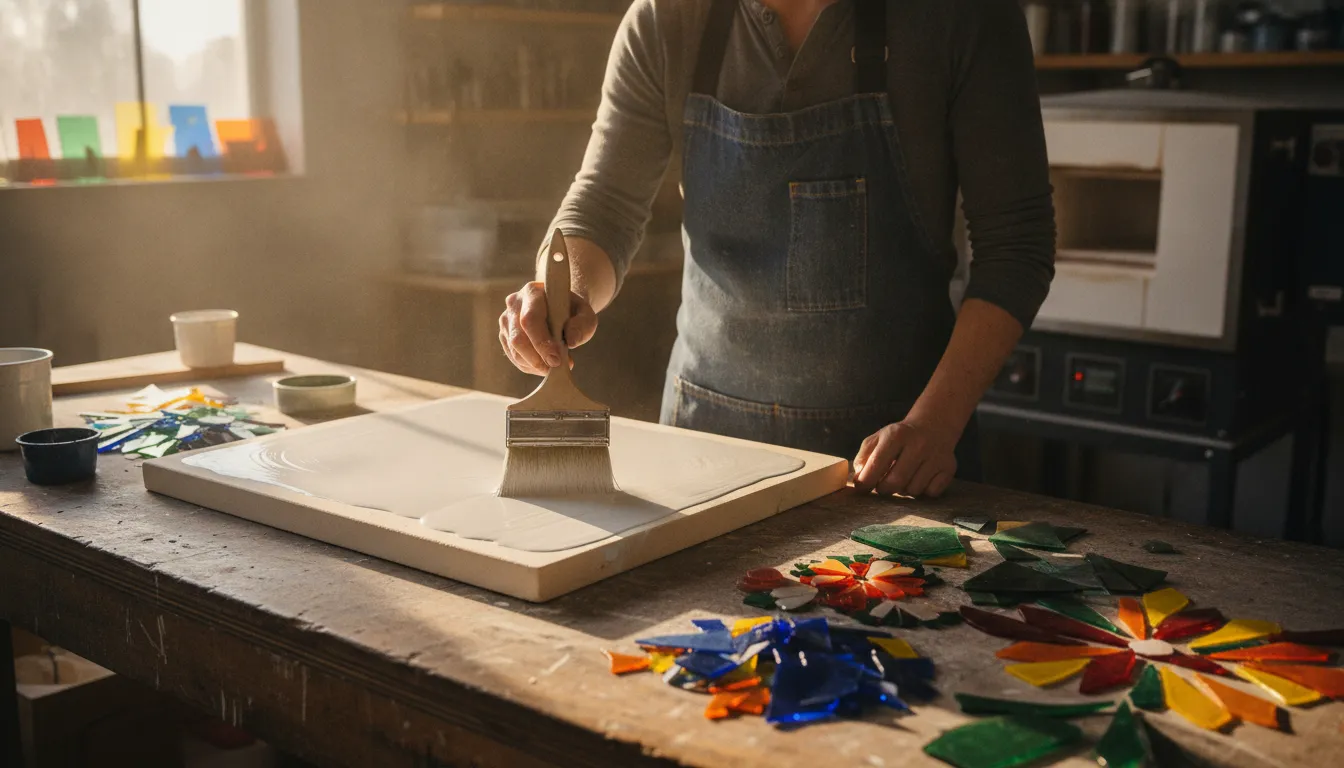
Mix and apply thin, even coats
Prepare the wash according to its instructions, mixing it thoroughly until the liquid is consistent. A clean, dedicated brush makes it easier to apply a light, even coat across the shelf. Avoid heavy ridges, puddles, and brush marks. An overly thick layer can chip or shed, while bare areas leave the glass vulnerable to sticking. Several thin coats are generally more manageable than one heavy coat, provided each coat is applied as directed.
Cover the working surface evenly, including the area beneath the planned glass. Keep the coating off the shelf edges where possible, and inspect the surface once it has dried. The shelf must be completely dry before loading glass. Moisture trapped beneath a project can interfere with a clean firing, so do not rush this step to meet a firing schedule.
Inspect the shelf before every firing
After a firing, check the wash for thin spots, cracks, flaking, or areas disturbed while removing a project. Clean away loose debris and old, damaged wash as directed by the product manufacturer, then repair or recoat the affected area. Reapplying only where the barrier has worn may be appropriate, but a broad area of damage can require a more complete refresh. Consistent shelf maintenance helps extend the usable life of kiln furniture and belongs on the same checklist as your other essential glass fusing studio supplies.
Kiln Shelf Paper vs Kiln Wash: Pros and Cons
Both materials create a release barrier between hot glass and the kiln shelf, but they support different studio workflows. Shelf paper is commonly a fiber paper placed directly on the shelf for one firing. Kiln wash is a refractory coating applied to the shelf as a liquid and dried before loading. The educational guide from The Art of Education identifies fiber paper as a shelf-separating option, while kiln wash forms a coated surface.
| Consideration | Kiln shelf paper | Kiln wash |
|---|---|---|
| Cost per firing | Higher over time because a fresh sheet is generally used for each firing. | Lower per firing after the initial application because the coating can serve multiple firings. |
| Setup time | Fast. Cut or place the paper, then load the project; no drying time is required. | Slower. Mix and apply the coating, then allow it to dry thoroughly before loading. |
| Reuse | Usually single-use. Remove and discard it after firing according to the product instructions. | Reusable until the layer wears, cracks, flakes, or develops thin spots, then reapply. |
| Texture imprint | May leave a fiber texture or imprint on the back of a fused piece. | Provides a thin, even release layer when applied smoothly, with less paper texture. |
| Best use cases | Quick turnaround, full-fuse work, small batches, or projects where convenience matters. | Regular production, repeated firings, and studios seeking a durable shelf surface. |
Choose shelf paper when speed and easy cleanup outweigh the recurring material cost, or when you need a temporary separator for a particular project. Choose kiln wash when you fire often and want a reusable release surface. Inspect the shelf before every firing. A worn or uneven barrier can allow glass to bond to the kiln furniture, damaging both the project and the shelf.
Neither option replaces compatibility planning. Confirm the COE, or Coefficient of Expansion, for every glass component before firing. COE mismatch can create stress as the piece cools, regardless of which separator you use. Also match the separator to the firing schedule and product instructions, especially when moving between tack and full-fuse work.
Fiber Paper for Texture and Surface Separation
Rigid fiber paper has a more specialized role than simply keeping glass off the kiln shelf. A ThinFire-style sheet can act as a working surface that releases the piece while transferring a subtle texture or relief to its underside. The fibers compress, burn away, or become impressed as the glass softens, depending on the paper, firing schedule, and amount of heatwork. The result is a back surface with visible texture rather than the uniformly smooth finish associated with a clean kiln shelf.
This dual function makes fiber paper useful when the underside is part of the design. Place the sheet flat on a clean shelf, position the compatible glass on top, and account for the texture in the finished piece. A textured back may improve visual interest, but it can also affect how a tile, dish, or cabochon sits on another surface. Test a small sample before committing an important project. The Art of Education identifies fiber paper as both a separator and a material that can imprint texture during kiln firing: see its kiln-firing explanation.
When fiber paper is the better choice
Choose fiber paper when you want fast setup, a disposable separation layer, or deliberate surface variation. Unlike liquid kiln wash, it does not need to be brushed onto the shelf and dried before loading. That setup-time advantage is valuable for a quick test firing, a small run of pieces, or a studio schedule where waiting for a coating to dry is inconvenient. It also avoids repainting the entire shelf when only one firing needs a temporary barrier.
Use kiln wash instead when you want a reusable, smooth release surface and do not want a paper texture on the back. Fiber paper is not a substitute for compatibility. Every glass component still needs a matching COE, or Coefficient of Expansion, and the firing schedule must suit the glass. A separator prevents glass-to-shelf bonding; it cannot prevent stress from incompatible glass cooling together. Treat fiber paper as a design and workflow decision within your broader glass fusing consumables guide, not as a shortcut around sound firing practice.
How Often Should You Replace Kiln Separators
Replacement timing depends on the separator, not simply on how many firings your kiln has completed. Treat kiln shelf paper as a single-use material. Remove it after the firing, inspect the shelf, and place a fresh sheet before the next load. Used paper can contain glass residue, lose its release performance, or leave an unwanted texture on the back of a project. Follow the product instructions, especially when choosing paper for tack fuse and full fuse work.
Kiln wash is different. A sound, evenly coated shelf can support multiple firings, so it does not need to be stripped and reapplied after every load. Instead, inspect the surface before each firing. Look for thin or bare spots, cracks, flaking, embedded debris, and areas where the coating has been disturbed while removing a project. These defects can create localized sticking. Reapply kiln wash when the protective layer is no longer continuous, typically after many firings or sooner if the shelf has been scraped or cleaned aggressively.
A practical inspection routine
- After unloading: Remove loose paper, glass fragments, and other debris without gouging the shelf.
- Before loading: View the shelf in good light and check the entire surface, including the edges and the area beneath the previous project.
- Before recoating: Clean away loose old kiln wash and residue according to the separator manufacturer’s instructions. Apply a fresh, even coating and allow it to dry completely before loading glass.
Consistent maintenance extends the usable life of expensive kiln furniture. A clean, level shelf with an intact separator is less likely to bond with glass or require aggressive scraping that damages its surface. This routine is one of the most useful habits in a glass fusing studio supplies plan. Separators still need to match the project and firing conditions, and they do not replace COE, or Coefficient of Expansion, compatibility checks between the glass components.
A Glass Fusing Consumables Guide for Every Firing Temperature
Your firing temperature influences the glass surface you want, but it also helps determine which separator is practical. The separator creates the release layer between glass and kiln shelf. Choose it alongside the schedule, project texture, and the manufacturer instructions for the specific product. Before loading, verify that every glass component has matching COE, or Coefficient of Expansion. A separator can prevent sticking, but it cannot make incompatible glass safe during heating and cooling. For a broader reference, see our guide to understanding glass compatibility.
- Tack fuse, approximately 1350-1370°F: Choose kiln wash for a reusable, dependable barrier when you want to preserve relief, texture, and distinct edges. Apply a thin, even coat to a clean shelf and let it dry fully before placing the compatible glass. Shelf paper also works when you need quick setup or want a single-use separator, particularly for small pieces and designs with loose frit. At this lower firing range, the glass sticks together while retaining many of its original characteristics. The cited range and tack-fuse outcome are described by The Art of Education.
- Medium fuse, approximately 1400-1450°F: Use kiln wash when you are repeating projects and want a consistent shelf surface. Select shelf paper when cleanup and speed matter more than reuse, or when shifting powders and frit make a disposable barrier useful. Fiber paper can be appropriate when you deliberately want texture or relief on the underside, but test it first because the paper may leave an imprint. Medium fusing rounds more edges than tack fusing, so inspect the separator for thin spots, cracks, or debris before loading.
- Full fuse, approximately 1460-1470°F, within the broader 700-830°C fusing range: Favor shelf paper or a suitable fiber paper when you need a fresh, continuous barrier for a melt. It works well for a piece that will flow and become smooth and glossy. Kiln wash remains an option if it is intact, evenly applied, and rated for the schedule, but a worn coating creates a localized sticking risk. Full-fuse temperatures and the smooth, rounded result are covered by The Art of Education. Follow the product directions, then use a compatible glass stack and an appropriate annealing schedule. Temperature alone does not determine success: COE compatibility and controlled cooling remain essential.
Ready to stock your studio? Shop kiln wash, shelf paper, and fiber separators at Art Glass Supplies and keep your shelf protected on every firing.
Frequently Asked Questions
What are the essential glass fusing consumables for beginners?
Start with a compatible kiln shelf separator, such as kiln wash or shelf paper, plus the glass, kiln furniture, and tools required by your project. Separators create a barrier between the glass and shelf, helping protect both the finished piece and the shelf from bonding during firing. Choose materials that suit your firing schedule, especially if you are learning the difference between tack and full fuse work.
What is the difference between shelf paper and kiln wash?
Kiln wash is a liquid refractory coating applied to the shelf and reused until it becomes worn, cracked, or uneven. Shelf paper is typically a single-use fiber sheet placed on the shelf for each firing. Paper is convenient and can help when you need a quick setup, while kiln wash is practical for regular production. Fiber paper may also leave a texture on the back of the glass, so consider the desired surface finish.
How often should I reapply kiln wash to my kiln shelf?
Do not reapply on a fixed calendar. Inspect the shelf before each firing for thin spots, cracks, flaking, or exposed areas, then clean away loose debris and repair the coating as the product instructions require. A thin, even, fully dry layer provides more reliable separation than a thick, damaged buildup.
Can I use shelf paper instead of kiln wash for every firing?
You can use shelf paper as a separator when its temperature rating and intended use match the project. But it is generally treated as a one-time material and replaced after firing. Check the manufacturer guidance because different papers behave differently at tack and full-fuse temperatures. If the paper leaves an imprint, select a smoother separator or use kiln wash when a cleaner underside is important.
How do I choose the right glass separator for my project?
Match the separator to the firing temperature, the amount of relief or texture you want, and the required surface finish. Most importantly, verify the COE, or Coefficient of Expansion, of every glass component so the materials are compatible during heating, fusing, and cooling. A separator prevents sticking, but it cannot correct incompatible glass or an unsuitable firing schedule.
Ready to Choose Your Fusing Separators?
The right kiln wash, shelf paper, or fiber separator can help you protect your kiln shelf and keep your firing setup suited to the project. Browse the full range of fusing supplies, kiln wash, and shelf paper from Art Glass Supplies, then choose the consumable that matches your process. Browse fusing supplies to get started.