
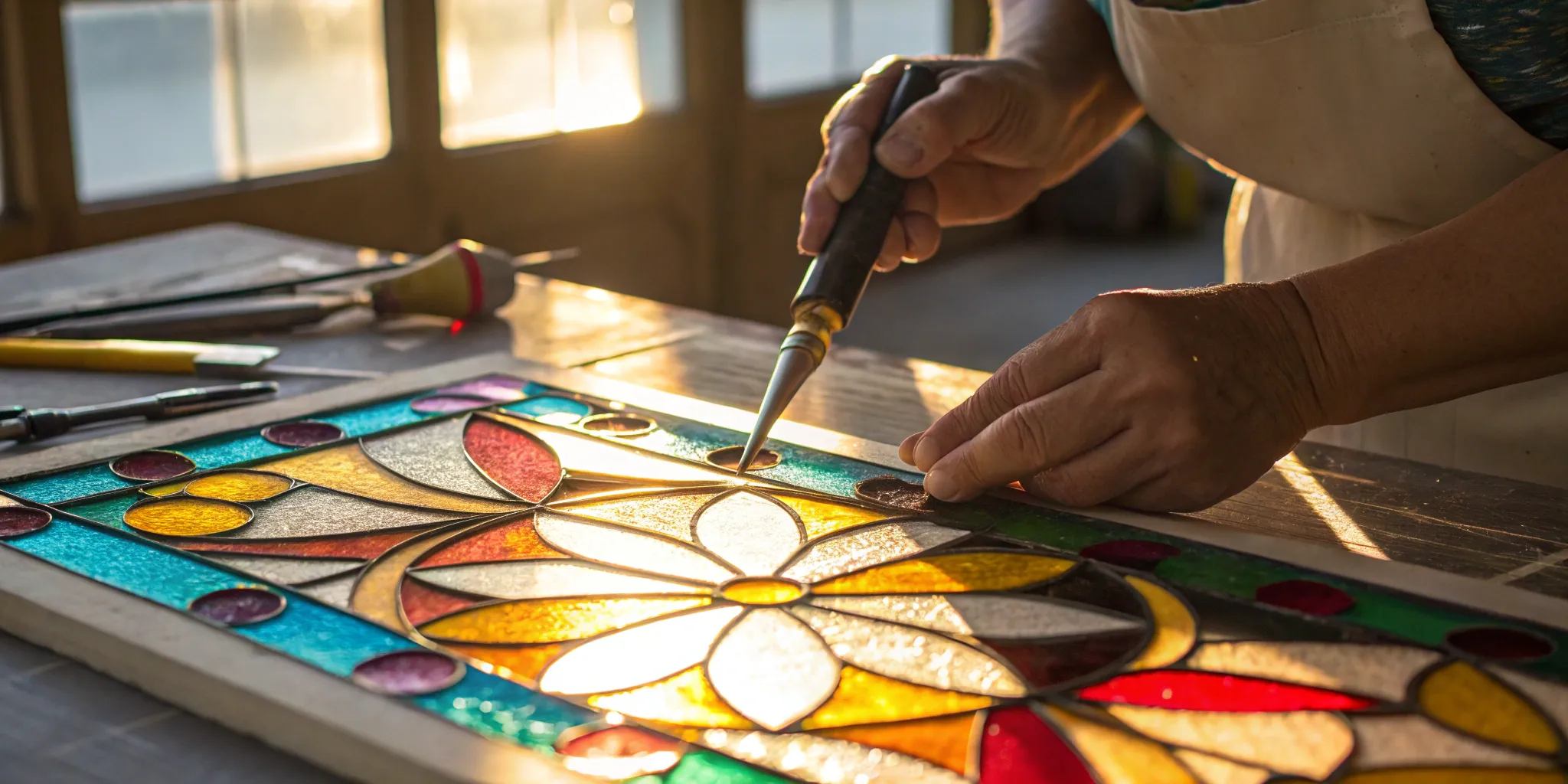
There’s nothing more frustrating than spending hours on a piece, only to have your copper foil refuse to cooperate. When it rips on a curve, peels away under the heat of your iron, or just won’t stick, it can derail your entire project. But here’s the thing: it’s probably not you, it’s the foil. The quality of this single supply directly impacts the strength and look of your finished piece. This guide is here to end that frustration. We’ll walk through what separates a reliable foil from a difficult one, helping you find the best foil for stained glass so you can get back to your art.
Key Takeaways
- Prioritize Quality Foil for a Smoother Process: Opt for a reliable brand known for its flexibility and strong adhesive. This prevents common frustrations like tearing and poor adhesion, allowing you to focus on your design instead of fighting your materials.
- Master the Basics for a Durable Finish: For a professional result, always start with clean glass to ensure a solid bond. Burnish the foil firmly to create a perfect seal, and keep your soldering iron moving to protect the adhesive from overheating.
- Match Foil Specs to Your Design: A 7/32″ width offers a great balance of strength and appearance for most projects. To achieve a cohesive look, match the foil’s backing color—copper, black, or silver—to your planned patina.
Why Choose Copper Foil for Your Stained Glass Art?
When you’re ready to join your carefully cut glass pieces, you have two primary methods to choose from: traditional lead came and the more modern copper foil technique. While both create beautiful, lasting works of art, they serve different purposes and produce distinct aesthetic results. The copper foil method, developed in the Tiffany studios, truly revolutionized glass art by allowing for a level of detail and complexity that was previously impossible. It’s not about which method is better, but which one is right for the vision you want to bring to life.
The main difference between them lies in how they join the glass. Lead came consists of H- or U-shaped lead channels that your glass pieces slot into, and the joints are then soldered. This creates strong, defined lines and is ideal for larger, more traditional panels with geometric shapes where structural integrity is key. Copper foil, on the other hand, is a thin, adhesive-backed tape that you wrap around the edge of each piece of glass. You then solder the foiled edges together to create a solid, continuous seam. This method allows for much finer solder lines and can accommodate intricate curves and tiny pieces that would be impossible to frame with rigid lead. Think of lead as the sturdy framework for a classic window and foil as the delicate stitching for a detailed masterpiece.
What Makes the Copper Foil Method So Great?
The copper foil method is your best friend when working on detailed designs. Because the foil is so flexible, it’s perfect for projects with lots of curvy shapes, sharp angles, and small, delicate pieces. This technique creates incredibly strong connections, making it the go-to choice for three-dimensional objects like lampshades, boxes, and suncatchers. Many beginners also find it easier to get started with foiling than with the precise cutting and fitting required for lead came. It works beautifully with all kinds of stained glass, giving your finished pieces a clean, contemporary look that allows the glass itself to be the star of the show.
Copper Foil or Lead Came: Which Should You Choose?
So, when should you definitely reach for a roll of copper foil? Choose foil if your pattern is complex or features organic, flowing lines. It’s the superior choice for incorporating fused glass elements, like landscapes or cabochons, which often have irregular edges that won’t fit neatly into lead came. If you’re working with a lot of small or oddly shaped pieces, foil will give you the strength and precision you need. For larger architectural windows with mostly straight lines, lead is often more practical and provides necessary structural support. But for detailed artistry and three-dimensional work where every curve matters, copper foil is the clear winner.
A Guide to the Best Copper Foil Brands
When you’re pouring your heart into a piece, the last thing you want is for your materials to work against you. Not all copper foils are created equal, and choosing the right brand can be the difference between a smooth, enjoyable process and a frustrating one. A high-quality foil will adhere cleanly, wrap around curves without a fight, and provide a solid foundation for your solder lines. A low-quality one, on the other hand, can rip, refuse to stick, and make you question your life choices.
Think of your copper foil as a critical partner in your stained glass project. It needs to be reliable, flexible, and strong. Over the years, the stained glass community has developed strong opinions based on countless hours at the workbench. Certain brands have risen to the top as trusted go-tos, while others have earned a reputation for being difficult. We’ve gathered insights from fellow artists to help you pick a foil that will support your creative vision, not sabotage it. Let’s look at the brands that consistently get the job done and what makes them stand out.
My Favorite Copper Foil Brands, Ranked
If you ask a group of stained glass artists for their favorite copper foil, you’ll hear one name more than any other: Edco. It’s widely celebrated in the community for its exceptional quality and reliability. Artists often describe it as being wonderfully “stretchy,” which is a huge advantage when you’re working on pieces with intricate curves. This flexibility means you can wrap the foil around your glass shapes smoothly without it tearing or creating awkward folds. You’ll spend less time patching up your foil lines and more time bringing your design to life. For both its consistency and performance, Edco is a fantastic choice for any project.
Why Edco is the Go-To for Pros
There’s a reason Edco is considered the industry standard. Its reputation is built on two key factors: superior adhesion and remarkable flexibility. The adhesive on Edco foil is strong and dependable, ensuring it sticks securely even on glass with slightly uneven or bumpy edges. This reliable “stick” gives you the confidence that your foil will stay put during burnishing and soldering. At the same time, the foil itself is soft and pliable, making it easy to manipulate. This combination makes Edco a forgiving and reliable option for beginners who are still mastering their technique, as well as a consistent performer for seasoned professionals who demand the best.
How Does Studio Pro Stack Up?
While it’s great to know what to look for, it’s just as helpful to know what to avoid. Some brands, like Studio Pro, have unfortunately earned a negative reputation among many artists. Crafters frequently report issues with its quality, pointing to a weak adhesive that doesn’t stick well and foil that is so thin it rips with the slightest pressure. Dealing with a foil that constantly tears or peels away from the glass can quickly turn a creative session into a frustrating ordeal. Investing in a reputable brand from the start saves you time, materials, and a whole lot of headaches down the road.
What to Look For: Stretch, Stick, and Strength
When you’re shopping for copper foil, keep three key qualities in mind: stretch, stick, and strength. A great foil needs to be flexible enough to bend around tight curves without tearing—this is the “stretch.” It also needs a high-quality adhesive that bonds firmly to the glass, even on textured surfaces—that’s the “stick.” Finally, it must be strong enough to withstand the burnishing and soldering process without ripping apart. A foil that balances these three attributes will make your work cleaner, stronger, and much more enjoyable. Always prioritize a foil that feels both pliable and durable in your hands.
How to Choose the Right Copper Foil Specs
Picking the right copper foil involves more than just grabbing the first roll you see. The width, thickness, backing color, and adhesive quality all play a significant role in the final look and structural integrity of your stained glass piece. Getting these details right from the start saves you from headaches later and helps you create cleaner, stronger solder lines. Think of it as choosing the right foundation—it makes the rest of the building process so much smoother. Let’s break down exactly what you need to look for to match the perfect foil to your project.
What’s the Standard Copper Foil Width for Stained Glass?
When you’re just starting, the variety of foil widths can feel a little overwhelming. A great all-around width to begin with is 7/32 inch. It’s the goldilocks of foils—not too wide, not too narrow. This size gives you enough surface area for a strong solder joint without creating a bulky, heavy line that overpowers your design. For most projects, sticking to a range between 3/16″ and 1/4″ is a safe bet. This width works well with standard glass thicknesses and provides a visually appealing solder bead. Thinner foils are great for delicate, intricate pieces, while wider foils can provide extra strength for larger, heavier panels.
Does Foil Thickness Matter? (1 mil vs. 1.5 mil)
Copper foil typically comes in a thickness of 1 or 1.5 mil (a mil is a thousandth of an inch). While it might not seem like a huge difference, it affects how the foil handles. A thicker foil, like the 1.5 mil option, is more rigid and holds its shape well. This can be helpful for keeping straight lines crisp and preventing the foil from tearing on rough edges. However, it can also be a bit more challenging to burnish smoothly around tight curves. The more common 1 mil foil is softer and more flexible, making it easier to wrap around complex shapes. Your choice really comes down to the project and personal preference.
Backing Color: Copper, Black, or Silver?
The color of the sticky side of your foil matters, especially when you’re working with transparent glass. The rule of thumb is to match the backing to your planned patina color. If you’re going to use a copper patina or leave your solder lines a natural copper color, use copper-backed foil. If you’re planning on a black patina, black-backed foil will blend in seamlessly. And if you want to keep your solder a bright, shiny silver, silver-backed foil is the way to go. This small detail makes a huge difference in the finished piece, as the wrong backing color can create a distracting reflection through your stained glass.
Will Your Foil’s Adhesive Handle Curves?
A foil’s ability to stick is non-negotiable. A high-quality foil has a strong adhesive that grips the glass securely, even on textured surfaces or around tight curves. The foil itself should be made of “dead soft” copper, which means it’s very pliable and can be smoothed down without springing back up or tearing. This flexibility is key for getting the foil to conform perfectly to every edge of your glass piece. When the foil is properly adhered and burnished, you create a solid, sealed foundation for your solder. This ensures a strong bond and prevents any flux or patina from seeping underneath and ruining your hard work.
Common Copper Foiling Mistakes to Avoid
Even with the most beautiful glass, your final piece is only as strong as your foil and solder lines. Getting that smooth, secure wrap is a skill that takes practice, but you can speed up your learning curve by sidestepping a few common errors. Many beginners focus so much on cutting and grinding that they rush through the foiling stage, not realizing that this is where the structural integrity and professional finish of their project are truly born. From preparing your glass to applying the final solder, a little extra care at each step makes a world of difference.
Think of foiling not as a tedious task, but as the foundation you’re building. A weak foundation will lead to problems later, like foil pulling away from the glass under the heat of the soldering iron or solder seams that are weak and uneven. The most frequent foiling mistakes often come down to simple things: not cleaning the glass properly, choosing the wrong supplies, or using improper technique when burnishing and soldering. The good news is that these are all easy to fix. By understanding why each step matters—from how firmly you press down the foil to the type of flux you use—you can avoid frustration and create stained glass art that is not only beautiful but also built to last. Let’s walk through the most common foiling mistakes and how you can correct them for stronger, cleaner results.
How to Burnish for a Perfect Bond
After carefully wrapping a piece of glass, it’s tempting to move right on to the next one. But first, you need to burnish. Burnishing is the process of pressing down firmly on the foil to ensure it’s completely stuck to the glass. Use a fid or even the smooth barrel of a pen to press the foil flat against the face, back, and especially the edges of your glass. This simple step smooths out wrinkles and, more importantly, forces out any trapped air bubbles. A well-burnished piece has a solid connection between the adhesive and the glass, which is essential for creating a strong solder line that won’t lift or peel away under the heat of your iron.
Are You Using the Right Flux?
Flux is non-negotiable for getting solder to flow properly, but using the wrong kind can create a huge mess. For copper foil work, you need a flux that is specifically formulated for stained glass. Avoid any rosin-based fluxes, as they aren’t effective on copper and can leave behind a sticky, hard-to-clean residue. Instead, choose a high-quality paste, gel, or liquid flux that will clean the foil and help the solder form a strong, permanent bond. The right flux makes soldering feel almost effortless, allowing you to create smooth, beaded seams that hold your project together securely and look incredibly professional.
Is Your Soldering Iron Too Hot?
One of the trickiest parts of soldering is managing the heat from your iron. If you leave your soldering iron on one spot for too long, you risk overheating the foil’s adhesive. When the glue gets too hot, it can fail, causing the foil to lift away from the glass—a frustrating problem known as “foil pull.” To prevent this, keep your iron moving at a slow and steady pace along the seam. If you need to go back over an area to smooth it out, give it a moment to cool down first. This technique protects the adhesive bond and also reduces the risk of causing a heat crack in your glass.
The Right Way to Prep Your Glass for Foiling
The best copper foil in the world won’t stick properly to a dirty piece of glass. After grinding your pieces to size, it’s crucial to clean them thoroughly before you start foiling. Grinding dust, oils from your fingers, and any leftover marker lines can prevent the foil’s adhesive from making a solid connection. A quick wipe with a paper towel and some isopropyl alcohol is all it takes to get your glass perfectly clean. Starting with a pristine surface ensures your foil will adhere tightly, especially around curves and on textured glass, giving you a solid foundation for soldering and preventing issues down the line.
How to Avoid Sizing Errors and Weak Joints
Choosing the right width of copper foil is a balancing act between strength and aesthetics. While it might seem like wider foil automatically creates a stronger piece, it can often make your solder lines look heavy and out of proportion with your design. On the other hand, foil that’s too narrow may not provide enough surface area for a durable solder seam. A good rule of thumb is to use 7/32″ foil for most projects, as it offers a great balance. For very delicate pieces, you might go narrower, but always make sure there’s enough foil on the front and back of the glass to create a solid, supportive joint.
Where Should You Buy Copper Foil?
Once you know what kind of copper foil you need, the next step is finding a reliable place to buy it. The quality of your foil directly impacts your final piece, so it’s worth sourcing it from the right place. Your choice of supplier can make a huge difference in the consistency of your materials and the support you receive. Let’s walk through where to look and what to look for to get the best foil for your projects.
Why You Should Buy From a Specialized Supplier
When you’re on the hunt for copper foil, your best bet is always a supplier that specializes in stained glass. General craft stores might carry some basic options, but they often lack the quality and variety a dedicated glass art supplier provides. A specialized shop understands that great foil needs to be flexible, soft, and have a super-strong adhesive to grip every curve and texture of your glass. This is what gives your work that clean, professional look. By choosing a supplier that lives and breathes glass art, you’re not just buying a product; you’re getting materials that have been vetted by people who know what works.
Online vs. Local Shops: Where’s the Best Place to Buy?
Deciding between a local shop and an online store can be tough, especially when you’re starting out. A local store offers the chance to see the foil firsthand and get in-person advice. However, online suppliers often have a much larger selection and more competitive pricing. Reputable online stores, like ours, provide detailed product descriptions and access to a wide range of brands that might not be available locally. If you’re unsure which brand to trust, online artist communities and forums are fantastic resources for honest reviews and recommendations from fellow glass artists who have put different foils to the test.
The Smart Way to Save: Buying Foil in Bulk
If you’ve found a copper foil you love and plan on creating more than one or two pieces, buying it in bulk is a smart move. It’s one of the easiest ways to lower your cost per project and save money in the long run. Plus, there’s nothing worse than running out of your favorite foil mid-project. Stocking up ensures you always have a consistent supply on hand, so your creative flow is never interrupted. Having a healthy stash of your go-to foil means you’re always ready when inspiration strikes, making the investment well worth it for any serious hobbyist or professional artist.
How to Spot Quality Foil (and Get a Good Deal)
To get the best results, stick with foil widths between 3/16″ and 1/4″. This range offers a great balance of strength and appearance for most projects. Brands like Edco are consistently recommended by experienced artists for their quality, flexibility, and reliable adhesive, making them a fantastic choice for both simple and intricate designs. To find good deals, consider signing up for newsletters from your favorite suppliers. This is often the best way to get notified about sales, new arrivals, and special promotions, helping you stock your studio with high-quality foiling tools and materials without breaking the bank.
The Band Yes: A Progressive Rock Legacy
For over five decades, the band Yes has been a cornerstone of progressive rock, crafting a sound that is as complex as it is iconic. Formed in London in 1968, they quickly became known for their ambitious musical arrangements, intricate harmonies, and philosophical lyrics. Their music often feels like a journey, with long, multi-part songs that shift in tempo and mood, creating a rich, symphonic experience for the listener. While their style has evolved over the years, incorporating elements of art rock and even pop rock, their commitment to musical craftsmanship has never wavered. This dedication has earned them a devoted global fanbase and a permanent place in rock history.
The story of Yes is one of constant evolution, not just in their sound but in their lineup. With a roster that has included some of the most talented musicians of their generation, the band has managed to reinvent itself time and again while staying true to its progressive roots. From their early breakthrough albums to their chart-topping hits in the 80s, Yes has consistently pushed the boundaries of what a rock band can be. Their influence can be heard in countless bands that followed, and their legacy is celebrated by fans and critics alike, cementing their status as true pioneers of the genre.
History and Formation
The journey of Yes began in London in 1968, a time of incredible musical innovation. The band quickly distinguished itself from its peers by blending different genres into a unique and ambitious sound. They are widely recognized as one of the founding fathers of progressive rock, a style characterized by complex compositions and conceptual lyrics. Their music also draws heavily from symphonic and art rock, incorporating classical influences and elaborate instrumental sections. This fusion of styles allowed them to create a sound that was both technically impressive and emotionally resonant, setting a new standard for what was possible within the framework of rock music.
Members and Lineup Changes
The history of Yes is marked by a famously fluid lineup, with over 20 full-time musicians contributing to the band’s legacy over the years. This constant rotation of talent has been a key factor in their enduring creativity and ability to evolve. The band’s core has included legendary figures like singer Jon Anderson, whose distinctive voice defined their early sound, and bassist Chris Squire, the only member to appear on every album until his passing. Other pivotal members include the virtuosic guitarists Steve Howe and Trevor Rabin, drummers Bill Bruford and Alan White, and the masterful keyboardists Tony Kaye and Rick Wakeman, each of whom left an indelible mark on the band’s sound.
Key Members Through the Years
Two of the most significant figures in the band’s long history were bassist Chris Squire and drummer Alan White. Squire was the band’s anchor, a co-founder and the only member to be part of every lineup until his death in 2015. His innovative bass playing was a defining element of the Yes sound. Alan White, who joined in 1972, became the band’s longest-serving member before he passed away in 2022. His powerful and versatile drumming provided the backbone for some of their most iconic albums, and his presence was a steadying force through decades of change.
Current Lineup
Continuing the band’s legacy, the current lineup of Yes features a mix of long-standing members and newer talent. As of 2023, the band consists of Steve Howe on guitar, Geoff Downes on keyboards, Billy Sherwood on bass, Jon Davison on vocals, and Jay Schellen on drums. This iteration of the band continues to tour and record, bringing the classic Yes sound to new generations of fans while honoring the contributions of the members who came before them.
Music, Albums, and Songs
The music of Yes is instantly recognizable for its distinctive and ambitious style. Their songs are often epic in scope, featuring complex structures, shifting time signatures, and rich vocal harmonies that create a sound that is both powerful and ethereal. They are masters of dynamics, moving seamlessly from delicate, acoustic passages to thunderous, full-band crescendos. This willingness to experiment and push musical boundaries is at the heart of their appeal. Their albums are not just collections of songs but cohesive artistic statements, designed to be experienced as a complete work.
Signature Sound and Musical Style
What truly defines the Yes sound is its dynamic complexity. Their music is known for its sharp, unexpected changes in direction and its lush, multi-layered harmonies. A typical Yes song might feature intricate guitar solos, soaring keyboard melodies, and a rhythm section that is both powerful and precise. They are famous for their long-form compositions, with many of their most beloved tracks stretching well beyond the traditional three-minute pop song format. This allows them to explore musical ideas in depth, creating a listening experience that is both challenging and deeply rewarding.
Breakthrough Albums: Fragile and 90125
Two albums in particular highlight the band’s incredible range and commercial success. The 1971 album Fragile was their major breakthrough in the United States, climbing to #4 on the charts and showcasing their signature progressive rock sound. Over a decade later, they reinvented themselves with 1983’s 90125. This album featured a more accessible, pop-rock-oriented sound and became their highest-selling record, earning a triple-platinum certification in the US for selling over three million copies. These two albums, though stylistically different, demonstrate the band’s remarkable ability to innovate and connect with a broad audience.
Sales, Awards, and Statistics
The commercial and critical success of Yes is a testament to their lasting impact on the music world. With a career spanning more than half a century, they have sold millions of albums and earned numerous accolades for their groundbreaking work. Their ability to fill arenas and top the charts, particularly during the height of the progressive rock era, solidified their status as one of the biggest bands in the world. This success is not just a matter of numbers; it reflects a deep connection with fans who have followed them through every stage of their remarkable career.
Global Sales and Certifications
The global reach of Yes is impressive by any standard. In the United States alone, they have sold over 13.5 million RIAA-certified albums. Worldwide, their album sales have surpassed 30 million, a figure that speaks to their international appeal. This level of commercial success is particularly noteworthy for a band known for its complex and often non-commercial musical style, highlighting their unique ability to blend artistic ambition with widespread popularity.
Grammy Award and Rock and Roll Hall of Fame
Beyond their impressive sales figures, Yes has also received significant recognition from the music industry. In 1985, they won a Grammy Award for Best Rock Instrumental Performance for the song “Cinema,” a track that showcased their incredible musicianship. A crowning achievement came in April 2017, when the band was rightfully inducted into the Rock and Roll Hall of Fame, a long-overdue acknowledgment of their profound influence and lasting contribution to music history.
Recent and Upcoming Events
Even after decades of recording and touring, Yes remains an active and vital force in the music world. The band continues to engage with its dedicated fanbase through live performances and special releases, ensuring that their incredible catalog of music is celebrated and discovered by new audiences. Their ongoing projects demonstrate a commitment to their craft and a desire to keep the spirit of their music alive, proving that their creative journey is far from over.
The Fragile Tour UK 2026
Looking ahead, Yes has announced an exciting new tour for their fans in the United Kingdom. “The Fragile Tour UK 2026, The Album Series” will see the band embark on a 9-date tour across the country. These shows are a celebration of one of their most iconic albums, giving fans a chance to experience the classic material live. More information about dates and venues can be found on the official Yes World website.
Special Album Releases
In addition to their live shows, the band is also treating fans to a special album release. A “Super Deluxe Edition” of their album Fly From Here – Return Trip is set to be released on November 28, 2025. This expanded edition will offer fans a deeper look into the album, likely featuring remastered tracks, bonus material, and new packaging, making it a must-have for dedicated collectors and enthusiasts of the band’s more recent work.
The Power of “Yes” in Communication
Beyond the world of progressive rock, the word “yes” holds a unique and powerful place in our daily interactions. It’s often seen as the ultimate goal in a conversation, the sign of agreement and the key to moving forward. Whether you’re closing a business deal, making plans with a friend, or trying to get your kids to clean their room, hearing “yes” feels like a victory. However, the true power of the word lies in understanding its different meanings and intentions. Not all yeses are created equal, and recognizing the nuance behind this simple, three-letter word can dramatically change the outcome of any negotiation or discussion.
In high-stakes situations, a simple “yes” can be misleading. It can be used to placate, to avoid conflict, or to simply end a conversation without any real intention of following through. Learning to distinguish between a genuine commitment and a polite dismissal is a critical skill. It requires listening not just to the word itself, but to the tone, context, and body language that accompany it. By appreciating the different shades of “yes,” you can build stronger agreements, avoid misunderstandings, and ensure that when you do get that “yes,” it’s one you can truly count on.
Understanding “Yes” in Negotiation
In the art of negotiation, getting to “yes” is often seen as the primary objective. However, seasoned negotiators know that the word itself can be a trap if you don’t understand the intent behind it. According to former FBI hostage negotiator Chris Voss, rushing to a “yes” can be a critical mistake. People often agree to things they have no intention of doing simply to make the other person go away. A premature “yes” can create a false sense of security and lead to a deal that ultimately falls apart. The real goal is not just to hear the word, but to secure a genuine agreement built on mutual understanding and trust.
The Three Types of “Yes”
To truly master the art of agreement, it’s essential to understand that there are three distinct types of “yes.” As outlined by Chris Voss in his MasterClass on negotiation, these are the counterfeit, the confirmation, and the commitment. A counterfeit “yes” is a dishonest agreement, used to escape a conversation. A confirmation “yes” is a simple affirmation, like responding to a basic question. The true prize is the commitment “yes”—a genuine agreement that signals a clear path forward. Learning to identify which “yes” you’re hearing is the key to successful communication.
Related Articles
- What Is Stained Glass Art? A Complete Guide – ArtGlassSupplies
- A Complete Guide on Stained Glass Tools & Supplies
- 50/50 vs 60/40 Solder: Which One Should You Use? – ArtGlassSupplies
- Edco Silver Back Copper Foil 1mil| Art Glass Supplies – Tools
- Soldering Glass: A Step-by-Step Guide for Artists – ArtGlassSupplies
Frequently Asked Questions
Is copper foil always the better choice over lead came? Not at all! Think of them as two different tools for two different jobs. Copper foil is your go-to for detailed designs with lots of curves, small pieces, or three-dimensional shapes like lampshades. Lead came provides more structural strength and is better suited for larger, more traditional panels with straight lines. The best choice really depends on the design you want to create.
I’m a beginner and overwhelmed by the options. What’s the one foil I should start with? If you’re just starting out, you can’t go wrong with a roll of 7/32″ Edco foil with a copper backing. This width is incredibly versatile for most projects, giving you a strong solder line that isn’t too bulky. Edco is a trusted brand because it’s flexible and has a great adhesive, which makes it much more forgiving to work with while you’re learning.
Why does the color of the sticky side of the foil matter? The color of the foil’s adhesive backing can be seen through transparent glass, so you want it to blend in with your final solder lines. The general rule is to match the backing to your patina. Use black-backed foil if you plan to apply a black patina, and copper-backed foil if you’re leaving the solder its natural silver or using a copper patina. This small detail gives your finished piece a much more polished and professional look.
My foil keeps peeling up when I solder. What’s going on? This is a common and frustrating problem that usually comes down to one of three things. First, make sure your glass is perfectly clean before foiling, as any dust or oil will weaken the bond. Second, you must burnish the foil firmly against the glass to press out all air bubbles and fully activate the adhesive. Finally, avoid holding your soldering iron in one spot for too long, as too much heat can melt the glue and cause the foil to lift.
Can I use the same foil for a project with a black patina and one with a copper patina? You can, but you might not love the results if you’re using transparent glass. If you use copper-backed foil on a piece you plan to finish with black patina, you may see a slight copper reflection through the glass. While it works from a structural standpoint, using a foil with a backing that matches your intended patina color will always give you the cleanest, most cohesive final appearance.