
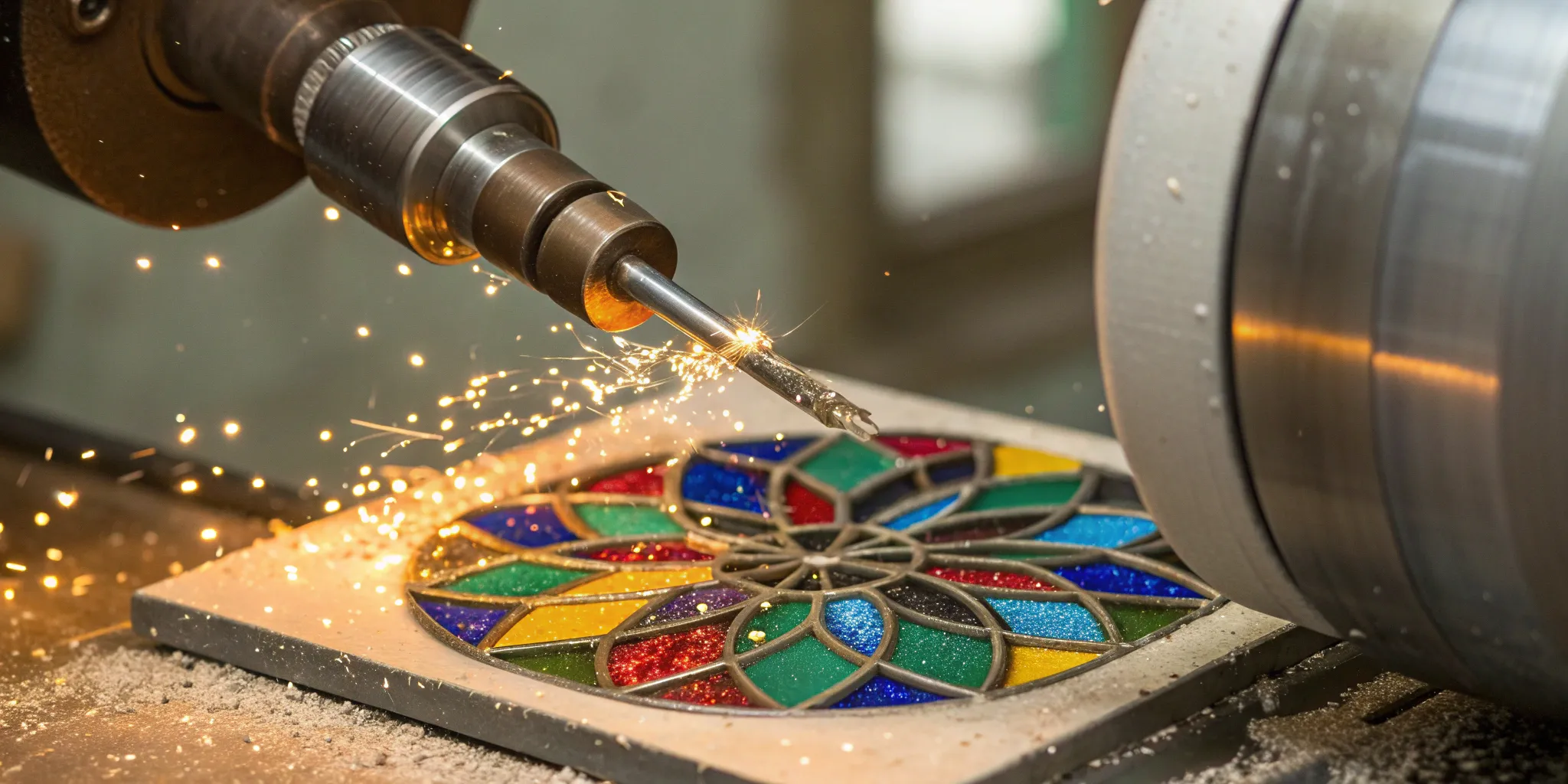
The best grinder for stained glass isn’t the one with the most features—it’s the one that feels like a natural extension of your hands. The right machine should match your creative flow, not fight against it. Think about the art you love to make. Are you drawn to tiny, intricate suncatchers or large, sweeping architectural panels? Whether you’re looking for the best stained glass grinder for beginners or a workhorse for a professional studio, the goal is the same: finding the perfect fit. A good glass grinder for stained glass makes all the difference. Let’s find the right one for your personal artistic style.
Key Takeaways
- Prioritize the Fundamentals Over Fancy Features: A reliable motor, a stable work surface, and a simple water-cooling system are what truly matter. These core components ensure you get smooth, accurate results, which is far more important than extra bells and whistles when you’re starting out.
- Make Safety and Maintenance a Non-Negotiable Habit: Always wear safety glasses. At the end of each session, take two minutes to rinse the reservoir and wipe down your machine. This simple routine protects you from injury and ensures your grinder remains a dependable studio partner for years.
- Match the Machine to Your Artistic Style: A compact grinder is perfect for an artist focused on intricate, small-scale foil work. If you’re tackling large panels or running a professional studio, investing in a heavy-duty workhorse will save you time and frustration. Your grinder should support your creative process, not limit it.
How to Pick the Right Glass Grinder
Choosing your first (or next) glass grinder can feel like a huge decision, but it doesn’t have to be complicated. Think of it as the key to getting those perfectly fitting pieces that make your projects look professional and clean. A good grinder smooths the sharp edges left after cutting, allowing your copper foil or lead came to fit snugly. When you’re shopping, you’re essentially looking for a balance of power, stability, and user-friendly features that match the kind of work you do.
The right machine will not only save you time and frustration but also open up new possibilities for more intricate designs. We’ll walk through the five most important things to consider: the motor, the work surface, the cooling system, the grinder bits, and overall safety and construction. Keeping these features in mind will help you find a reliable tool that supports your art for years to come.
Why Motor Power and Speed Are a Big Deal
The motor is the heart of your grinder, and its power determines how efficiently you can shape glass. Look for the motor’s speed, measured in Revolutions Per Minute (RPM). Most quality grinders operate between 2,800 and 3,600 RPM. A faster speed allows the diamond bit to grind away glass more quickly and smoothly, which is a huge help when you’re working on a big project. A powerful motor also prevents the bit from getting bogged down or chipping your glass, especially when you’re working with thicker pieces. It’s less about raw strength and more about having a consistent, reliable speed that lets you work without interruption.
Understanding Torque for Consistent Grinding
While RPM measures speed, torque is all about rotational force. Think of it as the muscle that keeps the grinder bit spinning steadily when you press your glass against it. A grinder with high torque won’t slow down or stall, even when you’re working with thick or stubborn pieces of glass. This is crucial for maintaining consistent performance and achieving a smooth, even edge every time. For most stained glass work, look for a grinder with a torque value between 21 and 29 oz/in. If you frequently work with heavy plate glass or thick fusing glass, opting for a model with even higher torque will make your grinding sessions much more efficient and frustration-free.
The Importance of Horsepower (HP)
Horsepower (HP) is a good overall indicator of a motor’s power, as it reflects the combination of both speed (RPM) and force (torque). A grinder with a higher HP rating can sustain its speed and power under a heavy workload without overheating or bogging down. This means you can grind larger pieces or work for longer periods without a drop in performance. While many manufacturers focus on RPM, a solid HP rating (typically around 1/8 or 1/9 HP for quality models) ensures the motor can support those high speeds effectively. This power is what prevents the glass from chipping and gives you the control needed for all your stained glass projects.
Why a Large, Stable Work Surface is a Must-Have
Your grinder’s work surface is where you’ll be guiding your glass pieces, so its size and stability are crucial. A larger surface gives you more room to maneuver, which is especially helpful for long, sweeping curves or bigger panels of stained glass. Look for a grinder with a solid, heavy base that won’t wobble or tip while you’re working. Some models also come with accessories like a face shield or splash guard, which are great for keeping your workspace clean and dry. A comfortable and spacious work area allows you to focus on precision instead of struggling to hold your glass in place.
Don’t Overlook the Water Cooling System
Grinding creates friction, which generates a lot of heat. Without a proper cooling system, you’ll quickly burn through your expensive diamond grinder bits. Every grinder uses water to keep the bit cool and wash away glass dust. Most models use a simple sponge that soaks up water from a reservoir and presses against the bit. This system is effective and easy to maintain. As you work, the water also traps fine glass dust, preventing it from becoming airborne where you could inhale it. Make sure the reservoir is easy to access for refilling and cleaning, as you’ll be doing it often.
Decoding Grinder Bit Quality
The grinder bit does all the hard work, so its quality and type matter. Most grinders come with a standard 3/4″ or 1″ medium-grit diamond bit, which is perfect for most everyday grinding tasks. However, you can also find bits in different sizes and grits. A coarse-grit bit removes a lot of glass quickly, which is great for rough shaping, while a fine-grit bit gives you a super-smooth finish. You can also get smaller bits for grinding intricate details in tight curves. Investing in a few different grinder bits will give you the versatility to tackle any design you can dream up.
Choosing Between Coarse and Fine Grit Bits
Think of grinder bits like sandpaper for glass—you wouldn’t use a rough, heavy-duty grit for a delicate finishing job. Most grinders come with a medium-grit bit, which is a fantastic all-around choice. But for ultimate control, it helps to have options. A coarse-grit bit is your workhorse for heavy lifting. Use it when you need to remove a lot of glass quickly, like after a cut that went a little off track. It’s aggressive and efficient for rough shaping, but be aware that it can leave a slightly chipped or textured edge that will need more refining.
On the other end of the spectrum is the fine-grit bit. This is your finishing tool, designed for precision and smoothness. It’s the perfect choice for working with delicate materials like thin antique glass, mirrors where you need to protect the silver backing, or any piece of stained glass that chips easily. A fine bit gently grinds the edge to a silky-smooth finish, which is essential for getting your copper foil to adhere perfectly. A great workflow is to use a coarse bit for initial shaping and then switch to a medium or fine bit to create that flawless, professional edge.
Safety First: What to Look for in Grinder Construction
Your safety should always come first. Always wear safety glasses to protect your eyes from tiny shards of glass that can fly off during grinding. It’s also a good idea to wear a mask to avoid breathing in any glass dust. Look for a grinder with a sturdy housing and a built-in splash guard to minimize mess and keep water contained. Some grinders even come with an attachable face shield for extra protection. A well-built machine is not only safer but will also last longer, making it a worthwhile investment for your studio.
Other Key Features to Consider
Beyond the core components, a few other features can make a big difference in your day-to-day use of a grinder. Thinking about these details now can save you headaches later and ensure your new tool adapts as your skills and projects evolve. Consider how the machine will fit into your workspace and what kind of support you’ll have if you need replacement parts or want to try new techniques. These factors often separate a good grinder from a great one.
Adaptability and Accessory Compatibility
A great grinder can do more than just smooth edges. Many models are designed to be adaptable, allowing you to add different accessories for various tasks. For example, you might want to use a smaller 1/4″ or 1/8″ bit for incredibly detailed work or attach a special bit for drilling holes. Before you buy, check what accessories are compatible with the machine and how easy they are to find. A grinder that can grow with you is a much better long-term investment. Ensuring that replacement parts are readily available from a trusted supplier also means your machine won’t become a paperweight if a small part wears out.
Noise Level and Motor Type
Let’s be honest: all grinders make noise. However, the level and type of noise can vary. A well-built motor will produce a consistent, humming sound, while a cheaper one might be loud and rattly. The motor’s performance is also tied to its speed and torque. Look for a grinder that operates around 3,000 RPMs or higher, as this speed helps prevent the glass from chipping and gives you a smoother finish. Good torque ensures the grinding bit won’t slow down or get stuck when you apply pressure, which is especially important when working with thicker pieces of COE96 glass or dense materials.
Buying Advice: Where to Shop and What to Avoid
Once you know what you’re looking for, the next step is deciding where to buy it. It can be tempting to jump on the first deal you see, but where you purchase your grinder is just as important as which model you choose. Buying from a reputable, authorized dealer ensures you’re getting a genuine product backed by a manufacturer’s warranty and reliable customer support. This protects your investment and gives you a resource to turn to if you have questions or need help.
Why to Be Cautious of Fakes on Third-Party Sites
Be careful when shopping on large third-party marketplace sites. While you might find what looks like a great deal, these platforms are often flooded with counterfeit or “knock-off” products, especially for popular brands like Gryphon. A fake grinder might look like the real thing, but it will likely be made with inferior parts, have a weak motor, and lack any real warranty. This not only leads to frustrating results but can also be a safety hazard. To guarantee you’re getting an authentic, high-quality machine, it’s always best to purchase from a dedicated stained glass supplier.
The Best Stained Glass Grinders for Every Artist
Choosing your first—or next—glass grinder can feel like a huge decision. With so many models on the market, it’s tough to know which one has the right balance of power, features, and price for your specific needs. The right grinder can make all the difference, turning a frustrating process into a smooth, precise, and enjoyable part of your workflow. A good machine helps you get those perfect-fitting pieces that make your final project shine.
To help you cut through the noise, I’ve put together a list of my top picks for every type of artist, from the weekend hobbyist to the full-time professional. Whether you’re working on tiny, intricate suncatchers or massive stained glass panels, there’s a grinder out there that’s perfect for you. We’ll look at the best options for different budgets and artistic styles, so you can feel confident you’re investing in a tool that will support your creative goals for years to come.
Best Budget-Friendly Grinder: Gryphon Gryphette
If you’re just starting out or looking for an affordable grinder for occasional projects, the Gryphon Gryphette is a fantastic choice. It’s compact, easy to store, and provides just enough power for light use without overwhelming a beginner. With a motor speed of 3,000 RPM and a 6.75″ x 6.75″ work surface, it’s perfectly suited for smaller pieces and hobbyist-level work. You won’t be tackling huge panels with this machine, but for the price, it’s an incredibly reliable tool that will help you achieve clean, smooth edges on your glass pieces. It’s the ideal entry point into the world of glass grinding.
Best All-Around Grinders: Inland WizCG & Glastar SuperStar II
When you’re ready to move beyond the basics, the Inland WizCG is a dependable mid-range grinder that can handle almost anything you throw at it. It offers a great balance of power and features, running at 3,500 RPM with a generous 10.5″ x 8.5″ work surface. This makes it a true workhorse for intermediate artists who need a machine for a variety of projects. Many artists also loved the Glastar SuperStar II, and you might see it recommended in older articles. However, it’s important to know that Glastar stopped making this model in 2021, so finding a new one is no longer an option.
A Note on the Inland Wizling Cg
Think of the Inland Wizling Cg as the slightly more compact cousin to the WizCG. It’s a fantastic, budget-friendly option that’s especially popular with beginners because it’s so reliable and easy to use. With a motor speed of 3,450 RPM, it has plenty of power for most hobbyist projects, like detailed suncatchers or smaller copper foil pieces. It’s not designed to be a powerhouse for grinding down thick glass or huge panels, so you might find it a bit slow for that kind of work. But for artists just starting their journey or those who need a dependable machine for smaller-scale art, the Wizling Cg is a solid choice. It’s a basic, no-frills grinder that does its job well and is known to last for a long time.
The Pro’s Choice: The Grinder by Techniglass
For serious glass artists running a professional studio, The Grinder by Techniglass is a top-tier investment. This machine is built for heavy use and precision. It comes packed with features that pros will appreciate, like a built-in LED light for better visibility and a unique water system that eliminates the need for a sponge. Its motor is both powerful and surprisingly quiet, and the spacious work surface can handle larger pieces of glass with ease. If you’re looking for a grinder that delivers flawless performance for perfect-fitting pieces day in and day out, this is the one to get.
Comparing “The Grinder” and “The Grinder 2”
If you’re deciding between these two models, the choice really comes down to your studio habits. “The Grinder” is the top-tier option for dedicated artists. It’s a true workhorse built for heavy, daily use, delivering the kind of flawless performance that results in perfect-fitting pieces. It has a powerful, quiet motor, a spacious work surface, and premium features like a built-in LED light and an innovative water system that does away with the sponge. “The Grinder 2,” in contrast, is a more compact and budget-friendly machine, making it a great fit for hobbyists or artists with limited space. It doesn’t have all the bells and whistles of its bigger sibling, but it provides solid, reliable performance for smaller or more intricate projects. Your decision depends on your needs: go with “The Grinder” for a professional setup or choose “The Grinder 2” for a high-quality, space-saving solution.
For Intricate Details: Diamond Max 2-in-1 Grinder
If your work involves a lot of intricate shapes, fine details, or 3D projects, the Diamond Max 2-in-1 Grinder is an excellent specialty tool. Unlike standard grinders, this one features flat grinding discs that give you incredible control for shaping and smoothing edges. This versatility makes it perfect for artists who need to execute precise curves or create complex forms. While it might not be your primary grinder for every single project, it’s an invaluable addition to the studio for any artist looking to expand their creative capabilities and take on more advanced glass crafting techniques.
Leading Grinder Brands: How Do They Stack Up?
Once you start shopping for a glass grinder, you’ll quickly notice a few brand names pop up again and again. Inland, Glastar, Gryphon, and Techniglass are all heavy hitters in the glass art world, and each has its own loyal following. So, how do you choose the right one for your studio? It often comes down to what you value most in a tool: long-term durability, budget-friendly value, or robust customer support. Let’s break down how these leading brands compare on the features that matter most to artists.
Inland vs. Glastar: Which Brand is More Durable?
When you’re investing in a tool you’ll use for years, durability is a huge deal. Artists often report that Inland grinders are built like tanks, with many machines lasting an incredible 15 to 20 years. That kind of longevity speaks for itself and makes them a solid choice for a long-term studio companion. On the other hand, some Glastar models have been known to have a shorter lifespan, sometimes around five years. However, Glastar offers a fantastic 5-year “no fault” warranty, which can provide great peace of mind. They may repair or replace your grinder even if you didn’t register it, which is a pretty amazing safety net.
Gryphon vs. Techniglass: Which Offers Better Value?
Getting the most for your money doesn’t always mean picking the cheapest option—it means finding the right fit for your needs. If you’re a hobbyist or work on smaller-scale stained glass projects, the Gryphon Gryphette is a fantastic, budget-friendly choice. It’s compact, easy to store, and handles light use perfectly. In contrast, The Grinder by Techniglass is a powerhouse designed for serious performance. It comes with a higher price tag, but you’re paying for advanced features like a superior water cooling system and a removable mini-table for detail work. For artists who grind glass frequently, many feel this investment is well worth it for the power and precision.
What to Expect from Warranties and Support
A grinder is a simple machine, but knowing you have support if something goes wrong is important. It’s worth noting that Glastar discontinued some popular older models in 2021, which has made some artists think twice about long-term parts and service. Regardless of the brand you choose, it’s always a good idea to shop around. Prices for the exact same grinder can vary between sellers, so do a little research to find a trusted retailer. Ultimately, most grinders will last for years with proper care, but a solid warranty can be the deciding factor when you’re making your final choice.
The Glastar 5-Year Warranty
When you’re investing in a new piece of studio equipment, the warranty can be a major deciding factor. Glastar really stands out here with its impressive 5-year “no fault” warranty. What this means for you is that they’ll repair or replace your grinder even if you forgot to register it, which is a huge relief. This warranty acts as a great safety net, especially since some artists find that certain Glastar models last about five years. Knowing that the company will support you, no matter what, gives you the confidence to invest in their tools. This kind of assurance can make a real difference in your overall satisfaction with the product and is a key feature to consider when comparing different brands.
Your First Grinder: What Beginners Really Need
Choosing your first grinder can feel like a huge decision, but it doesn’t have to be complicated. As a beginner, your main goal is to find a reliable tool that helps you learn the fundamentals without a steep learning curve. A good entry-level grinder will make your first projects much more enjoyable and successful by helping you shape glass pieces accurately and safely. Think of it as your trusty sidekick as you start your stained glass adventure. The right machine will grow with you as your skills develop, giving you the confidence to take on more complex designs.
Is a Stained Glass Grinder Necessary?
Let’s get straight to the point: you don’t absolutely need a grinder to make stained glass, but once you use one, you’ll wonder how you ever lived without it. A grinder is the tool that takes your work from “good enough” to “perfectly precise.” Its main job is to smooth and shape the edges of your cut glass so that every piece fits together flawlessly. This precision is what allows for tight, clean solder lines and professional-looking results. While you can get by without one for very simple designs, a grinder opens up a world of creative possibilities, allowing you to tackle intricate curves and complex patterns that are nearly impossible to cut perfectly by hand.
Using a Carborundum Stone for Smooth Edges
Whether you use a grinder or not, you should always have a carborundum stone (also called a rubbing stone) on your workbench. After cutting a piece of glass, its edges can be razor-sharp and slightly uneven. Running a carborundum stone along these edges quickly dulls them, making the glass much safer to handle. This step is essential before you start foiling, as it prevents the sharp edges from tearing your copper foil. While a stone is perfect for smoothing and tidying up, it isn’t designed for removing significant amounts of glass or changing the shape of a piece. Think of it as a finishing tool for safety and prep, while a grinder is your go-to for shaping and fitting.
Why You Can’t Use a Regular Grinder or Dremel
It might be tempting to try using a standard bench grinder or a Dremel tool you already have in your garage, but please don’t. These tools are not designed for glass and can be incredibly dangerous for this kind of work. The key difference is water. A dedicated stained glass grinder is a wet grinder, meaning it uses a constant supply of water to cool the diamond bit and the glass. This water prevents the glass from cracking due to heat (thermal shock) and keeps the diamond bit from burning out. It also traps the fine glass dust in a slurry, preventing you from breathing it in. A dry tool like a Dremel will generate too much heat, destroy your glass, and send hazardous dust into the air.
Must-Have Features for Your First Grinder
When you’re just starting out, a grinder is one of the most important tools you’ll own, especially if you’re using the copper foil method. Its main job is to smooth the sharp edges of your cut stained glass and fine-tune the shape so your pieces fit together perfectly. A snug fit is what gives your final project that polished, professional look. You don’t need a top-of-the-line model with tons of extra features. Instead, look for a grinder with a solid motor, a standard grinding bit, and a stable work surface. These core features are all you really need to get beautiful results and build a strong foundation for your craft.
Look for a Grinder That’s Easy and Safe to Use
The idea of grinding glass might sound intimidating, but modern grinders are designed with safety and ease of use in mind. The combination of electricity and water is handled safely, making them much less hazardous than many common workshop tools. Your biggest priority should always be protecting your eyes. Before you ever turn the grinder on, make sure you’re wearing safety glasses. Tiny shards of glass can fly off during grinding, and this simple step is non-negotiable. Look for a model with a simple on/off switch and a water reservoir that’s easy to fill and clean. A user-friendly design lets you focus on your art, not on figuring out the machine.
Avoid These Common Beginner Grinding Mistakes
We’ve all been there! One of the most common mistakes is being too aggressive. Remember to grind conservatively—you can always take more glass off, but you can’t put it back on. Use a light, steady pressure and let the grinder do the work. Another key tip is to make sure your grinder bit is always wet. Before you start, check that the reservoir has enough water and the sponge is saturated. A wet bit grinds more efficiently, prevents the glass from chipping, and keeps the bit from overheating, which will make it last much longer. Getting these simple habits down early will save you a lot of frustration.
Ready for an Upgrade? What Pros Look for in a Grinder
When your hobby becomes a passion or even a profession, the tools that once served you well might start to feel limiting. If you find yourself spending more time at the grinder, tackling larger panels, or dreaming up more intricate designs, it’s probably time for an upgrade. Professional artists and serious hobbyists demand more from their equipment because their time is valuable and their results need to be consistent. They look for grinders that offer not just power, but also precision, durability, and features that can keep up with their creative ambitions. Moving up to a professional-grade grinder is an investment in your craft, allowing you to work more efficiently and expand your artistic capabilities. It’s less about having the most expensive tool and more about finding the right partner for your studio that will support your growth for years to come.
Why Pros Need a Heavy-Duty Motor and Speed Control
When you’re grinding glass for hours on end, a basic motor just won’t cut it. A heavy-duty motor is the heart of a professional-grade grinder, providing the consistent torque needed to shape dense or large pieces of glass without bogging down. Look for grinders with higher RPMs (revolutions per minute), typically in the 2,800 to 3,600 range. A faster speed not only lets you grind more quickly but also helps keep the grinder bit cooler, extending its life. Some advanced models also offer variable speed control, giving you the finesse to slow down for delicate curves and speed up for straight edges. This level of control is essential for achieving perfect fits in complex stained glass patterns.
Are These Advanced Features Worth the Money?
As you advance, you’ll find that specialized features can open up a whole new world of creative possibilities. While not essential for beginners, these add-ons are often what set professional grinders apart. Some models come equipped with secondary platforms or mini-tables, perfect for grinding tiny, intricate pieces without straining your fingers. Others might feature advanced water cooling systems that minimize spray and keep your work surface cleaner and safer. You may also find grinders with attachments like diamond discs for creating bevels or polishing pads for finishing edges to a professional sheen. These features allow you to do more with a single machine, streamlining your workflow and helping you execute more ambitious designs.
How to Choose a Grinder That Lasts a Lifetime
A high-quality grinder is a long-term studio investment, and durability is a top priority for any serious artist. Many professionals use grinders that have been reliable workhorses for over a decade. Look for models with solid, corrosion-resistant housing and a reputation for motor longevity. While a higher price tag can sometimes indicate better construction, the best grinder for you is one that matches your workflow and artistic needs. Consider how often you’ll be using it and the types of projects you create. A well-chosen grinder will not only withstand the demands of a busy studio but will also be a dependable tool you can count on for years of creative work.
Find the Right Grinder for Your Art
The best grinder isn’t the one with the most features or the highest price tag—it’s the one that feels like a natural extension of your hands. The right machine should match your creative flow, not fight against it. Think about the kind of art you love to make. Are you drawn to tiny, intricate suncatchers with dozens of delicate pieces? Or do you dream of creating large, sweeping architectural panels? Maybe you’re an experimenter, always looking to mix media or create unique textures.
Each of these styles calls for a different kind of grinder. An artist who primarily uses the copper foil method for detailed work needs precision and control above all else. Someone running a professional studio needs a workhorse that can handle heavy use and large sheets of stained glass without slowing down. And an artist who wants to drill holes or shape custom bevels will need a machine with more versatility. Before you choose a grinder, take a moment to consider your personal artistic style. Finding the right fit will make your entire process smoother, more enjoyable, and ultimately, more creative.
Best Grinders for Intricate Details and Small Pieces
If you love creating complex patterns with many small pieces, a grinder is your best friend. For the copper foil technique, a perfect fit is everything, and a grinder ensures every curve and angle lines up exactly as it should. It turns what could be a frustrating puzzle into a satisfying process of assembly. You don’t need a massive, high-powered machine for this kind of work. A compact, affordable grinder like the Gryphon Gryphette is often the perfect choice. It gives you the precision you need to smooth tiny edges and correct minor cutting mistakes without taking up your entire workspace or budget.
Best Grinders for Large Panels and Production Work
When you’re working on large-scale projects or producing pieces for sale, your needs change. Grinding the edges of a huge sheet of glass requires more power and a larger, more stable work surface. A small hobby grinder will struggle under the load and make the process slow and difficult. For this kind of heavy-duty work, you’ll want a machine with a powerful motor that won’t bog down under pressure. Models like The Grinder by Techniglass are built for this, offering the durability and strength needed for daily studio use. The investment in a professional-grade machine pays for itself in efficiency and reliability.
Do You Need a Special Grinder for Fused Glass or Mixed Media?
For artists who like to push the boundaries, a grinder can be more than just a shaping tool. Some advanced models offer features that open up a whole new world of creative possibilities. Do you want to drill clean holes in your glass to hang beads or wire? Or create custom-beveled edges for a unique light-refracting effect? Look for grinders with specialty bits or attachments that allow for drilling and polishing. While these features might be unnecessary for a beginner, they can be invaluable for an artist looking to add unique dimensions to their work with different types of COE90 glass or mixed media elements.
How to Make Your Grinder Last for Years
Your glass grinder is one of the most important tools in your studio, and with a little consistent care, it can serve you well for a very long time. Think of it as a trusted partner in your creative process—the tool that helps you achieve those perfect fits and smooth curves that make your work stand out. Just like any other piece of essential equipment, from your soldering iron to your kilns, a grinder performs best when it’s properly maintained. Neglecting it can lead to a shorter lifespan, a strained motor, and frustratingly imperfect glass pieces. The good news is that grinder care isn’t complicated or time-consuming. By building a few simple habits into your workflow, you can protect your investment and ensure you get clean, smooth edges on every project. It all comes down to a solid cleaning routine, smart bit management, and proper operation.
A Simple Daily Cleaning Routine
Think of cleaning your grinder as the final step of every work session. This simple habit prevents the buildup of glass sludge, which can clog your machine and make a mess of your workspace. After you finish grinding, take a moment to wipe down the work surface and rinse out the water reservoir. This keeps your grinder running smoothly and also directly impacts your work. As any seasoned artist knows, you must clean your glass pieces thoroughly after grinding so that your copper foil can stick properly. A clean grinder and workspace make this step much easier, ensuring a strong and lasting bond for your solder lines.
When and How to Replace Your Grinder Bits
The grinder bit is where the action happens, so giving it some attention is key. To get the most life out of a bit, try to use its entire surface by moving your glass piece up and down as you grind. This prevents a groove from forming in one spot. It’s also important to use the right bit for the job. Coarse bits are great for shaping and removing a lot of glass quickly, while fine bits are better for delicate stained glass that might chip easily. When you notice grinding takes more effort or your glass edges are getting chipped, it’s time for a replacement. A dull bit not only produces poor results but also puts unnecessary strain on your grinder’s motor.
The Right Way to Maintain and Store Your Grinder
A few simple practices during and after use will make a huge difference in your grinder’s longevity. Always make sure the reservoir has enough water and that the sponge is wet before you start working. This cools the diamond bit, which preserves its cutting ability and minimizes airborne glass dust. It’s also a good habit to turn your grinder off when you’re not actively using it, even if you’re just stepping away for a few minutes. This saves wear and tear on the motor. When you’re done for the day, a quick rinse and wipe-down are perfect. If you won’t be using it for a while, placing a cover over it will keep dust out of the motor and moving parts.
A Warning About Overfilling the Water Reservoir
Here’s a quick but crucial tip: be mindful of the water level in your grinder’s reservoir. It might be tempting to fill it to the brim to avoid frequent refills, but overfilling can cause serious problems. If the water level is too high, it can seep into the motor housing, potentially causing the grinder to short out and stop working altogether. Most grinders have a fill line indicated on the reservoir, and it’s there for a reason. Keeping the water level just high enough to wet the sponge or the bottom of the bit is all you need to keep things cool and running smoothly. It’s a small detail that makes a big difference in protecting your machine from preventable damage.
Troubleshooting Common Grinder Problems
Even the most reliable grinder can have an off day. You might be in the middle of a project when suddenly your glass starts chipping, the bit gets stuck, or the whole machine starts vibrating. It’s frustrating, but don’t panic—most of these issues are common and have surprisingly simple fixes. Understanding what causes these problems is the first step to solving them quickly and getting back to your creative flow. Whether it’s a bit that’s seen better days or a simple adjustment you need to make, a little know-how can save you a lot of headaches. We’ll walk through some of the most frequent grinder hiccups and how to resolve them, so you can spend less time troubleshooting and more time creating beautiful art.
How to Remove a Stuck Grinder Bit
There’s nothing more frustrating than a grinder bit that refuses to budge when it’s time for a change. This usually happens when glass dust and water create a cement-like bond between the bit and the motor shaft. If you find yourself in this situation, don’t force it with pliers, as you could damage the shaft. Instead, try unplugging the grinder and soaking the stuck bit with a penetrating oil like WD-40 for a few hours. If it’s still stubborn, a car battery terminal puller is an excellent tool for providing even, gentle pressure to pop it right off. To prevent this from happening again, apply a thin layer of anti-seize lubricant to the shaft before installing a new bit.
Identifying and Fixing Grinder Vibration
If your grinder starts to vibrate or shake while you’re working, it’s a sign that something is off-balance. The most common culprit is a grinder bit that isn’t seated properly. Turn off the machine and check that the bit is pushed all the way down onto the motor shaft. Then, make sure the set screw is tightened securely and sits flush against the flat side of the shaft. An improperly tightened screw can cause a wobble that you’ll feel through the glass. If the bit is secure, the vibration might be coming from how you’re holding the glass. Be sure to hold your piece firmly and flat against the work surface to provide stability and prevent chattering.
Signs Your Bit is Worn and Needs Replacing
Is grinding starting to feel like a workout? If you have to apply more pressure than usual to shape your glass, or if you notice your edges are becoming chipped and rough, your grinder bit is likely dull. A worn-out bit doesn’t just produce sloppy results; it also puts a significant strain on your grinder’s motor, which can shorten its lifespan. Diamond bits don’t last forever, and replacing them is a normal part of grinder maintenance. When you feel that loss of cutting power, it’s time to invest in a new one. Having a fresh set of grinder bits on hand ensures your work stays precise and your machine runs smoothly.
Helpful Accessories and Advanced Techniques
Once you’ve mastered the basics of grinding, you might start looking for ways to refine your process and achieve even more professional results. This is where helpful accessories and advanced techniques come into play. While a standard grinder setup is perfect for most stained glass work, a few key additions can extend the life of your tools, improve the quality of your finish, and even open up new creative possibilities. From using coolants that preserve your diamond bits to learning how to polish an edge to a glass-like shine, these next-level steps can make a noticeable difference in your work. These aren’t necessities for beginners, but for the dedicated artist, they are the details that separate good work from great work.
Using Grinder Coolant to Extend Bit Life
While water is essential for cooling your grinder bit, adding a coolant can offer extra benefits. Grinder coolants are specially formulated additives that reduce heat and friction even more effectively than water alone. This helps your diamond bits last longer by minimizing wear and tear. It can also help prevent thermal shock—tiny, invisible cracks that can form in the glass from the heat of grinding. While you don’t always need a special coolant, especially if you’re diligent about keeping the water in your tray fresh and cold, it’s a great option for artists who do a lot of grinding and want to get the absolute most out of every bit.
How to Achieve a Polished Edge on Glass
A standard grinder bit will give you a clean, matte-finished edge that’s perfect for applying copper foil or lead came. But what if you want a perfectly clear, shiny edge, like you’d see on a piece of custom tabletop glass? Achieving that high-polish look requires a few extra steps and tools. After your initial grind, you’ll need to work through a series of progressively finer grit hand pads to smooth the edge completely. The final step involves using a felt disc on a rotary tool with a special polishing compound, such as cerium oxide. This process takes patience, but it’s the secret to creating a flawless, transparent edge for projects where the sides of the COE90 glass are visible.
Set Up the Perfect Grinding Station
Having the right grinder is only half the battle. Where you put it and how you organize your space can make all the difference between a frustrating session and a creative flow state. A dedicated grinding station doesn’t have to be fancy, but it should be safe, comfortable, and efficient. Think of it as your command center for shaping glass. Taking a few minutes to set up your area properly will save you time, prevent accidents, and help you achieve those perfect, smooth edges on every piece. Let’s walk through the three key elements of a great
Why Lighting and Ventilation Are Non-Negotiable
You can’t grind what you can’t see. Good lighting is non-negotiable for following your pattern lines accurately. Position your grinder under a bright, direct light source, like an adjustable desk lamp, to eliminate shadows and get a clear view of your progress. Just as important is ventilation. Your grinder uses a wet sponge to catch most of the glass dust, but some particles can still escape into the air. Work in a well-ventilated room, open a window, or use a small fan (pointed away from your face) to keep the air clear. This simple step protects your lungs and keeps your workspace clean.
Don’t Skip on Safety Gear
This is the part where I sound like your mom, but it’s that important. Always, always wear safety glasses. Tiny shards of glass can fly off the grinder bit, and your eyes are too precious to risk. A simple pair of safety glasses is all you need for protection. You should also wear a mask to avoid breathing in fine glass dust, which can cause serious lung issues over time. Even with a wet grinding system, it’s better to be safe. Keeping your workspace tidy and free of clutter also goes a long way in preventing accidents while you handle your beautiful stained glass pieces.
How to Organize Your Tools for a Smooth Workflow
A little organization goes a long way in making grinding feel less like a chore. Before you even turn the grinder on, lay out all your cut glass pieces next to your pattern. This helps you visualize how everything fits together and tackle the project methodically. A great pro-tip is to grind your project in “layers,” starting with the bottom-most pieces and working your way up. Keep a small bowl of water nearby to rinse your pieces and check your progress. Having everything you need within arm’s reach creates a seamless workflow, letting you focus on the art, not on finding your tools.
Related Articles
- How to Use a Glass Grinder: A Beginner’s Guide
- A Complete Guide on Stained Glass Tools & Supplies
- A Guide to the Different Types of Glass Cutters
- What Is Stained Glass Art? A Complete Guide
Frequently Asked Questions
Do I absolutely need a grinder to make stained glass? While you can technically create stained glass without one, especially if you’re working with lead came, a grinder is a game-changer for the copper foil method. It’s the tool that takes your pieces from “close enough” to a perfect fit. This precision is what allows your foil to adhere smoothly and gives you those clean, tight solder lines that make a project look professional. For beginners, it’s one of the best investments you can make to reduce frustration and get great results faster.
How can I tell when it’s time to replace my grinder bit? You’ll start to feel it more than you’ll see it. A dull bit requires you to push the glass much harder against it to get the same result. You might also notice that the edges of your glass are chipping more frequently, or that the grinding process is taking significantly longer than it used to. When you feel like you’re fighting the machine instead of guiding the glass, it’s a sure sign that a fresh bit will make a world of difference.
I’m just starting out. What’s the single most important thing to focus on when choosing my first grinder? Don’t get distracted by a long list of features. For your first grinder, the most important thing is a combination of a reliable motor and a stable work surface. You want a machine that won’t wobble while you’re working and has enough consistent power to grind smoothly without getting bogged down. A simple, sturdy machine will help you master the fundamentals of shaping glass, which is the perfect foundation to build your skills on.
Can I use a grinder for more than just smoothing the edges of my glass? Absolutely. While smoothing edges for a perfect fit is its primary job, many grinders can do more with different bits and attachments. Some models allow you to use specialty bits to drill clean holes in your glass, which is perfect for adding decorative wire or hanging elements. Others can be fitted with flat lap discs for shaping custom bevels or polishing edges to a crystal-clear finish, opening up a lot of creative possibilities beyond basic construction.
Is it worth spending more on a professional-grade grinder if I’m just a hobbyist? This really depends on your artistic ambitions and how much time you spend in your studio. If you create a few suncatchers a year, a reliable entry-level model will serve you perfectly well for a long time. However, if you find yourself working on larger panels, grinding glass several times a week, or getting frustrated by a lack of power, then upgrading is a smart move. A professional-grade machine is an investment in efficiency and durability that can make your creative process much more enjoyable.