
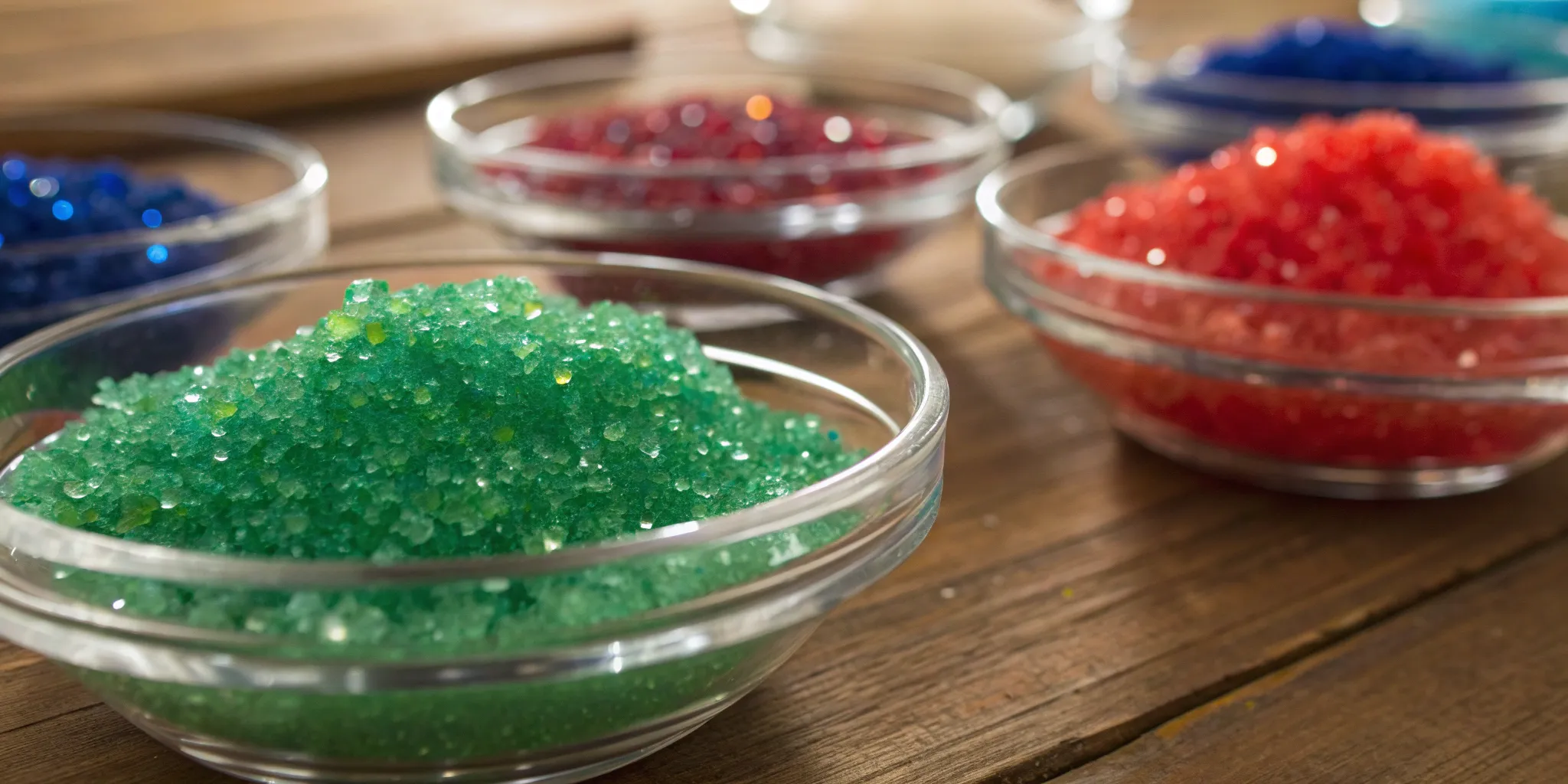
Frit seems simple—it’s just tiny bits of colored glass. But in the kiln, it’s where art meets science. Understanding the “why” behind the rules of fusing is what gives you true control over your creative process. This guide breaks down what COE (Coefficient of Expansion) means for your glass. We’ll cover what COE 96 glass frit is used for, how reactive frits create their unique effects, and why your firing schedule is so critical. This knowledge will help you troubleshoot problems and push your creative boundaries. To start your own hands-on learning, a great first step is to buy coe 96 frit assortment packs and begin testing what you’ve learned.
Key Takeaways
- Compatibility is Non-Negotiable: The golden rule of fusing is to match your COE. Using COE 96 frit with COE 96 glass is essential to prevent stress fractures and ensure your finished piece is strong and stable.
- Choose Frit Size for Your Desired Effect: Treat frit sizes like different tools for texture. Use fine powders for smooth color gradients and detailed “painting,” and select coarser grits to create bold, dimensional surfaces that catch the light.
- Master Your Firing Schedule: Your kiln settings are just as important as your materials. Use a firing schedule specifically designed for COE 96 glass and understand the temperature differences between a textured tack fuse and a smooth full fuse to control your final outcome.
Your Guide to COE 96 Frit: What Is It & Why It Matters
Frit is one of the most exciting materials in a glass artist’s toolkit. These tiny granules of crushed glass can add incredible color, texture, and dimension to your fused glass projects. From delicate, powdered shading to bold, chunky patterns, frit opens up a whole new world of creative expression. But before you start sprinkling it on your next piece, there’s one critical technical detail you need to understand: the COE.
Getting the COE right is the difference between a beautiful, stable piece of art and a cracked, disappointing mess. While it sounds scientific, the concept is straightforward and is the single most important rule in glass fusing. Think of it as the foundation upon which all your creative work is built. A solid understanding of what COE means and why it matters will save you a lot of frustration and help you create stunning, lasting work. Let’s break down what you need to know about COE 96 frit.
Let’s Talk COE: What Does It Mean?
COE, or Coefficient of Expansion, is simply a measurement of how much glass expands when it gets hot and shrinks as it cools down inside your kiln. Think of it like a personality trait for glass—each type has its own unique way of reacting to heat. This rate is assigned a number, like 90 or 96, which tells you exactly how it will behave.
All the glass you plan to fuse together in a single project, including your base sheet glass and any frit you add, must have the same COE. If the numbers don’t match, the different glass types won’t be compatible. They will expand and contract at different rates, creating a recipe for disaster.
Other Meanings of the Abbreviation COE
Now that we’ve covered the most important meaning of COE for our work with glass, you might be surprised to learn how often this little acronym appears in completely different fields. It’s one of those abbreviations that has been adopted and adapted for all sorts of purposes, from corporate boardrooms to university admissions offices. Understanding these other meanings won’t change how you fuse glass, but it’s a fun bit of trivia that shows just how versatile three little letters can be. It’s a great reminder that the specialized terms we use in our creative practices often have a life of their own out in the wider world.
From business and technology to education and even real estate, the term COE pops up in some unexpected places. You might hear it used to describe a high-level team in a large company, a critical document for an international student, or the final step in buying a house. We’re going to walk through some of the most common alternative meanings. Think of it as a quick tour of the many hats the acronym COE wears when it’s not in a glass artist’s studio. You’ll be prepared the next time you hear it used in a totally new context.
Center of Excellence (CoE) in Business and Technology
In the corporate and tech worlds, a CoE, or Center of Excellence, is a specialized team created to provide leadership and expertise in a specific area. Think of it as a company’s internal brain trust. This group of experts is dedicated to a single topic, like data analytics or cybersecurity, and their job is to establish best practices, research new trends, and share their knowledge across the entire organization. Much like a master artist in a guild might develop new techniques and teach them to apprentices, a CoE helps a company centralize its skills and resources, ensuring that everyone is working from the same playbook and pushing in the same direction on key initiatives. It’s all about creating a single source of truth and driving progress from a central point of expertise.
Key Goals and Benefits of a CoE
Companies often form a Center of Excellence to stay competitive and handle rapid change. These teams are designed to be hubs of innovation, helping the business come up with new ideas and solutions. A CoE also focuses on developing new skills within the workforce and creating a framework where the company can learn quickly from its experiences, including its mistakes. By centralizing expertise, a CoE ensures that valuable knowledge is shared effectively rather than being stuck in one department.
Common Challenges
While a CoE offers many advantages, setting one up isn’t always easy. One of the biggest hurdles is getting full support from top leadership, as these centers require significant investment and authority to be effective. It can also be difficult for the team to get different departments to agree on a single set of standards. According to TechTarget, another common issue is a failure to track success properly, which makes it hard to prove the CoE’s value over time.
COE in Education and Student Affairs
The acronym COE is also a common sight in the world of education, where it stands for several different things depending on the context. For an international student, it represents a crucial piece of paperwork needed to study abroad, acting as a golden ticket for their visa application. In the realm of career training, it’s the name of an important accrediting body that gives schools a stamp of approval. It also refers to a nonprofit organization dedicated to making higher education accessible to everyone, regardless of their background. Each of these uses highlights the term’s role in formalizing and supporting educational journeys, from verifying a student’s place in a program to ensuring the quality of an entire institution.
Confirmation of Enrolment
For anyone planning to study in another country, like Australia, a Confirmation of Enrolment (CoE) is an essential document. An educational institution issues this official paper to confirm a student’s enrollment in a specific course. The CoE contains key details like the course name, duration, and tuition fees. It’s a required part of the student visa application process, proving to the government that the applicant has been accepted into a legitimate program of study.
Council on Occupational Education
The Council on Occupational Education (COE) is a national accrediting agency recognized by the U.S. Department of Education. This Council is responsible for giving its official seal of approval, known as accreditation, to post-secondary schools that offer career and technical education. This includes non-degree-granting institutions and those that offer applied associate degrees. Accreditation from the COE signifies that a school meets certain standards of quality and integrity in its programs.
Council for Opportunity in Education
Founded in 1981, the Council for Opportunity in Education (COE) is a nonprofit organization with a powerful mission. It works to expand college access for low-income, first-generation students, and students with disabilities. Through advocacy, professional development, and support for college access and success programs, the Council for Opportunity in Education aims to ensure that every student has a fair chance to prepare for, attend, and graduate from college.
COE in Government and Defense
In government and military circles, COE is used to signify official status, organizational bodies, and specialized training centers. Here, the acronym often carries a sense of authority and formal recognition. For a veteran, it might be the key document needed to secure a well-deserved home loan. On the international stage, it represents a major organization dedicated to upholding human rights across an entire continent. Within powerful defense organizations like NATO and the U.S. Army, it refers to facilities that are laser-focused on developing expert skills and strategies. In each case, COE points to a structure or certification that is foundational to a larger system, whether it’s a benefit program, an international treaty, or a military doctrine.
Certificate of Eligibility
A Certificate of Eligibility (COE) is a document that confirms a veteran, service member, or surviving spouse meets the requirements for a VA-backed home loan. It’s the first step in the VA loan process, as it proves to the lender that the applicant has satisfied the necessary military service requirements. In a different context, a Certificate of Eligibility can also be a required document for obtaining certain types of student visas, verifying that an applicant is qualified for a specific program.
Council of Europe
Not to be confused with the European Union, the Council of Europe is an international organization focused on upholding human rights, democracy, and the rule of law. Founded in 1949, it includes 46 member states and works to promote awareness and encourage the development of Europe’s shared cultural identity. The European Convention on Human Rights, which established the European Court of Human Rights, is one of its most significant achievements.
Military Centers of Excellence
The “Center of Excellence” model is also widely used in military and defense organizations. Both NATO and the U.S. Army operate numerous COEs, each dedicated to a specific area of expertise, such as cyber defense, military engineering, or aviation. These military Centers of Excellence serve as primary hubs for training, education, and the development of new doctrines and technologies to support soldiers and military operations.
More Definitions of COE
Just when you think you’ve heard them all, a few more unique meanings for COE pop up. These final definitions are highly specific to their fields and show just how adaptable an acronym can be. In the high-stakes world of real estate, it marks the finish line of a property transaction—the moment a house officially becomes a home. Then, in a complete shift of tone, it appears in casual conversation in Brazil as a quick and friendly way to get someone’s attention. These examples round out our tour of the many identities of COE, taking us from legally binding formal processes to the most informal, everyday slang. It’s a great illustration of how language evolves in different communities.
Close of Escrow in Real Estate
In real estate transactions, COE stands for the close of escrow. This is the final step in the process of buying a home, where all conditions of the sale have been met, all documents have been signed, and the funds have been transferred. Once escrow is closed, the deed is recorded, and the ownership of the property is officially transferred from the seller to the buyer. It’s the moment everyone involved in the transaction has been working toward.
“Coé” in Portuguese
If you’re in Brazil and hear someone say “Coé,” they’re not talking about glass or business. Coé is a very informal slang term used as a greeting, similar to saying “What’s up?” or “Yo!” in English. It’s a contraction of the phrase “Qual é?” which literally translates to “What is it?” This casual, friendly expression is a perfect example of how language evolves to create quick and easy ways for people to connect with each other.
Why COE Compatibility Is Your Secret to Crack-Free Glass
Here’s the golden rule of glass fusing: never mix glass with different COE values in one project. When you fuse incompatible glasses, they fight against each other as they cool. The glass with a higher COE will shrink more than the glass with a lower COE, creating immense internal stress. This tension has to go somewhere, and it usually results in cracks, fractures, or even a complete break.
This is why it’s so important to match your materials. If you are creating a piece with COE 96 glass, you must use COE 96 frit. Even a small amount of incompatible frit can introduce enough stress to ruin your entire project. Sticking to one COE family ensures all your glass elements expand and contract in harmony, resulting in a strong, stable, and beautifully fused piece.
Which COE 96 Frit Size Do You Need?
Choosing the right frit size is just as important as picking the right color. The texture of your frit—from dusty powder to chunky bits—directly impacts the final look of your piece. Each size has its own personality and purpose, and learning how to use them will open up a whole new world of design possibilities. Think of it like having different types of paintbrushes; you wouldn’t use a wide brush for tiny details. The same principle applies here. Let’s walk through the different sizes of COE 96 frit so you can pick the perfect one for your next project.
Using Powder Frit for Delicate Details
Powder frit is the finest grain you can get, with a consistency similar to flour or dust. This super-fine texture is perfect for creating smooth gradients, shading, and delicate, watercolor-like effects. Because the particles are so small, they melt together seamlessly, leaving a polished surface with no bumps. Use powder frit when you want to “paint” on glass, sift it through stencils for crisp patterns, or add subtle color transitions. It’s your go-to for any design that requires precision and a flawless finish. Just be mindful when working with it—a little goes a long way, and a mask is a good idea to avoid inhaling the fine dust.
Achieving Smooth Surfaces with Fine Frit
A step up from powder, fine frit has a texture like granulated sugar. It’s still small enough to create a relatively smooth surface when fired, but it offers a bit more texture and sparkle than powder. This size is incredibly versatile. You can use it to fill small areas with solid color, create gentle textural effects, or layer it for interesting blends. Fine frit is a fantastic middle-ground option that gives you a bit of dimension without being overly coarse. It’s a staple in my studio because it works well for so many different applications, from jewelry to decorative plates.
Medium Frit: Your Go-To for Versatile Designs
Medium frit consists of small, irregular chunks of glass, similar in size to coarse sea salt. This is where you start to see more distinct texture and dimension in your finished work. When fired, the individual grains remain somewhat visible, creating a beautiful, speckled appearance that adds depth. Medium frit is great for creating backgrounds, filling larger design areas, or adding a pop of textural contrast against smoother elements. You can also use it in casting molds to create interesting patterns. It’s a workhorse frit that balances detail and texture perfectly.
Creating Texture and Depth with Coarse Frit
Coarse frit is the largest size, made up of chunky glass pieces that look like small pebbles or crushed rock candy. If you want to make a bold statement with texture, this is the frit for you. It’s ideal for creating heavy, dimensional effects that catch the light beautifully. Use coarse frit in abstract pieces, to mimic the look of geodes or mosaics, or as a thick border on a platter. Because the pieces are so large, they don’t melt down completely flat, leaving a wonderfully tactile, jewel-like surface. It’s also fantastic for “frit casting” in a kiln to create solid glass objects.
How to Pick the Perfect COE 96 Frit Colors
Walking into a glass supply store—or browsing online—can feel like being a kid in a candy shop. The sheer number of colors is both exciting and a little overwhelming. How do you pick the right ones for your project? The colors you choose will define the mood and style of your finished piece, so it’s worth putting some thought into your palette.
Think about the effect you want to achieve. Are you creating a vibrant, abstract piece or a subtle, layered design? Your answer will guide you toward certain colors and types of frit. We’ll break down the basics, from essential starter colors to specialty reactive frits that add a touch of magic. We’ll also cover the key difference between transparent and opaque options so you can layer with confidence. Building a versatile frit collection happens one jar at a time, and starting with a clear plan will help you invest in the colors you’ll use again and again.
Starter Palette: Essential Colors for Your First Projects
When you’re just starting, it’s smart to build a foundational palette. Think of it as your core set of art supplies. You’ll want a good mix of primary colors (red, yellow, blue), along with black, white, and clear. With these basics, you can mix and layer to create a surprisingly wide range of hues and shades. Many artists begin with Oceanside frits, which are made from crushed and cleaned COE 96 glass, ensuring perfect compatibility and consistent results for your projects. Having these essential colors on hand means you’re always ready when inspiration strikes, without having to make a special trip for a single color.
Ready for More? Exploring Specialty & Reactive Colors
Once you have your basics covered, you can start playing with specialty frits. This is where things get really interesting. Some frits are designed to react with other glass during the firing process, creating unique colors, outlines, and textures you can’t achieve otherwise. For example, colors like “Red Reactive Transparent” and “Vanilla Cream Reactive Opal” can produce stunning, often unpredictable effects when fused with glass containing copper. These reactive frits add an element of surprise and can give your work incredible depth and character, making each piece truly one-of-a-kind. Experimenting with these is a fantastic way to develop your signature artistic style.
Transparent vs. Opaque: What’s the Difference?
Understanding the difference between transparent and opaque frit is key to controlling the final look of your piece. Transparent frits are see-through, like colored cellophane, and allow light to pass through. They are perfect for creating a sense of depth, layering colors, or adding a subtle tint to your base glass. Opaque frits, often called “opal,” are solid and not see-through. They provide bold, vibrant color coverage and are great for creating strong patterns and defined shapes. You can use them together to create amazing effects—try sifting a light layer of transparent frit over an opaque base to add a beautiful, glassy sheen.
Our Favorite Brands for COE 96 Frit
When you’re investing time and materials into a project, the last thing you want is an unpredictable result. Choosing frit from a reputable brand ensures you’re working with high-quality, tested-compatible glass. This means more consistent particle sizes, reliable colors, and successful firings. Here are some of the top brands you can count on for your COE 96 glass projects.
ArtGlassSupplies.com: Our Top Pick for Quality
We take glass compatibility seriously because we know how crucial it is for your art. As we always say, the most important rule in glass fusing is to never mix glass with different COE values in a single project. That’s why we stand behind our curated selection of COE 96 frit. We source and provide frits that meet high standards for quality and consistency, ensuring every jar you purchase will perform reliably in your kiln. By offering a trusted range of products, we aim to take the guesswork out of your process so you can focus on your creativity.
Oceanside Glass & Tile: The Industry Standard
Oceanside Glass & Tile has built a strong reputation among glass artists, and for good reason. Their frit is manufactured from crushed, screened, and cleaned System 96 sheet glass, ensuring it’s tested and compatible. This meticulous process means you get a product that is clean, consistent, and reliable every time. For artists who need predictable results for intricate patterns or layered designs, Oceanside is a go-to choice. Their commitment to the System 96 standard makes their frit a dependable foundation for any fusing project, allowing you to build your designs with confidence.
Wissmach Glass: For an Incredible Color Spectrum
If you’re looking to build a vibrant and diverse color palette, Wissmach Glass is an excellent brand to explore. Known for its rich and extensive range of colors, Wissmach provides artists with endless creative possibilities. Whether you need a specific shade for a detailed pictorial piece or want to experiment with bold color combinations, you’ll likely find what you’re looking for in their collection. Their frit is a popular choice in the glass fusing community, often found alongside other top-tier brands, making it a trusted option for artists who prioritize color in their work.
Uroboros: When You Need Something Unique
Uroboros has a long-standing history of producing high-quality art glass, and their frit reflects that legacy. Made from crushed and cleaned Uroboros and Spectrum System 96 glass, their products offer excellent quality and compatibility. Artists often turn to Uroboros for its unique color blends and reliable performance, which are perfect for creating one-of-a-kind compositions. If your work involves creating special effects or requires a frit that can add distinctive character, exploring the Uroboros line is a great step. Their dedication to the System 96 standard ensures you can use their products seamlessly with other compatible glass.
Your COE 96 Frit Buying Checklist
Once you understand the basics of frit sizes and colors, you can start building your collection. But not all frit is created equal. Knowing what to look for will help you invest in high-quality materials that give you beautiful, reliable results every time you open the kiln. From ensuring COE compatibility to choosing the right packaging for your studio, a little bit of know-how goes a long way. Let’s walk through the key factors to consider so you can shop with confidence and get the best frit for your projects.
Always Check for Quality and Compatibility
This is the most important rule in glass fusing: your frit’s COE must match your base glass’s COE. If you’re working with COE 96 glass, you absolutely must use COE 96 frit. Mixing different COE ratings creates tension in the glass as it cools, which can lead to stress fractures or cause your piece to break entirely—sometimes days or weeks after firing. Reputable manufacturers test their products to ensure they are compatible and will fuse without issues. Always buy from trusted suppliers who clearly label their frit with the correct COE to protect the integrity of your artwork.
Why Consistent Particle Size Matters
Frit is sorted into different grain sizes, from powder to coarse. When you buy a jar of medium frit, you expect to get medium-sized particles, not a random mix of dust and chunks. High-quality frit has consistent particle sizes within each grade. This consistency is key to achieving your desired effect, whether you’re creating a smooth, even layer with fine frit or a chunky, textured surface with coarse frit. Inconsistent sizing can lead to unpredictable melting and a less professional finish. When your materials are reliable, you have more control over the final look of your piece.
Review the Color Range and Ask for Samples
One of the best parts of working with frit is the incredible spectrum of colors available. You can find everything from vibrant primary colors to subtle pastels, as well as opaque and transparent options. When you’re starting out, it’s a good idea to build a palette of essential colors you’ll use often. As you grow, you can explore specialty reactive frits that create unique effects when fired. If you’re unsure about a color, see if smaller sample sizes are available. This lets you test how a color looks after firing before committing to a larger, more expensive container.
Don’t Forget Packaging and Storage
Frit is typically sold in plastic jars or larger jugs. For colors you use frequently, buying a 4-pound jug can be much more economical than purchasing multiple 8.5-ounce jars. However, for specialty colors or ones you use sparingly, the smaller jars are a perfect choice. Consider your studio space and how you’ll store your materials. Good packaging should be sturdy and easy to seal tightly to keep moisture out. I recommend labeling your containers clearly with the COE, size, and color to keep your supplies organized and prevent any costly mix-ups.
Where to Buy COE 96 Frit and What to Expect to Pay
Once you know what frit sizes and colors you need, the next step is finding the right place to buy them. Shopping for art supplies should be fun, not stressful, so let’s talk about how to find high-quality COE 96 frit without breaking the bank. You can find frit at local glass shops or through a variety of online retailers, each with its own pricing and selection.
Online stores often have a wider variety and more competitive pricing simply because they can manage a larger inventory. When you’re browsing, it’s smart to look beyond just the sticker price. Consider the quality of the product, the reliability of the supplier, and other factors like shipping costs and bulk discounts. A little bit of research can help you stock your studio with beautiful, compatible frit that will make your projects shine. Planning your purchases can save you a lot of money in the long run, especially if you find yourself using certain colors or sizes frequently.
How to Compare Prices from Online Shops
When you start shopping for COE 96 frit, you’ll notice prices are fairly consistent for standard sizes. Generally, you can expect an 8.5-ounce jar of frit to cost between $11 and $12. This size is perfect for trying out a new color or for smaller projects where you don’t need a large quantity. For artists who use a lot of frit, buying in bulk is much more economical. For example, a 4-pound jug often costs between $58 and $63. Doing the math, that’s about seven and a half times the amount of frit for roughly five times the price, which is a fantastic value.
Should You Buy a Starter Set or a Premium Assortment?
If you’re just starting out or want to experiment with a new color palette, frit assortments are a great option. Starter sets bundle several essential colors together, giving you a versatile collection without needing to buy each jar individually. These are perfect for getting a feel for how different colors interact. Premium assortments offer a more curated selection, sometimes based on a specific theme or color family. Reputable suppliers make their frit from crushed sheets of compatible art glass, which is then screened and tested to ensure it will fire perfectly with your other COE 96 glass. This quality control is key to avoiding issues in the kiln.
How to Save with Shipping and Bulk Buys
Don’t forget to factor shipping costs into your budget. Many online suppliers offer deals like flat-rate shipping on orders over a certain amount, which can lead to significant savings. This is another reason why buying in bulk is a smart move. By planning your projects and ordering larger quantities of your most-used frits at once, you can easily meet the minimum for a shipping discount. It also ensures you have plenty of materials on hand for when creativity strikes. Stocking up on your favorite colors means less time waiting for deliveries and more time creating in your studio.
How to Use COE 96 Frit in Your Glass Art
Once you’ve chosen your frit, the real fun begins. Frit is an incredibly versatile material that lets you add intricate details, vibrant color washes, and unique textures to your work. Think of it as painting with glass. Here are a few fundamental techniques to get you started on using COE 96 frit in your next project.
Simple Techniques for Stunning Effects
One of the best things about working with COE 96 frit is its reliability. It’s made from crushed and cleaned COE 96 glass, so you can be confident it will fuse beautifully with your base glass without causing stress fractures. For an extra layer of creativity, try experimenting with reactive colors. Some frits, like “Red Reactive Transparent” or “Vanilla Cream Reactive Opal,” are specially designed to interact with other glass colors during firing. This chemical reaction can produce stunning new shades, halos, and patterns where the colors meet, giving your piece a one-of-a-kind look that’s full of surprises.
How to Layer Different Frit Sizes
When you’re layering frit between sheets of glass or on top of your base, the golden rule is to maintain COE compatibility. If your project is built with COE 96 glass, you must use COE 96 frit to prevent your piece from cracking under stress. Beyond that, you can play with different particle sizes to achieve various effects. Powder and fine frits are perfect for creating soft, smooth color gradients or delicate, shaded details. Medium frit is a great all-rounder for general coverage and design work, while coarse frit adds bold, chunky texture and depth that can really make a piece stand out.
Nailing Your Firing Schedules and Temperatures
Your firing schedule is what brings your entire piece together, and getting the temperature right is key to achieving your desired finish. For COE 96 glass, a tack fuse, which preserves much of the frit’s texture, typically happens between 1350–1370°F. If you want a smoother, more integrated look, you’ll need a contour fuse, which requires a higher temperature of around 1400–1450°F. Every kiln can have its own quirks, so it’s always a good idea to keep a firing log to track what works best for your specific setup. Following these temperature guidelines will help you get consistent, beautiful results every time.
Common Mistakes to Avoid with COE 96 Frit
Working with frit is incredibly rewarding, but a few common slip-ups can turn a promising project into a pile of cracked glass. Trust me, we’ve all been there! The good news is that these mistakes are easy to avoid once you know what to look for. Paying attention to a few key details—like compatibility, quality, and your kiln schedule—will save you a lot of frustration and help you get the beautiful results you’re aiming for. Let’s walk through the three biggest pitfalls so you can steer clear of them in your studio.
Mistake #1: Mixing Different COE Types
This is the golden rule of glass fusing: always, always match your COE. The Coefficient of Expansion (COE) tells you how much glass will expand and contract when heated and cooled. If you mix glass with different COEs, they’ll fight against each other inside the kiln, leading to stress and cracking. As the experts at Delphi Glass note, “If you want to use frit between layers of 96 COE glass you must use 96 COE frit or stress fractures can occur.” So, when you’re working with COE 96 glass, stick exclusively with COE 96 frit. Keep your glass types separate in your studio to prevent any accidental mixing.
Mistake #2: Ignoring Quality and Sourcing
Not all frit is created equal. The quality of your frit directly impacts the final look and structural integrity of your piece. Low-quality or poorly tested frit can contain impurities or have an inconsistent COE, even if it’s labeled correctly. That’s why it’s so important to buy from reputable manufacturers who test their products. For example, Oceanside makes their frits from “crushed, screened and cleaned 96 COE tested compatible sheet glass.” This process ensures you’re getting a pure, reliable product that will behave as expected in the kiln. Investing in high-quality COE 96 frit from a trusted supplier is one of the best ways to guarantee success.
Mistake #3: Getting the Firing Schedule Wrong
Your firing schedule is the recipe that brings your glass art to life, and using the wrong one can ruin your project. Different types of glass require different temperatures and timing. A schedule that works perfectly for COE 90 glass will not work for COE 96. As a helpful guide from Glass Campus points out, “All these firing schedules are for COE 96 glass. For COE 90, add 20 degrees F (7C) to all top temperatures.” Always double-check that your firing schedule is specifically designed for COE 96. It’s a good practice to keep a log of the schedules that work best for your specific kiln and the types of projects you create.
Related Articles
- Wissmach Glass Black Opalescent Frit COE96 – COE96 Opalescent Frit
- Get 3mm Thick Terra Cotta Opalescent Oceanside COE96 Glass – COE96 Opalesc
- Get Grenadine Transparent Youghiogheny COE96 Glass From ArtGlassSupplies.c
- Order 3mm Thick Champagne Opalescent Oceanside COE96 Glass – COE96 Opalesc
Frequently Asked Questions
What will happen if I accidentally use a little bit of COE 90 frit on my COE 96 project? Even a tiny amount of incompatible frit can ruin your entire piece. Because the two types of glass shrink at different rates as they cool, an incredible amount of stress builds up internally. This tension will almost certainly cause your project to crack. The frustrating part is that this break might not happen in the kiln; it could happen hours, days, or even weeks later, long after you thought your project was a success. It’s always best to keep your COE 90 and COE 96 supplies completely separate to avoid this costly mistake.
Can I mix different sizes of COE 96 frit, like powder and coarse, in the same piece? Yes, absolutely! Mixing different frit sizes is a fantastic way to create unique textures and depth in your work. Think of it as combining different brush strokes in a painting. You could lay down a smooth, even layer of color with powder frit and then add a few chunky, jewel-like accents with coarse frit on top. As long as all the frit you use is COE 96, you can layer and combine the different sizes however you like to achieve your desired artistic effect.
I’m just starting out. What are the absolute must-have frit colors and sizes for a beginner’s toolkit? When you’re building your first collection, focus on versatility. I recommend starting with a medium or fine frit, as these sizes are incredibly useful for a wide range of designs. For colors, you can’t go wrong with a basic palette: a good red, yellow, and blue, plus black and white. With just these five colors, you can layer and blend to create many other shades. This core set will give you a solid foundation to experiment with before you start investing in more specialized colors and textures.
What’s the difference between a ‘tack fuse’ and a ‘contour fuse’ when using frit? The main difference is the final texture of your piece. A tack fuse uses lower temperatures, so the frit particles soften and stick to the base glass but don’t melt completely flat. This leaves you with a raised, sandy, or pebbly texture that you can feel. A contour fuse uses higher temperatures, causing the frit to melt more fully into the surface of the glass. This results in a much smoother, more rounded finish where the edges of the frit are soft and integrated with the base.
My piece cracked, but I’m sure I used all COE 96 materials. What else could have gone wrong? This is incredibly frustrating, but it happens. If you’re certain all your glass and frit were COE 96, the next thing to check is your firing schedule, specifically the annealing phase. Annealing is the process of cooling the glass slowly to relieve internal stress. If your glass cools too quickly, stress can build up and cause it to crack, even if all the materials are compatible. Double-check that your firing schedule allows for a proper, slow annealing cycle for the size and thickness of your project.