
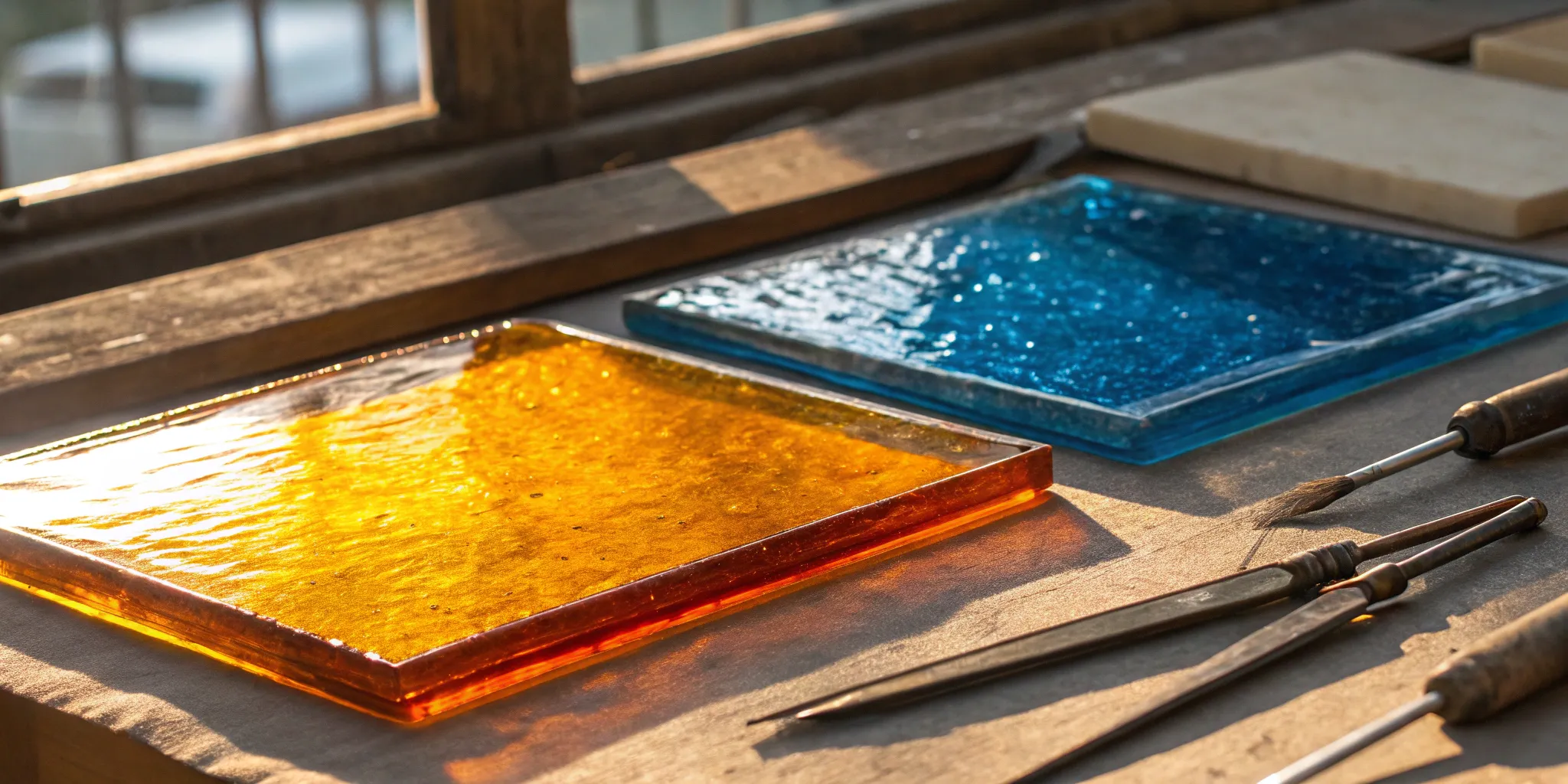
Building your glass studio is thrilling, but your first big decision can feel daunting: which COE system will you choose? Think of it like picking a camera brand; once you commit, you’re building a whole collection of compatible gear. The coe 90 vs 96 debate is central to this. Your choice dictates every future purchase, from sheet glass to frit. It impacts your budget, color options, and creative flow. Understanding the coe glass meaning is key to building a compatible, cost-effective library of materials, whether you choose 96 coe glass or its counterpart.
Key Takeaways
- Never Mix COEs in a Fusing Project: To prevent cracks, every piece of glass going into your kiln—from the base sheet to the smallest stringer—must have the same COE. This ensures everything expands and contracts together harmoniously.
- Choose COE 90 for Color or COE 96 for Cost-Effectiveness: COE 90 offers an unparalleled color selection but typically costs more. COE 96 is a more budget-friendly option that’s perfect for beginners, students, or large-scale work, without sacrificing quality.
- Forget About COE for Traditional Stained Glass: The “same COE” rule only applies when you’re melting glass together. For stained glass projects using foil or lead came, you have complete freedom to mix glass of any COE you wish.
What Does COE Mean in Glass Art?
If you’ve spent any time around glass fusing, you’ve definitely heard the term “COE.” It sounds technical, but it’s one of the most important concepts to understand before you fire up your kiln. Getting a handle on COE is your first step toward creating beautiful, strong, and crack-free fused glass art. Think of it as the golden rule of compatibility for your glass.
Simply put, COE determines which types of glass you can safely melt together. Sticking to a single COE for a project prevents the heartbreak of opening your kiln to find a fractured masterpiece. In the next few sections, we’ll break down exactly what COE means, why it’s so critical for your work, and clear up a few common myths you might have heard.
The Science Bit: Coefficient of Expansion Explained
COE stands for Coefficient of Expansion, which is a fancy way of saying how much glass expands when it gets hot and shrinks when it cools. Every type of glass has a specific COE rating. For example, you’ll often see glass labeled as COE 90 or COE 96.
What do those numbers mean? They represent how much the glass moves, measured as a tiny fraction per degree of temperature change. A higher number, like 96, means the glass expands and contracts slightly more than a glass with a lower number, like 90. While the difference seems minuscule, it has a massive impact when you’re heating glass to molten temperatures inside a kiln.
How COE is Measured
So, how do scientists actually measure this tiny movement? The technical unit is “parts per million per degree Celsius.” That sounds complex, but the concept is simple. It means that for every one degree Celsius the temperature rises, the glass expands by a certain number of millionths of its size. For COE 90 glass, that number is 90. For COE 96 glass, it’s 96. This means COE 96 glass moves just a tiny bit more than COE 90 glass when it gets hot. While this difference is completely invisible to the naked eye, it’s more than enough to create stress inside a kiln, which is why mixing COEs is a recipe for cracked glass.
The #1 Rule: Why You Can’t Mix Glass COEs
When you’re fusing, you’re melting different pieces of glass together into a single, solid piece. If you try to fuse glass with different COEs, you’re setting your project up for failure. As the mixed-COE piece cools in the kiln, the different types of glass shrink at different rates. One part will be pulling and squeezing on the other, creating immense internal stress.
This stress is a ticking time bomb. Your piece might crack right away in the kiln, or it could break days, weeks, or even months later, seemingly for no reason. To avoid this, always use glass with the same COE for any fusing, slumping, or kiln-forming project. All your sheet glass, frit, stringers, and powders must be compatible.
Glass COE Myths You Need to Stop Believing
One of the biggest points of confusion is whether COE matters for traditional stained glass. The answer is no! If you are building a panel using copper foil or lead came, you can mix and match COEs freely. This is because the glass pieces aren’t being melted together. Instead, they are simply sitting next to each other within a flexible metal framework.
Each piece of stained glass can expand and contract on its own without putting stress on its neighbors. So, if you find a gorgeous piece of COE 96 glass you want to use alongside your favorite COE 90 sheet in a stained glass window, go for it. The “same COE” rule only applies when you’re heating glass in a kiln to fuse it.
COE 90 vs. COE 96: What’s the Real Difference?
At first glance, the numbers 90 and 96 seem pretty close. In the world of glass fusing, however, that small difference is everything. Think of it as the golden rule of your craft: you must know your COE and stick with it for a given project. Understanding the distinct characteristics of COE 90 glass and COE 96 glass will save you from cracked projects and wasted materials. Let’s break down what sets these two popular glass types apart so you can choose the right one with confidence.
How Each Glass Type Reacts to Heat
The main difference between COE 90 and COE 96 glass is how they react to heat. Both types expand when heated and shrink as they cool, but at slightly different rates. Imagine walking with a friend who takes much larger steps—eventually, you’ll fall out of sync. It’s the same with glass. If you fuse two different COEs, their mismatched expansion and contraction rates create immense internal stress as the piece cools. This stress almost always results in cracks or a complete break, which is why you can’t mix them in a single fusing project.
Do They Need Different Firing Schedules?
Because they expand differently, COE 90 and COE 96 also have different working properties in the kiln. Generally, COE 96 is a “softer” or lower-temperature glass. This means it reaches a given softness, or viscosity, at a lower temperature than COE 90 glass does. For you, this could mean slightly shorter firing schedules or using less energy. This doesn’t make one better than the other; it’s simply a different characteristic to consider when programming your kiln and planning your work. Your choice will depend on your specific goals and techniques.
Can You Fire Both COEs in the Same Kiln?
This is a great question, and the answer is yes—with a very important rule attached. You can absolutely fire a COE 90 project and a COE 96 project in the same kiln load, but they must be completely separate pieces. Think of them as neighbors sharing an apartment building; they can coexist in the same space, but they can’t become one. This means your COE 90 dish on its own mold can fire right next to your COE 96 jewelry pendants, as long as not a single grain of frit or shard of glass from one touches the other.
The reason this works is that the internal stress we talked about only happens when incompatible glasses are physically fused together. When the projects are separate, each one can expand and contract at its own rate without interfering with its neighbor. The main challenge is choosing a firing schedule. Since COE 96 glass is softer, you’ll likely need to fire to the schedule required for your COE 90 piece. This might mean your COE 96 project gets a little more heat-work than usual, but it’s a common and effective way to maximize your kiln space.
The Only Compatibility Rule You Need to Know
The most important takeaway is to never mix COEs. Once you choose a side, stick with it for the entire piece. The good news is that both COE 90 and COE 96 offer a massive universe of compatible products, from colorful sheets to dichroic glass and frit. A practical factor that might influence your choice is cost. COE 96 glass is often more affordable, making it a fantastic option for artists just starting out or for large-scale projects. Its forgiving nature and lower price point allow you to experiment freely with new designs and molds without as much financial pressure.
Physical Properties and Handling
Texture and Cutability
Beyond the science, you’ll notice a difference in how these two glass types feel and handle. COE 96 glass is known for being exceptionally smooth, which makes it a dream to cut. If you’re new to glass art or your work involves intricate cuts, you’ll appreciate how easily your cutter glides across its surface, giving you clean, predictable breaks. On the other hand, COE 90 glass often has a subtle “rolled” texture. While this can make it slightly more challenging to cut, many artists embrace this quality. The texture can be used to intentionally trap tiny, elegant bubbles between layers, adding a unique depth and sparkle to your finished pieces.
Standard Sheet Sizes and Sales Units
Practicality and budget are always a factor, and sheet size plays a big role here. Typically, COE 96 glass is manufactured in larger sheets than its COE 90 counterpart. For artists working on large-scale projects like architectural panels or big platters, this can be a significant advantage, leading to fewer seams and less waste. The larger format often translates to a better price per square inch, making it a cost-effective choice for production artists or community studios. While these are the standard formats, you can find both glass types in a wide variety of pre-cut sizes to suit any project, big or small.
Color Palettes and Visual Differences
Comparing Color Vibrancy and Richness
The most exciting difference between the two systems is often the color palette. Your choice here really depends on your artistic style and the mood you want to create. COE 96 is generally known for its bright, crisp, and vibrant colors. If your work calls for bold, saturated hues that pop, you’ll find a fantastic selection in the COE 96 family. In contrast, the COE 90 color palette is often described as richer and deeper, with more subtle and complex tones. Think of it as the difference between a vibrant watercolor set and a nuanced collection of oil paints; both are beautiful, but they achieve different effects.
Brand-Specific Color Strengths
The differences in color are closely tied to the manufacturers. Bullseye Glass is the dominant producer of COE 90 glass and is renowned for its unmatched range of colors, offering an extensive and sophisticated palette with especially strong pinks and purples you can’t find elsewhere. This premium selection often comes with a higher price point. For COE 96, brands like Wissmach and Youghiogheny offer an incredible array of brilliant, reliable colors that are more budget-friendly. This makes COE 96 an excellent system for artists who want a broad, vibrant palette without the premium cost, allowing for more experimentation and large-scale work.
Shopping for COE 90 and COE 96 Glass
Once you commit to a COE for a project, you’re all in. Every piece of glass you add—from the base sheet to the tiniest sprinkle of frit—must belong to the same COE family to ensure a successful, crack-free fuse. Think of it as building a team where every player works together perfectly. Luckily, whether you choose COE 90 or COE 96, you’ll find a fantastic array of products to bring your vision to life. Let’s look at what’s available for each.
Building Your COE 90 Supply Kit
Often considered the industry standard for glass fusing, COE 90 is celebrated for its incredible range of colors and forms. Bullseye Glass is the most recognized name in this category, offering a consistent and reliable product line that artists have trusted for decades. You can find everything from transparent and opaque sheet glass to delicate stringers, powders, and confetti. While COE 90 glass often costs more, making it a more expensive option for newcomers to the craft, many artists find the investment is worth it for the unparalleled quality and artistic possibilities. Its stability and predictability in the kiln make it a favorite for creating detailed, complex designs.
Building Your COE 96 Supply Kit
If you’re looking for a more budget-friendly yet high-quality option, the world of COE 96 is for you. COE 96 sheet glass is often lower in cost than COE 90, making it a cost-effective option for many artists, especially those creating larger pieces or just starting out. Brands like Wissmach and Youghiogheny produce a stunning variety of COE 96 glass, known for vibrant colors and beautiful textures. You’ll have no trouble finding compatible frits, noodles, and dichroic coatings to match. This COE family is incredibly versatile and user-friendly, making it a popular choice for everything from jewelry to large-scale architectural art.
Matching Frit, Stringers, and Dichroic to Your COE
Beyond sheet glass, the real magic happens with the details. Frit, stringers, and dichroic glass add texture, fine lines, and iridescent sparkle to your work. It is absolutely critical that these accessory glasses match the COE of your base glass. Mixing them is a recipe for disaster. It’s also helpful to know that different COE families can behave differently in the kiln. For instance, System 96 is a lower temperature glass, meaning it takes less time and heat for S96 products to reach a given viscosity than it does for common COE 90 products. This is why having a dedicated kiln and understanding its firing schedules for your chosen COE is key to achieving beautiful, lasting results.
Which Brands Make COE 90 and 96 Glass?
Once you’ve decided which COE is right for your project, the next step is choosing your glass. Just like with paint or fabric, different brands offer unique colors, textures, and working properties. Getting to know the major players in the glass world will help you find the perfect materials to bring your vision to life. While many artists end up picking a favorite COE and sticking with it, it’s helpful to understand the landscape so you can make an informed choice from the start.
Bullseye Glass: The Go-To for COE 90
If you’re working with COE 90, you’re almost certainly working with Bullseye Glass. They are the industry standard for this coefficient, known for their rigorous testing, consistency, and an absolutely stunning range of colors. Artists love Bullseye because they can trust that every sheet is compatible, taking the guesswork out of fusing. Whether you need transparents, opaques, or specialty glass like iridized or textured sheets, Bullseye offers a reliable and beautiful option. Their commitment to quality makes their COE 90 glass a top choice for both professional artists and serious hobbyists who demand predictability in the kiln.
For COE 96, Look to Spectrum and CBS
For those who prefer COE 96, Spectrum Glass (now produced by Oceanside Glass & Tile) is the name you’ll hear most often. It’s a fantastic system known for being easy to cut and forgiving in the kiln. Many artists find that COE 96 glass is a bit more budget-friendly, which makes it an excellent choice for beginners or for creating larger pieces without breaking the bank. When you want to add some sparkle, CBS (Coatings by Sandberg) is the leading manufacturer for vibrant dichroic glass that is fully compatible with the System 96 family, giving you endless creative possibilities.
What About Wissmach and Youghiogheny Glass?
While Spectrum is a giant in the COE 96 world, don’t overlook other fantastic manufacturers like Wissmach and Youghiogheny. These brands are beloved in the stained glass community but also produce beautiful fusible glass that is compatible with the System 96 standard. They are known for their rich, mottled colors and unique textures that can add incredible depth and character to your work. Because System 96 glass tends to melt at slightly lower temperatures, it can reach its ideal viscosity with less heat and time in the kiln, which is a factor many artists appreciate when planning their firing schedules.
Quality and Workability Considerations
When you’re deciding between the two systems, one of the most practical factors is the balance between cost and color. Generally, COE 90 glass, particularly from Bullseye, offers an unmatched spectrum of rich, nuanced colors, but it often comes with a higher price tag. This makes it a favorite for artists who prioritize a specific color palette for their work. On the other hand, COE 96 glass is known for being more budget-friendly. This affordability makes it an excellent starting point for beginners, students, or anyone tackling large-scale projects where material costs can add up quickly. It’s important to remember that “budget-friendly” doesn’t mean you’re sacrificing quality; you’ll still find a beautiful and reliable range of colors to work with.
Beyond price, the two glass types behave differently in the kiln, which affects your creative process. COE 96 is often described as a “softer” glass because it reaches its ideal working viscosity at a lower temperature than COE 90. For you, this can translate into slightly shorter firing schedules, which might mean using less energy over time. This characteristic also makes it feel more forgiving to some artists, especially when slumping glass into intricate molds. Neither property is inherently better; it’s a matter of what works for your specific techniques and the results you want to achieve. Understanding these subtle differences will help you better control your outcomes and choose the glass that best suits your artistic style.
Where to Buy COE 90 and COE 96 Glass
Once you know which COE you need for your project, the next step is finding a reliable place to buy your supplies. Whether you prefer the convenience of online shopping or the hands-on experience of a local store, you have plenty of great options for sourcing high-quality glass. Let’s walk through where you can find everything from basic sheets to specialty frits and stringers.
Shopping at ArtGlassSupplies.com
For a truly comprehensive selection, ArtGlassSupplies.com is a fantastic resource for both COE 90 and COE 96 glass. Having everything in one place makes it simple to find exactly what you need, whether you’re just starting out or stocking up your professional studio. If you’re watching your budget, it’s helpful to know that “COE96 glass often costs less, making it a cost-effective option for newcomers to the craft.” This affordability is a huge plus when you’re experimenting with new techniques. From Bullseye sheets to Wissmach frit, you can easily gather all the compatible materials for your next masterpiece without having to shop around.
Finding Glass at Other Online Stores
When you’re looking for specific brands or just want to compare options, exploring other online retailers that specialize in glass art is a great idea. You might find that certain suppliers have unique advantages. For example, if you’re working with System 96 glass, you’ll appreciate its lower temperature requirements. As one source notes, “System 96 is a lower temperature glass — that is, it takes less time / heat for S96 products to reach a given viscosity than it does common COE 90 products.” This small difference can be a game-changer for artists who fire their kilns frequently, as it can lead to savings on both time and energy costs over the long run.
Should You Buy from a Local Shop?
There’s something special about being able to see and touch glass before you buy it, which is why local craft stores and specialty glass shops are invaluable. These stores often carry both COE 90 and COE 96 glass, and they offer the huge benefit of immediate access to materials—no waiting for shipping! Plus, the staff can be an amazing resource for advice. While you might be focused on 90 or 96, they can introduce you to other options. For instance, some instructors find that “those working with soft glass are most likely to tell students they should use 104.” A quick chat with a local expert can open your eyes to new possibilities for your art.
How Much Does COE Glass Cost?
When you’re stocking your studio, budget is always a factor. The price difference between COE 90 and COE 96 can influence your project choices, especially if you’re just starting out or planning a large-scale piece. Let’s break down what you can expect to pay for each type and how you can find the best deals.
What to Expect for COE 90 Prices
Generally speaking, COE 90 glass often costs more, making it a more expensive option for newcomers to the craft. This higher price is often associated with brands like Bullseye, known for rigorous testing, a vast color palette, and consistent quality. For many professional artists, the reliability is worth the investment, as it can lead to fewer failed firings. While the initial cost per sheet is higher, the quality can save you money and frustration in the long run. Think of it as an investment in your art—you’re paying for consistency and a premium selection of colors and styles.
What to Expect for COE 96 Prices
If you’re looking for a more budget-friendly option, you’re in luck. COE 96 sheet glass is often lower in cost than COE 90, making it a cost-effective choice for many artists. This affordability makes it excellent for beginners who want to experiment freely without worrying about expensive mistakes. It’s also practical for teachers, students, and artists creating large pieces where material costs add up quickly. Don’t let the lower price fool you—COE 96 is a high-quality material that produces stunning results. It simply offers a more accessible entry point into glass fusing.
How to Find Sales and Get the Best Deals
Everyone loves a good deal, and with a little planning, you can save on glass supplies. A great first step is to sign up for newsletters from your favorite suppliers for alerts on sales. Buying in larger quantities or in pre-selected packs can also reduce the cost per sheet. It’s worth noting that System 96 is a lower temperature glass, meaning it takes less time and heat to reach its working viscosity. This efficiency can sometimes translate into more frequent promotions. Keep an eye out for clearance items or scrap packs from our stained glass collection, which are perfect for smaller projects like jewelry or adding decorative accents.
Tips for Finding Bullseye (COE 90) Deals
While COE 90 glass is known for its premium quality and higher price point, there are smart ways to manage the cost. Think of it as an investment; as one source notes, “the reliability is worth the investment, as it can lead to fewer failed firings.” Saving a project from the scrap heap is the ultimate money-saver. To make your budget stretch further, look for variety packs or buy in larger quantities to lower the per-sheet cost. Signing up for newsletters from suppliers like us is another great strategy for getting alerts on sales and special promotions. Also, consider using full sheets for your base and smaller, more affordable scrap pieces or frit for decorative elements. This approach lets you enjoy the quality of Bullseye without needing a full sheet for every color in your design.
Tips for Finding Oceanside (COE 96) Deals
Getting a great price on COE 96 glass is often easier since it’s already a budget-friendly choice. Its affordability is a major advantage, making it “excellent for beginners who want to experiment freely without worrying about expensive mistakes.” To maximize your savings, look for starter kits that bundle popular colors together at a discount. Because it’s a lower-temperature glass, you’ll also save on energy costs over time with slightly shorter firing schedules. Keep an eye out for seasonal sales or clearance events, which are perfect opportunities to stock up on basics. Buying scrap packs is another fantastic way to get a wide variety of colors for small projects like jewelry or mosaic work at a fraction of the cost of full sheets.
How to Choose the Right COE for Your Project
Picking the right glass for your project can feel like a big decision, but it gets much easier when you know what you’re making. The type of glass art you’re creating—whether it’s a fused bowl, a stained glass panel, or a delicate piece of jewelry—is the single most important factor in choosing between COE 90 and COE 96. Each project has different needs, and understanding them will help you select the perfect glass every time. Let’s walk through the most common types of glass projects to see which COE is the best fit for your creative vision.
Which COE is Best for Fused Glass?
If your project is heading into a kiln, COE is your number one consideration. For fusing, slumping, or any kiln-formed glass art, you must use glass with the same COE throughout the entire piece. Many artists who are just starting out prefer COE 96 glass because it tends to be more affordable and melts at a slightly lower temperature. This can make the firing process a little quicker and more forgiving. On the other hand, COE 90 glass offers an incredible palette of colors and is the standard for brands like Bullseye. Ultimately, either COE works beautifully for kiln work, as long as you don’t mix them.
Does COE Matter for Stained Glass?
Here’s some great news for stained glass artists: you don’t need to worry about COE! When you’re creating a traditional stained glass piece using copper foil or lead came, the glass pieces are placed next to each other, not melted together. Since there’s no fusing involved, the glass doesn’t need to be compatible. This gives you total creative freedom to mix and match any stained glass you like, regardless of its COE. You can focus entirely on choosing the perfect colors and textures for your design without ever thinking about expansion rates. It’s one of the wonderful simplicities of this classic art form.
What’s the Best COE for Glass Jewelry?
When it comes to making glass jewelry, paying attention to COE is absolutely critical. Because jewelry is created by fusing small pieces of glass together in a kiln, all the glass in a single piece must have the same COE. Even the tiny difference between COE 90 and COE 96 is enough to create stress as the glass heats and cools, which will cause your beautiful creation to crack or break. To avoid this heartbreak, simply choose one COE for your project and stick with it. Whether you’re working with a sheet glass base, dichroic accents, frit, or stringers, make sure every single component is either COE 90 or COE 96.
Is COE 96 a Good Choice for Mosaics?
Much like stained glass, traditional mosaic art doesn’t involve fusing, so you have the freedom to mix glass of any COE. However, COE 96 glass has become a favorite in the mosaic community for several practical reasons. It is often more affordable than COE 90, which makes it a fantastic choice for beginners, students, or anyone tackling a large-scale project where material costs can add up. This accessibility allows you to experiment with designs and techniques without the financial pressure. Plus, the System 96 family offers a huge range of vibrant colors and is known for being easy to cut, which makes shaping all those tiny tesserae a much more enjoyable process.
Emerging Trends in Glass Art
The world of glass art is always evolving, with artists finding new ways to push creative boundaries. One of the most exciting developments is a growing interest in sustainability, with more artists seeking out eco-friendly and recycled glass options for their work. Technology is also playing a bigger role, as new digital tools are helping artists design intricate patterns and plan complex projects with greater precision than ever before. We’re also seeing a rise in mixed-media pieces, where artists are beautifully combining glass with materials like wood, metal, and ceramics to create stunning, multi-dimensional art that challenges traditional definitions.
Final Checks Before You Buy Your Glass
Choosing between COE 90 and COE 96 glass is a big decision that shapes your entire project, from the initial design to the final firing. Before you fill your cart, let’s walk through a few key considerations. Thinking about compatibility, your experience level, and your project goals will help you buy with confidence and set you up for a successful, stress-free creative session. These simple steps will save you from potential headaches and ensure you get the results you’re looking for.
Don’t Skip This Step: Test for Compatibility
This is the number one rule in glass fusing: always test your glass. Even if two pieces are labeled with the same COE, slight variations can exist between brands or even different batches from the same manufacturer. If you melt two pieces of glass with different COEs, they will expand and shrink at different rates. This causes stress, which can make the glass crack or even shatter when it cools. To avoid a heartbreaking discovery in your kiln, fuse a small test piece first. Fusing a scrap of your new COE 90 glass with a piece you trust can save your entire project from disaster.
The Risk of Mixing COE 96 Brands
When you’re working with COE 96 glass, it’s tempting to mix and match the beautiful options from different manufacturers. While they are all labeled ’96,’ it’s important to know that not all brands are perfectly interchangeable. Slight differences in their chemical makeup and manufacturing can lead to tiny variations in their actual expansion rates. Some artists report successfully combining brands like Oceanside, Wissmach, and Youghiogheny, but others have run into serious problems like cracking, especially when mixing Wissmach with Oceanside glass. This inconsistency is a gamble you might not want to take with a piece you’ve poured your heart into. To avoid the risk of a failed project, the safest approach is to stick with one brand for all the components in your piece. This ensures everything expands and contracts in perfect harmony.
Choosing a COE Based on Your Skill Level
While any artist can use either COE, one might be a better fit depending on your experience. If you’re just starting your glass fusing journey, COE 96 glass is a fantastic choice. It often costs less, making it a cost-effective option for newcomers to the craft. This allows you more freedom to experiment without worrying about the cost of materials. For more experienced artists, the vast and vibrant palette of COE 90, especially from brands like Bullseye, offers an incredible range of creative possibilities with a huge selection of frits, stringers, and powders to match.
First, Plan Your Project and Budget
Your project’s specific needs should guide your choice. Think about the scale, complexity, and your budget. Because COE 96 glass generally melts at a lower temperature, it can reach a given viscosity with less heat. This might mean slightly shorter firing times, which can save you time and energy costs, especially on larger projects that require specific molds. If you’re working on a big piece or producing multiple items to sell, the lower price point of COE 96 can make a significant difference to your bottom line. Always map out your project needs before you buy to ensure you choose the most practical and economical option.
Related Articles
- Pop Art Frit Blend Coarse Grain COE90 – COE90 Frit Blends
- Get 3mm Thick Terra Cotta Opalescent Oceanside COE96 Glass – COE96 Opalesc
- Gold Purple Opalescent Frit Balls COE90 – COE90 Frit Balls
- Order 3mm Thick Champagne Opalescent Oceanside COE96 Glass – COE96 Opalesc
- Precut Dichroic Glass Circles – Candy Apple Red on Black Glass COE90 – COE
Frequently Asked Questions
I’m just starting out with glass fusing. Which COE should I choose? If you’re new to working in a kiln, I often suggest starting with COE 96. It’s typically more affordable, which gives you the freedom to experiment and learn without the pressure of using expensive materials. It’s also known for being very user-friendly and forgiving during the firing process. Once you get comfortable, you can always explore the incredible color palette of COE 90.
What actually happens if I fuse a piece of COE 90 glass with COE 96 glass? Think of it as a slow-motion tug-of-war inside your art. As the piece cools down in the kiln, the two types of glass shrink at different speeds. This mismatch creates immense internal stress as one part pulls against the other. Eventually, that tension has to go somewhere, and it results in a crack. The break might happen right away, or it could happen days or even weeks later, seemingly out of nowhere.
Does COE matter if I’m making a traditional stained glass window? Nope, you’re in the clear! For traditional stained glass made with copper foil or lead came, you can mix and match glass to your heart’s content. Since the individual pieces aren’t being melted together, they can expand and contract independently without putting stress on each other. The “same COE” rule only applies when you’re heating glass in a kiln for fusing or slumping.
Why is COE 90 glass usually more expensive than COE 96? The price difference often comes down to the manufacturing process and the specific ingredients used to create the colors. Brands like Bullseye, the standard for COE 90, are known for rigorous quality control and an exceptionally wide, consistent color range. You’re paying for that reliability and the extensive palette. COE 96 glass is made with different formulations that are often more cost-effective to produce, making it a fantastic high-quality, budget-friendly option.
Can I switch between COE 90 and COE 96 for different projects? Absolutely! You are never locked into one COE for your entire artistic career. Many artists keep both types of glass in their studio. The key is to keep them strictly separate for each individual project. Think of them as two different sets of paint that you don’t mix. You can create a beautiful COE 90 bowl one day and a stunning COE 96 platter the next, as long as you never mix components from the two families in a single piece.