
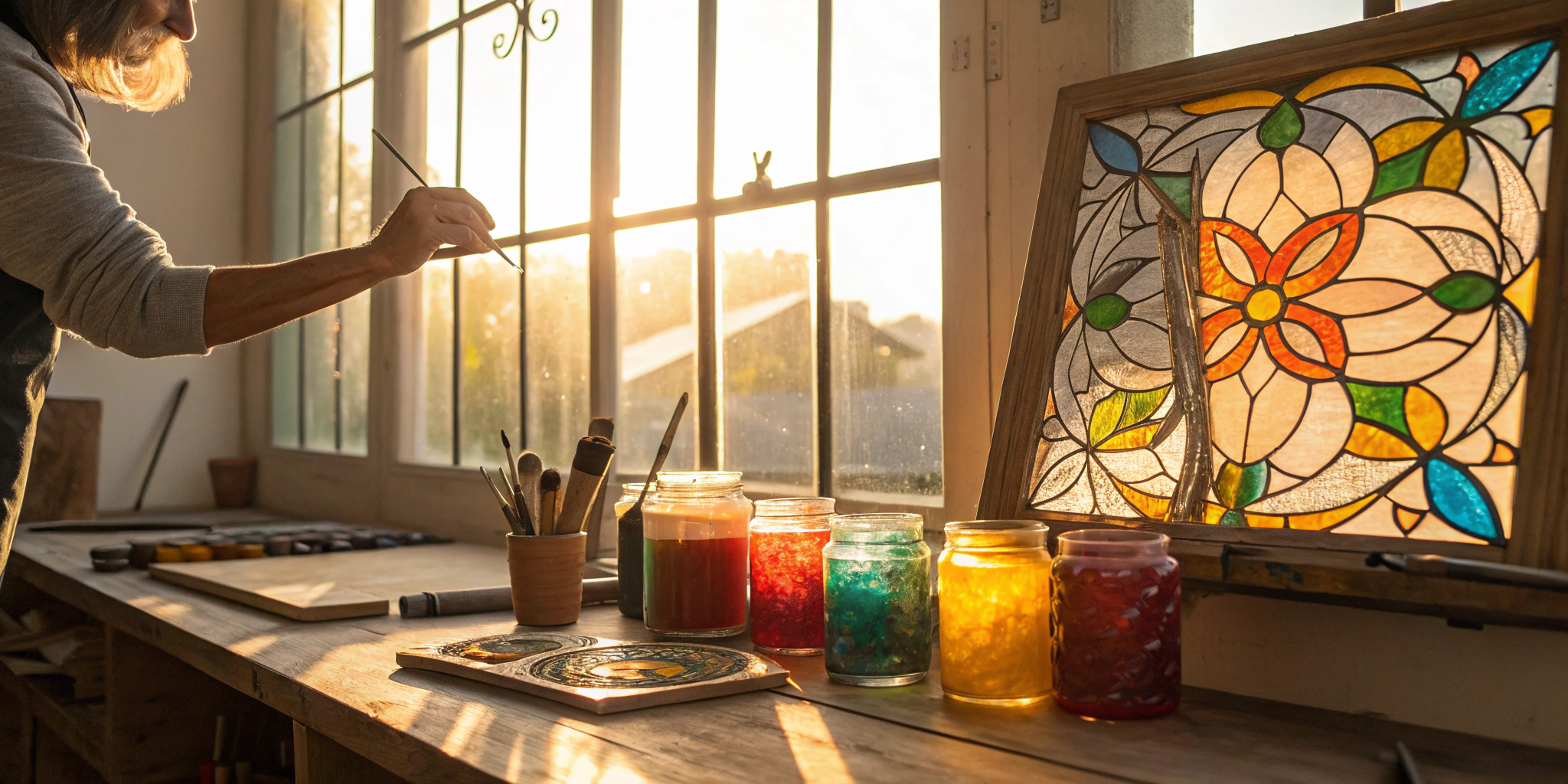
So, you’re ready to start using Reusche glass paint and take your art to the next level. But finding where to buy Reusche glass paint is just the first step. To get those amazing results, you need to know what you’re buying and how to use it. This guide is your complete resource. We’ll show you where to find reliable Reusche glass paints online, like at ArtGlassSupplies.com. We’ll also cover what makes these powdered Reusche paints so special, how to pick the right colors, and what tools you’ll need to fire them perfectly in your kiln.
Key Takeaways
- Master Your Mix for Total Control: Reusche paints come as a powder, so you must combine them with a medium like gum arabic and water. This gives you the freedom to create the perfect consistency for any technique, from thin washes to crisp, opaque lines.
- Match Your COE for Lasting Results: To prevent cracking or peeling, the paint’s Coefficient of Expansion (COE) must be compatible with your glass. Always confirm you’re using the right paint for your COE90 or COE96 glass and use a slow, steady firing schedule.
- Handle Powdered Pigments with Care: Always work in a well-ventilated space and wear gloves and a dust mask when handling Reusche powders. These simple precautions protect you from inhaling particles and keep your studio time safe and enjoyable.
Reusche Glass Paint: What Is It and Why Do Artists Love It?
If you’ve spent any time in the world of glass art, you’ve likely heard the name Reusche. It’s a brand that has earned a stellar reputation among artists for its line of traditional glass paints and enamels. These aren’t your average craft store paints; Reusche offers finely ground pigments that are specifically designed to be fired onto glass, creating a permanent, vibrant design that becomes part of the glass itself. For generations, artists have relied on these paints to add intricate details, shading, and rich color to their work, from historic church windows to contemporary fused art.
What makes Reusche a go-to for so many creators? It comes down to quality and control. The pigments are incredibly rich and consistent, allowing for predictable results every time you fire up the kiln. Because they come in a powder form, you have complete control over the consistency, whether you need a thin wash for subtle shading or a thick paste for crisp, opaque lines. This versatility makes them a staple for anyone serious about adding painted details to their glass projects. It’s a traditional material that continues to be essential for modern glass artists.
What Can You Do With Reusche Paint?
Artists love Reusche paints for their reliability and professional-grade results. The pigments are exceptionally fine, which allows for smooth application and blending without a gritty texture. Once fired, the colors are permanent and lightfast, so they won’t fade over time. This durability makes them perfect for traditional stained glass painting, where artists add facial features, drapery folds, and lettering. They are also widely used in glass fusing to create detailed surface designs, patterns, and imagery on everything from jewelry to decorative plates. The consensus among artists is clear: these paints are easy to work with and deliver excellent results.
How to Work with Powdered Glass Paint
One of the first things to know about Reusche paints is that they come as a dry powder. This gives you the freedom to mix them to the exact consistency your project requires. To prepare the paint, you’ll need to combine the powder with a liquid medium on a glass palette. Common choices include water mixed with gum arabic, which creates a smooth, watercolor-like paint, or various oils like clove or lavender oil for a slower drying time ideal for detailed line work. You can simply mix the powder with your chosen medium using a palette knife until you reach a smooth, ink-like consistency.
A Guide to Firing Temperatures and Glass Compatibility
To make your painted design permanent, you have to fire the glass in a kiln. Reusche paints are formulated to mature at specific temperatures, typically between 1150°F and 1250°F, though you should always check the manufacturer’s recommendation for the specific color you’re using. These paints are compatible with most types of glass, including popular fusing glasses like COE90 and COE96, as well as sheet glass used for stained glass projects. With the right firing schedule, you can achieve a huge range of effects and textures, from a soft, matte finish to a glossy, fully fused look.
Where to Buy Reusche Glass Paint Online
Finding the right Reusche paints for your project is easier than ever. Whether you’re looking for a specific shade for a detailed stained glass piece or just stocking up on essentials, you have plenty of online options. From dedicated glass art suppliers to larger craft marketplaces, knowing where to look can save you time and help you find exactly what you need. Here are some of the best places to buy Reusche glass paint online.
Shop Direct at ArtGlassSupplies.com
When you need reliable, high-quality Reusche glass paint, starting with a specialist is always a good idea. That’s why ArtGlassSupplies.com is such a fantastic resource. Since they focus entirely on supplies for glass artists, you can trust their selection. It’s incredibly convenient to grab your paints while also picking up other essentials for your project, whether it’s COE96 glass sheets or a new slumping mold. Shopping with a dedicated supplier means you’re buying from people who understand the art form. It’s the perfect one-stop shop for keeping your studio stocked and ready for your next creation.
Exploring Other Specialty Glass Art Shops
Beyond our top pick, several other excellent specialty retailers carry a great selection of Reusche glass paints. Shops like Ed Hoy’s International and Delphi Glass are well-known in the glass art community and offer a wide variety of supplies. These stores are run by people who are passionate about glass, so you can expect a curated inventory. For example, some suppliers focus on offering an extensive color palette. You can find retailers that feature a huge range of Reusche paints, making it easy to find that perfect, unique hue. Exploring these options is a great way to compare prices and discover new products.
Can You Find It at Big-Box Stores?
You can also find Reusche glass paints at larger online marketplaces and some big-box craft stores. Retailers like Amazon or the online stores of chains like Michaels sometimes carry the basics, which can be convenient if you just need a common color quickly. Other major glass manufacturers also sell paints directly to artists. For instance, you can find a selection of paints and enamels on the Bullseye Glass website. While the selection at these larger stores might not be as comprehensive as a specialty shop’s, they are still a viable option for standard colors.
Your Smart Shopping Checklist for Reusche Paint
Ready to add Reusche paints to your studio? Getting started is exciting, but it helps to have a clear shopping list so you don’t forget any essentials. Because these paints come in a powder form, you’ll need more than just the color itself. Think of this as your pre-shopping huddle to make sure you have everything you need to mix, paint, and store your colors for beautiful, lasting results. We’ll walk through what to look for, how much to buy, and the must-have tools to get you painting right away.
How to Choose the Perfect Colors
One of the best parts of working with Reusche is the incredible range of rich, traditional colors available. When you start shopping, you’ll notice that the paints are sold as a fine powder, most commonly in 1-ounce jars. While some suppliers offer larger quantities, the 1-ounce pot is the standard for most artists, as a little bit of powder goes a long way once it’s mixed. This format gives you complete control over the consistency of your paint. You can create a thin wash for delicate shading or a thicker paste for crisp lines, all from the same jar.
Exploring the Reusche Color Palette
The Reusche color palette offers a huge selection of rich, traditional colors perfect for any project. You’ll find everything from deep blues like Ocean Blue and Resolute Blue to earthy tones like Leather Brown and Red Brown. The range also includes vibrant greens, sunny yellows, and classic reds, giving you plenty of options to bring your vision to life. The pigments are known for their consistency, which means you can count on getting predictable and beautiful results every time you fire your piece in the kiln. This reliability is exactly why so many artists trust Reusche for their most detailed work.
How Much to Buy and What to Expect on Price
A little planning can help you budget for your new paint collection. Prices for a 1-ounce jar of Reusche glass paint typically range from about $15 to $28, depending on the specific color and pigments used. If you know you’ll be using a lot of a certain color, like Tracing Black, buying in a larger size can be more economical. For example, an 8-ounce container might cost around $82, while a 1-ounce jar is closer to $18. For artists trying Reusche for the first time, starting with a few 1-ounce jars of your most-used colors is a great way to experiment without a huge initial investment.
Understanding the Cost and Finding Sales
While the initial cost of Reusche paints is an important part of budgeting, you can often find great deals to help you save. Many suppliers run sales and promotions, sometimes offering discounts from $4.00 to $6.00 off the regular price for each 1-ounce bottle. Keeping an eye on these events is a smart way to stock up on your favorite colors without breaking the bank. For a reliable selection and competitive pricing, consider shopping at specialty retailers like ArtGlassSupplies.com. Because they focus entirely on supplies for glass artists, you can trust you’re getting quality products from a knowledgeable source, and they’re a great place to watch for sales on your go-to paints.
The Tools You’ll Need for Mixing
Your paint won’t work straight from the jar, so you’ll need to pick up a mixing medium. Reusche powders must be mixed with a binder and a liquid before they can be applied to glass. The most common and effective combination is gum arabic and water. You can buy gum arabic as a powder or liquid to create the perfect painting medium. You’ll also want a small palette knife and a glass slab or ceramic tile to mix on. These simple tools are essential for achieving a smooth, consistent paint ready for your next project.
Finding the Right Kiln for Your Budget
To permanently set your beautiful painted designs, you’ll need a kiln. This is definitely a bigger investment for your studio, but it’s an essential one. New kilns suitable for glass painting often cost $1000 or more, which can feel like a big leap. A great way to manage this is by looking for a used kiln. You can often find fantastic deals on places like Facebook Marketplace, sometimes for just a few hundred dollars. When you’re shopping, pay close attention to the power requirements. Many tabletop kilns are a perfect choice because they run on a standard 110V wall outlet, so you won’t need special wiring installed. Just make sure any kiln you consider can reach the necessary temperatures for Reusche paints, which is typically between 1150°F and 1250°F.
How to Store Your Paint to Make It Last
To protect your investment, proper storage is key. Since the paints are powders, their biggest enemy is moisture. Always make sure the lids on your jars are screwed on tightly after each use to keep them airtight. Store your collection in a cool, dry place away from direct sunlight and humidity, like a dedicated cabinet or drawer in your studio. When stored correctly, your Reusche powders will remain perfectly usable for years, ensuring you’re always ready when inspiration for a new piece of stained glass strikes.
Safety First: How to Handle Reusche Paint
Working with powdered paints is a fantastic way to add detail and life to your glass art, but just like any studio material, it’s important to handle them with care. Your health and safety should always be the top priority in your creative space. Before you mix your first color, let’s go over a few simple but essential practices to make sure your painting process is as safe as it is fun. These steps will help you create with confidence, knowing you’ve set up your workspace correctly and are protecting yourself from potential hazards.
What Does the Prop 65 Warning Mean?
You might notice that Reusche paints come with a California Proposition 65 warning for lead. This can be a bit confusing, especially since some products are marketed as lead-free. So, what does it mean? Essentially, the warning indicates that the product contains chemicals known to the state of California to cause health issues. Even if the risk is low, the law requires the warning to be present. The best approach is to take this warning seriously and always handle the paints with the assumption that you need to protect yourself from lead exposure. It’s a simple case of “better safe than sorry” that empowers you to work safely.
Creating a Safe, Ventilated Workspace
Creating a dedicated and safe area for painting is one of the most important steps you can take. Start by making sure your workspace is clean and clear of anything you don’t want to get paint on (like food or drinks). Good ventilation is non-negotiable when working with powders, as you want to prevent inhaling any airborne particles. At a minimum, work in a room with open windows and good airflow. Using a fan to direct air away from your face and out of the room is a great idea. An even better setup is a dedicated ventilation system or a NIOSH-approved respirator, especially if you work with these materials frequently.
Essential Protective Gear and Safety Tips
Think of your protective gear as part of your artist’s uniform. Always wear gloves to keep the paint off your skin, safety goggles to protect your eyes from stray powder, and a dust mask or respirator to avoid breathing in particles. When you’re ready to paint, remember that Reusche comes as a powder and needs to be mixed with a medium like gum arabic and water before you can use it. Finally, keep in mind that these paints are designed to be fired at very high temperatures, typically between 1150°F and 1400°F. This requires a proper kiln and standard high-temperature safety precautions, like wearing heat-resistant gloves when handling hot items.
Safe Disposal of Leftover Paint
Once your project is complete, you might have some mixed paint left over on your palette. The best and most economical practice is to reuse it whenever possible. If you must dispose of it, it’s critical to do so safely. Because these paints can contain materials like lead or cadmium, you should never pour them down the drain or discard them outside. This can pose serious environmental and safety risks. Instead, the proper method is to use your local hazardous waste collection service. A quick search for facilities in your area will give you a designated place to drop off materials, ensuring they are handled correctly and responsibly.
How to Transport Unfired Painted Glass
Moving your glass pieces after painting but before firing can be tricky, as the unfired paint can easily smudge. A clever and practical solution many artists use is an old pizza box. It provides a flat, sturdy container that helps keep your glass from sliding around during the trip. Just be sure to drive carefully! If you find yourself frequently transporting pieces to a shared or rental kiln, it might be time to consider the convenience of having your own. Investing in one of our kilns can save you a lot of hassle and give you complete control over your firing schedule, right in your own studio.
How to Pick the Perfect Reusche Paint for Your Project
Choosing the right paint is just as important as picking your glass. Reusche paints are a fantastic choice for many projects, but a little know-how goes a long way in getting the results you want. Think of it like this: you wouldn’t use watercolors on an oil canvas. The same principle applies here. Your glass technique, the type of glass you’re using, and your firing plan all play a role in which paint will work best. Let’s walk through the key things to consider so you can feel confident in your selection and get straight to creating.
Pairing Paints with Your Glass Technique
First, think about what you’re making. Are you adding fine details to a stained glass panel or painting a design on a piece you plan to fuse? Reusche paints are essentially a mix of finely ground glass and pigment, so they become one with your artwork when fired. The enamels, which are made from glass frit and metallic oxides, can be either transparent or opaque, giving you a ton of creative freedom. Just remember a key rule for enamels: always fire them with the painted side facing up. This ensures the surface melts smoothly into a beautiful, glossy finish instead of sticking to your kiln shelf.
Getting COE Compatibility Right
If you’ve worked with fusing glass, you know how critical COE is. The Coefficient of Expansion (COE) tells you how much glass expands and contracts when heated and cooled. For a successful project, your paint and glass must have a compatible COE. If they don’t, you risk the paint cracking, crazing, or even peeling off after firing—a truly heartbreaking outcome. Always double-check the product details for both your paint and your glass. Whether you’re working with COE90 glass or COE96 glass, matching the paint’s compatibility is a non-negotiable step for a lasting piece.
Tips for a Perfect Firing Schedule
Your firing schedule is the final piece of the puzzle. Most Reusche paints mature at around 1247°F (675°C), but you can’t just crank up the heat. A successful firing requires a slow, steady ramp-up in temperature to prevent thermal shock, which could crack your glass. The same goes for the cooling process. A gradual cool-down is essential for the paint to properly adhere and for the glass to anneal correctly. If you’re new to this, it’s always a good idea to run a small test piece first. This lets you see how the color develops and ensures your schedule works with your specific kiln and glass.
Firing Multiple Paint Types Together
So, what happens if you want to use different types of paint on the same piece? It’s a common question, and the good news is that it’s usually possible. Most Reusche paints are formulated to mature at similar temperatures, typically between 1150°F and 1250°F. However, if you’re thinking about combining different paint families—like enamels with your tracing black, for instance—you absolutely need to check the specific firing temperatures for each one. Firing a paint at a temperature that’s too high can lead to some disappointing results, like your beautiful colors turning muddy brown or black. This is why running a small test piece before committing to your main project is so important. It lets you see exactly how the colors will develop and confirms that your firing schedule is compatible with the specific paints, glass, and kiln you are using. A slow and steady ramp-up in temperature is also key to preventing thermal shock, which could crack your glass. The same goes for the cool-down; a gradual descent is essential for the paint to adhere permanently and for the glass to anneal correctly.
Troubleshooting Common Reusche Paint Problems
Even the most experienced artists run into a few bumps in the road, and working with powdered paints is no exception. If your painted glass isn’t coming out of the kiln looking quite right, don’t worry. Most common issues are easy to fix with a few small adjustments to your mixing or application technique. Let’s walk through some of the typical problems you might face and how to solve them, so you can get back to creating beautiful, flawless pieces.
Paint Drying to a Powder
It can be frustrating to see your carefully painted design turn back into dust after it dries, vulnerable to the slightest touch. This usually happens when there isn’t enough binder in your paint mixture to hold the pigment particles together and to the glass surface. The simplest fix is to adjust your mixing medium. If you’re using a simple water mix, try adding a bit more gum arabic. This natural binder will give your paint the adhesion it needs to stay put before firing. Mix a small test batch and let it dry to see if you’ve found the right ratio of powder to medium.
Cracks Appearing in the Paint
If you notice tiny cracks, often called crazing, in your paint after it has dried or been fired, the cause is usually one of two things. Most often, the paint was applied too thickly. A heavy layer of paint can shrink as it dries, causing it to pull apart and crack. The solution is to work in thinner, more delicate layers, building up opacity gradually if needed. The other potential culprit is a COE mismatch between your paint and your glass. Always ensure your paint is compatible with the COE96 glass you are using to prevent stress and cracking during the firing and cooling cycle.
Bubbles in the Paint Mixture
Finding tiny bubbles or gritty, translucent beads in your paint can disrupt a smooth application. This issue almost always comes down to the initial mixing process. Reusche powders need to be thoroughly ground into your medium to create a perfectly smooth, homogenous paste. Don’t just stir the powder and liquid together; use a palette knife on a glass slab to work the mixture back and forth, applying pressure to break down any clumps. This ensures all the pigment particles are fully saturated. If you still see bubbles, let the mixture rest for a few minutes to allow trapped air to escape before you start painting.
The Artist’s Verdict: What to Expect from Reusche Paint
When you’re investing time and materials into a piece, you want to know your paints will deliver. The true test comes after the firing, and that’s where Reusche paints have built a loyal following among glass artists. From the way they mix to the final vibrant colors, these paints are known for their reliability and beautiful results.
Artists consistently praise Reusche for its performance, but what does that mean for your specific project? It means predictable outcomes, rich colors that hold up to high temperatures, and a versatile medium that adapts to your creative style. Whether you’re a seasoned professional or just starting to experiment with glass painting, understanding what to expect can help you get the most out of every jar. Let’s look at what fellow artists have to say about working with Reusche paints.
How Does It Perform After Firing?
There’s nothing quite like the anticipation of opening your kiln after a firing. With Reusche, artists often find that anticipation is rewarded with stunning, permanent results. The colors fuse beautifully with the glass, creating a durable finish that won’t scratch or fade. One artist summed up the experience perfectly, saying, “I absolutely love these paints! They are easy to use and give excellent results.” This reliability is a huge reason why so many artists trust Reusche for their most important projects. You can count on the colors to mature as expected, giving you consistent outcomes you can build your work around.
How Vibrant and Opaque Are the Colors?
Reusche is celebrated for its rich, highly pigmented colors that remain vibrant after firing. The fine powder provides excellent coverage, whether you’re creating delicate lines or shading larger areas. Artists find the creative possibilities exciting, with one sharing, “Reusche paints are all I use. It is really fun.” Another artist noted, “I am having success with the painting itself, and am enjoying the different effects and textures I can achieve on the glass.” This speaks to the paint’s ability to produce a wide range of artistic effects, from opaque blocking to subtle, transparent washes on your stained glass pieces.
How It Mixes and Applies
As a powdered pigment, Reusche paint offers incredible versatility in how you prepare and apply it. You have complete control over the consistency, which allows for a variety of techniques. As one artist explained, “Basically you mix the powdered paint with either water or some kind of oil, like clove oil.” This flexibility means you can create a thin, watercolor-like wash or a thicker, more opaque paste depending on your needs. This adaptability makes it a go-to choice for artists working on everything from detailed illustrations on COE90 glass to bold, graphic designs.
Related Articles
- Glass Painting History: A Journey Through Time – ArtGlassSupplies
- The Best Paint for Glass and How to Use It – ArtGlassSupplies
- Best Paints for Glass Art: From Windows to Decorative Pieces
- How to Paint on Glass Windows: Techniques & Supplies
- 5 Fun Glass Painting Ideas to Try at Home – ArtGlassSupplies
Frequently Asked Questions
Why should I use a powdered paint instead of a pre-mixed one? The powdered form gives you complete control over the paint’s consistency. By mixing it yourself, you can create anything from a thin, watercolor-like wash for subtle shading to a thick, opaque paste for sharp, defined lines. This versatility allows you to use the same color for a wide variety of artistic effects, which you just can’t get from a pre-mixed paint.
What are the absolute essentials I need to buy besides the paint itself? To get started, you’ll need a few simple tools to turn the powder into usable paint. You’ll want a liquid mixing medium, with gum arabic and water being the most common choice. You will also need a flat, non-porous surface to mix on, like a small glass slab or a ceramic tile, and a palette knife to blend the powder and liquid into a smooth paste.
Can I use Reusche paint on any type of glass? Not exactly. The most important factor for a successful project is matching the paint’s Coefficient of Expansion (COE) to your glass. If you’re working with COE96 glass, you need to use a paint that is compatible with COE96. Mixing COEs can cause the paint to crack, craze, or even pop off the glass after firing because they expand and shrink at different rates. Always check the product description to ensure compatibility.
The lead warning sounds serious. How can I use these paints safely? It’s wise to treat any powdered studio material with respect. The key is to prevent inhaling the powder or getting it on your skin. Always work in a well-ventilated area, wear gloves, and use a dust mask or respirator when handling the dry powders. Once the paint is mixed into a paste, the risk of airborne particles is greatly reduced. These simple precautions are good practice for any art studio.
Do I need a special firing schedule for these paints? While Reusche paints mature within a general temperature range, a successful firing depends more on a slow, controlled process. You need to ramp up the temperature gradually to avoid shocking and cracking the glass. The same goes for cooling down. It’s always a great idea to fire a small test tile first to see how the color develops and to confirm your firing schedule works well with your specific kiln and glass.