
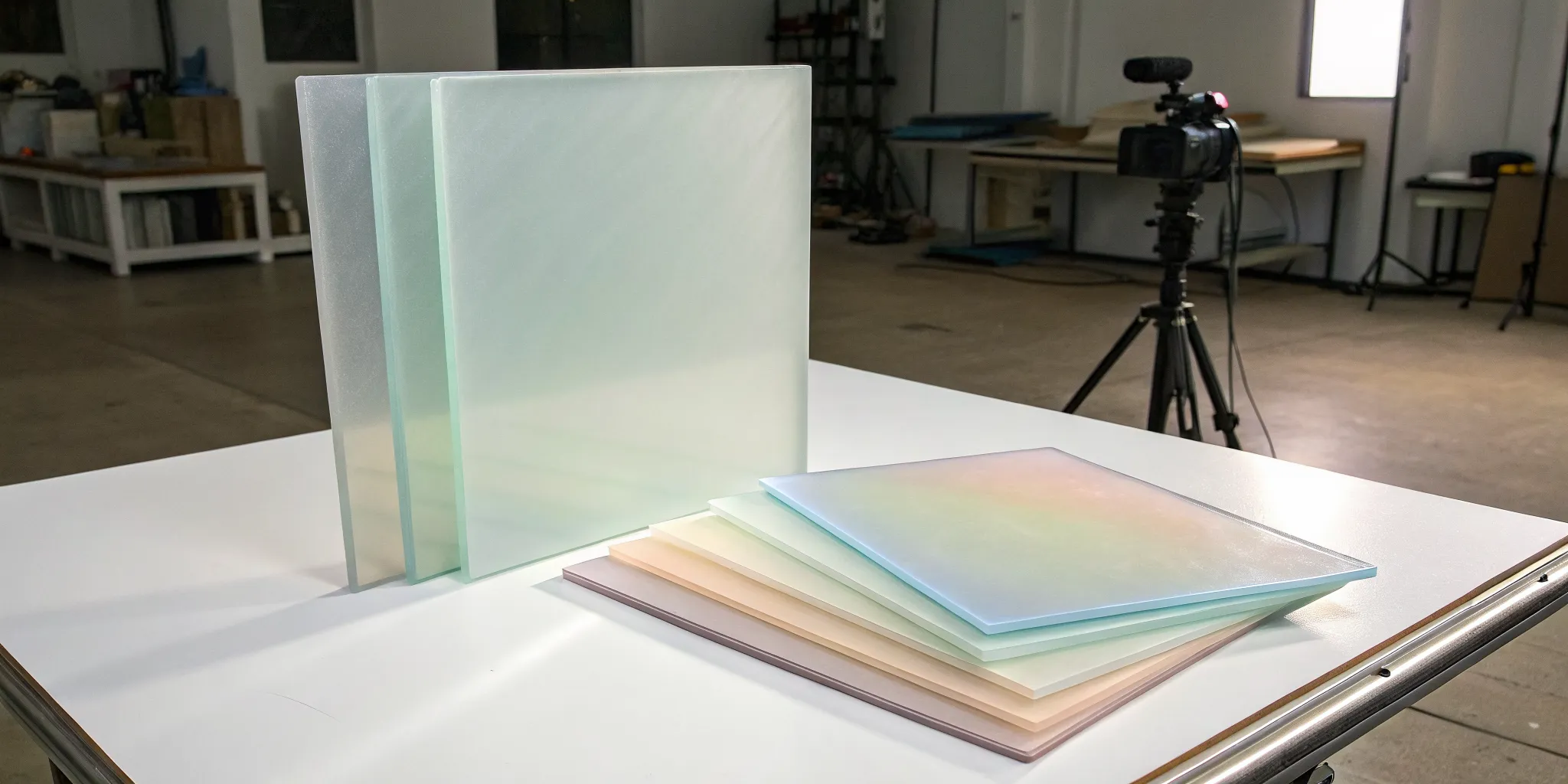
The first thing you notice about opalescent glass is its signature milky appearance and swirling colors. This isn’t a flaw; it’s the defining feature that gives the glass its name and its artistic power. Each sheet tells a story through its unique patterns, offering a one-of-a-kind canvas for your work. This visual texture is what makes it so versatile for everything from stained glass panels to fused jewelry. Understanding how to harness these qualities is key to making your art stand out. In this article, we’ll cover everything you need to know about choosing and using opalescent glass sheets to add incredible depth and character to your next creation.
Key Takeaways
- Use opacity to your advantage: Opalescent glass is known for its milky quality that scatters light beautifully. Use this to your advantage for projects like Tiffany-style lamps, privacy screens, or any design where you want solid, rich color without seeing through the glass.
- Always check the COE for fusing: For any project you plan to fire in a kiln, all your glass must have the same Coefficient of Expansion (COE) to avoid cracks. If you’re making a traditional stained glass panel without heat, you don’t need to worry about matching the COE.
- Plan your cuts for better results: Because you can’t see through opalescent glass, trace your pattern directly onto the surface for accurate cuts. Also, take a moment to study the unique color swirls in each sheet so you can strategically place them within your final design.
What Is Opalescent Glass?
Opalescent glass is one of the most captivating materials you can work with as a glass artist. Unlike transparent glass that you can see right through, opalescent glass has a dreamy, milky quality that plays with light in beautiful and often surprising ways. It’s famous for its swirling colors and opaque or semi-opaque finish, which is why it was a favorite of Louis Comfort Tiffany for his iconic lamps and windows. Think of it as the mysterious cousin to standard clear glass. It doesn’t just let light pass through; it catches it, scatters it, and transforms it, creating a soft, internal glow that adds incredible depth and character to any piece.
This unique effect makes it incredibly versatile for all kinds of projects. You can use it for stained glass panels that don’t rely on a perfect backlight, or for fused pieces that need a solid, colorful base. Whether you’re aiming for a subtle, single-color design or a vibrant, multi-hued masterpiece, opalescent glass gives you a rich palette to work with. Understanding what makes this glass so special is the first step to using it effectively in your own art. In the next few sections, we’ll look at the magic behind its swirled appearance, the science that creates its color, and how it stacks up against other types of glass you might have in your studio.
The Magic Behind Its Milky, Swirled Look
The first thing you’ll notice about opalescent glass is its signature milky appearance. This isn’t a flaw; it’s the defining feature that gives the glass its name. Depending on the specific mix and how the light hits it, the glass can look cloudy, streaky, or have a soft, pearly sheen. Some sheets might have a subtle blue or white tint that seems to shift as you move the glass around. This visual texture is what makes each sheet so unique. The swirls and variegations mean that no two cuts will be exactly alike, adding an organic, one-of-a-kind feel to your finished artwork.
How Light and Crystals Create Color
The beautiful look of opalescent glass comes from a carefully controlled cooling process. As the molten glass cools, some parts cool slower than others. This slow cooling allows tiny, light-scattering crystals to form within the glass, which is what creates the opaque effect. Glassmakers can even reheat certain areas of the sheet to encourage these crystals to grow, often turning those sections a brilliant white. It’s this delicate balance of heat, cooling, and chemistry that produces the stunning swirls and color variations that opalescent glass is known for. It’s truly a science and an art form combined in one sheet.
Opalescent vs. Transparent vs. Cathedral Glass
When choosing glass for a project, it helps to know the basic types. Transparent glass, often called cathedral glass, is see-through and allows light to pass directly through it, illuminating the color. Opalescent glass, on the other hand, is opaque and blocks or scatters light. Many opalescent sheets are actually a mix, combining one or more colors of cathedral glass with a white opal glass to create a multi-colored, variegated sheet. This is why you can find opalescent glass with varying levels of light transmission. Exploring different types of stained glass will help you see the beautiful range of possibilities for your next piece.
Popular Types of Opalescent Glass
Once you start exploring the world of opalescent glass, you’ll quickly discover that different manufacturers each have their own unique flair. Artists often develop favorites based on a brand’s specific color palette, consistency, and available textures. Getting to know the most popular types is a fantastic way to figure out which glass will work best for your vision and your specific art form, whether you’re creating a detailed stained glass panel or a vibrant fused glass dish. Some of the biggest names you’ll encounter are Bullseye, Wissmach, Youghiogheny, and Kokomo, and each one brings something special to the table.
Bullseye, for example, is a giant in the world of kiln-formed glass, while Kokomo has a deep history tied to classic Tiffany lamps. Beyond the brand names, you’ll also find a whole world of textures that can add incredible depth and character to your work. From mottled and rippled surfaces to swirled marbleized patterns, the texture you choose can completely change how light interacts with your finished piece. Understanding these options is the first step toward making more intentional and beautiful art. It helps you move from just picking a color to selecting a piece of stained glass that has the exact properties you need to bring your creative ideas to life.
Bullseye Opalescent Sheets
If you’re doing any kind of kiln work, you’re probably already familiar with Bullseye Glass. Their opalescent sheets are a go-to for fusing artists because of their premium quality and reliable testing. This handmade glass often has a signature “catspaw” texture, a subtle mottling that gives it an organic feel and allows hints of light to pass through. Because it’s designed for high-quality kiln forming, it’s a fantastic and dependable choice for your projects. Many artists rely on Bullseye for its extensive selection of compatible COE90 glass, making it easy to mix and match colors without worrying about compatibility issues during firing.
Wissmach and Youghiogheny Options
Wissmach and Youghiogheny are two other powerhouse names in the world of opalescent glass, especially for stained glass artists. Wissmach Glass Company is known for producing sheets with incredibly vibrant colors and consistent quality. You can always count on their glass to be beautiful and easy to work with. Similarly, artists praise Youghiogheny for its stunning consistency and beauty, which makes it a reliable choice for large-scale projects where uniformity matters. Both brands offer a fantastic range of colors and styles, including some beautiful COE96 glass options perfect for fusing.
Kokomo Opalescent Glass
Kokomo has a rich history and holds the title of America’s oldest art glass company. Originally called The Opalescent Glass Works, this manufacturer is famous for its deep, rich colors and diverse textures. In fact, its glass was a key component in many original Tiffany lamp reproductions, a testament to its quality and timeless appeal. If you’re aiming for a classic, traditional look in your work, Kokomo is an excellent choice. Its legacy and continued production of beautiful art glass make it a staple in studios everywhere.
Textured and Mottled Varieties
Beyond specific brands, you’ll find opalescent glass in several distinct textures that can add incredible depth to your work. Mottled glass, for instance, features a mix of cloudy and clear spots, creating a beautiful, dappled light effect. Ripple glass has a soft, wavy texture that gently distorts light, while marbleized glass swirls two or more solid colors together for a dynamic, flowing look. These variations give you more creative control, allowing you to play with how light interacts with your piece. You can even create your own textures by slumping glass over molds in a kiln.
Best Uses for Opalescent Glass Sheets
The beautiful, milky quality of opalescent glass makes it incredibly versatile. Its unique interaction with light opens up a world of creative possibilities, from traditional stained glass to modern fused art. Whether you’re a seasoned artist or just starting, opalescent sheets offer a fantastic medium for adding color, depth, and texture to your work. Let’s explore some of the most popular and inspiring ways to use this amazing material.
Stained Glass Windows and Panels
Opalescent glass is a cornerstone of traditional stained glass art for good reason. Its opaque nature allows you to control the light passing through your piece, making it perfect for creating privacy or directing the viewer’s focus. When you design a stained glass panel, the opalescent pieces create solid areas of rich color that contrast beautifully with more transparent sections. The glass is cut into shapes and fitted into metal came, a classic technique that brings large-scale windows and decorative panels to life. The milky swirls and streaks within the glass add a layer of texture and movement that you just can’t get from a flat, single-color sheet.
Tiffany-Style Lamp Shades
If you’ve ever admired the warm, inviting glow of a Tiffany lamp, you’ve seen opalescent glass at its best. Its ability to diffuse light is what makes it the perfect choice for lampshades. Instead of a harsh glare from the bulb, the glass scatters the light, creating a soft, ambient luminescence that fills a room with color. When making a lamp, you want to hide the light source, and the opacity of this glass does the job perfectly. The heat from the bulb also seems to make the colors and swirls within the glass dance, giving the piece a life of its own.
Suncatchers and Mosaic Art
Opalescent glass truly shines when it’s used in suncatchers. Because it changes color depending on how the light hits it, a suncatcher made with opalescent sheets will look different throughout the day, shifting and shimmering with the moving sun. For mosaic artists, its opacity is a game-changer. You can apply pieces to any surface without worrying about the adhesive showing through, ensuring a clean and professional finish. The rich, solid colors and internal textures add visual weight and depth, making your mosaic designs pop. Using a variety of opalescent textures can create a dynamic and tactile piece of art.
Glass Fusing and Kiln-Formed Projects
For artists working with a kiln, opalescent glass is an essential part of the palette. High-quality, fusible sheets like COE90 glass are specifically made for kiln work, ensuring predictable and stunning results. You can layer opalescent sheets with transparent or dichroic glass to create incredible depth and unique patterns that emerge during firing. It can serve as a solid, colorful base for a fused plate or be cut into smaller elements to create a focal point in your design. The way the colors blend and flow in the heat of the kiln makes opalescent glass a favorite for creating one-of-a-kind fused art.
Unique Jewelry Pieces
The soft, luminous quality of opalescent glass makes it ideal for creating beautiful and unique jewelry. When cut and fused into small cabochons, the glass takes on a gemstone-like appearance, with a visual depth that draws the eye. The internal swirls of color mean that no two pieces will ever be exactly alike, so you can create truly custom earrings, pendants, and rings. Many jewelry artists use fusible COE96 glass to craft their pieces, often layering it with dichroic coatings for an extra touch of sparkle. The result is a tiny piece of wearable art with a rich, captivating quality.
How to Choose the Right Opalescent Glass
Picking the perfect opalescent glass is one of the most exciting parts of planning a new project. The right sheet can bring your vision to life, while the wrong one can lead to frustration. But with so many colors, textures, and types available, how do you make the right choice? It comes down to understanding your project’s needs and your artistic goals.
Think about the final piece. Will it be a fused bowl, a stained glass panel, or a mosaic? The answer will guide your decisions. You’ll need to consider the glass’s color and opacity, its thickness, its compatibility with other glass for fusing, and even how you can layer it to create unique effects. Let’s walk through the key factors to help you select the best opalescent glass for your next masterpiece.
Match Color, Opacity, and Texture to Your Design
The first thing you’ll notice about opalescent glass is its beautiful, milky quality. True opalescent glass is opaque, meaning you can’t see through it. This makes it perfect for creating strong silhouettes and bold color fields. You’ll also find semi-opaque glass, which is often a color mixed with white or another color. This type allows some light to pass through, creating a soft, ethereal glow that can add incredible dimension to your work.
When choosing, think about how light will interact with your piece. Do you want to block it completely or let it filter through? Also, consider the texture. A smooth surface offers a clean, modern look, while a textured one can add visual interest and depth. The best way to get a feel for your options is to browse different sheets of stained glass and imagine them in your design.
Select the Right Thickness for Your Project
Glass thickness is a practical detail you don’t want to overlook. The standard thickness for most opalescent and stained glass sheets is 3 mm. This is a versatile choice that works well for a wide range of stained glass projects, fitting comfortably into standard lead came and copper foil.
However, your project’s specific needs might call for something different. For delicate jewelry or intricate mosaic work, a thinner glass might be easier to cut and handle. For larger, architectural panels that require more strength and stability, you might consider a thicker sheet. Choosing the right thickness is about balancing the look you want with the structural integrity your finished piece needs to last.
Understand COE for Fusing Projects
If you plan on fusing glass in a kiln, understanding the Coefficient of Expansion (COE) is absolutely essential. In simple terms, COE measures how much glass expands when heated and contracts when cooled. For a fused piece to be successful, all the glass you use must have the same COE. If you mix different COEs, the glass will cool at different rates, causing stress, cracks, and heartbreak.
The two most common ratings you’ll see are COE90 glass and COE96 glass. Always check the COE of your glass before you start a fusing project. If you’re working on a traditional stained glass piece that won’t be fired in a kiln, you don’t need to worry about matching the COE.
Use Layers to Create Depth and Variation
One of the most creative ways to work with opalescent glass is by layering it. Because of its opacity, you can place different colors on top of each other to create entirely new shades and stunning visual depth. This is especially effective in fusing, where the layers melt together into a single, blended piece. Imagine layering a transparent blue over an opaque yellow to create a vibrant, custom green.
You can also use layering to create shadows and highlights. Stacking two or three layers of the same color, each slightly smaller than the last, can produce a subtle gradient effect. This technique allows you to move beyond the colors available on the shelf and create truly unique and personalized art. Don’t be afraid to experiment with scraps to see what beautiful combinations you can discover.
Tips for Working With Opalescent Glass
Working with opalescent glass is a joy, but its unique properties mean it handles a little differently than transparent glass. Its beautiful swirls and milky opacity require a few specific techniques to get the best results. Whether you’re cutting, firing, or assembling your piece, these tips will help make the process smoother and bring your creative vision to life. Here are my go-to strategies for making every opalescent glass project a success, from start to finish.
How to Cut and Score Opalescent Glass
Because you can’t see through opalescent glass, it can be tricky to follow your pattern lines. My best tip is to trace your pattern directly onto the glass with a fine-tipped permanent marker. Place your sheet on a flat, clean work surface to ensure it’s fully supported. When you’re ready to score, use a high-quality glass cutter and apply firm, consistent pressure in one smooth motion. You want to hear that satisfying “zip” sound. If your glass has a textured side, always cut on the smoothest side available for the cleanest break.
Manage Color Consistency in Your Project
The swirls, streaks, and color variations are what make opalescent glass so special. Before you cut, take a moment to study your entire sheet. Hold it up to a light source to see how the opacity changes across the panel. This is especially important for projects like lampshades, where you might want to use the more opaque sections to hide the bulb. By planning your cuts carefully, you can use specific areas of a sheet to create flow, highlight a feature, or add depth to your stained glass design. Think of it as painting with glass; you get to choose which part of the “brushstroke” you use.
Avoid Devitrification When Firing
If you’re a glass fuser, you know that devitrification (a hazy, scummy crystallization on the surface) can ruin a piece. The best way to prevent this is to use high-quality, compatible glass. Always make sure every piece of glass in your project has the same Coefficient of Expansion, or COE. For example, only fuse COE90 glass with other COE90 products. Sticking to a single system, like Bullseye, helps ensure compatibility. Also, follow a proper firing schedule for your specific glass and project size, and keep the inside of your kiln clean to avoid any contaminants that could trigger devitrification during firing.
Best Practices for Adhesion and Assembly
Whether you use the copper foil method or lead came, a clean surface is essential for strong solder joints and secure assembly. Before you start foiling or cementing, wipe down the edges of each cut piece with isopropyl alcohol to remove any glass dust or oils from your fingers. The opacity and sturdiness of opalescent glass make it ideal for traditional stained glass techniques. When fitting your pieces, aim for a snug fit within your came channels, but never force the glass. A little bit of wiggle room is necessary to prevent stress fractures later on.
Store and Handle Your Glass Sheets Safely
Protecting your glass is just as important as working with it. The best way to store your sheets is vertically in a sturdy bin or rack, with cushioned dividers between each one to prevent scratches. This also reduces the stress on the glass. When you’re moving sheets, handle them by the edges and wear gloves to keep fingerprints and oils off the surface. This is especially important for textured glass, as oils can be difficult to clean out of the grooves. Proper handling not only keeps you safe but also preserves the beautiful finish of your glass for your next project.
How Much Does Opalescent Glass Cost?
Budgeting for a new glass art project can feel a little tricky, especially since the price of opalescent glass can vary quite a bit. The good news is that there’s a beautiful sheet of glass for every budget. The final cost depends on a few key things, like the brand you choose, the size of the sheet, and the complexity of the color. Understanding these factors will help you plan your project and find the perfect glass without any surprises. Let’s break down what you can expect to pay and what influences those prices.
Price Ranges by Brand and Sheet Size
Generally, you can expect a single sheet of opalescent glass to cost anywhere from about $17 to over $80. The biggest factor in that range is usually the size of the sheet. A smaller, hobby-sized cut, like an 8×10 inch piece, will be on the lower end of the price scale. Larger sheets, such as 12×12 inches or full-size sheets from the manufacturer, will naturally cost more upfront but can offer a better value per square inch if you have a big project in mind. Brands like Bullseye, Wissmach, and Kokomo each have their own pricing structures, so it’s helpful to compare them as you shop for COE90 glass.
What Factors Affect the Price?
Beyond size, the price of opalescent glass is shaped by its artistry and composition. Premium, handmade glass often costs more because of the skill and labor involved in its creation. The color itself is another major factor. Some pigments and the minerals used to create them, like those in certain reds, pinks, or specialty colors, are more expensive. For example, a turquoise opal that contains copper might have a different price point than a simple white or black. The complexity of the glass, such as whether it has mottling, streaks, or unique textures, also adds to its value and, therefore, its cost.
How to Find the Best Value
Finding the best value doesn’t always mean finding the lowest price. It’s about getting the right glass for your project at a cost that works for you. A great first step is to filter products by price when you shop online to see what fits your budget. Keep an eye out for sales and promotions, as you can often find beautiful stained glass at a discount. If you’re new to a particular type of glass, consider buying a smaller piece first to test its color and texture before committing to a larger sheet. This way, you can make sure it’s exactly what you want for your final piece.
Where to Buy Opalescent Glass Sheets
Why Artists Choose ArtGlassSupplies.com
Finding the right supplier is just as important as picking the perfect sheet of glass. At ArtGlassSupplies.com, we offer a huge variety of opalescent glass sheets designed to meet your creative needs. We know that every project is unique, which is why we stock an incredible range of textures, styles, and colors. Whether you’re searching for a specific shade for a commission or just browsing for inspiration, our goal is to provide the materials that help bring your vision to life. We believe in exploring the creative potential held within each sheet of glass, and our selection of stained glass reflects that commitment to artistry and quality.
What to Look For in a Reliable Glass Supplier
When you’re ready to buy, it helps to know what to look for in a great supplier. A reliable source will always provide detailed descriptions of their glass, including its opacity, texture, and exact color. This is especially important for opalescent glass, where you want to control how light diffuses through your piece. Beyond product details, consider their shipping practices. Are the sheets packed securely to prevent breakage? Do they have a good reputation for customer service? A trustworthy supplier makes the entire process smooth, from browsing their COE90 glass selection to unboxing your order. Look for a partner who is as invested in your art as you are.
Online vs. In-Store: Which Is Right for You?
Deciding between shopping online or in a physical store really comes down to your personal preference and project needs. Shopping online offers unmatched convenience and a much broader selection than most local shops can carry. You can easily compare different brands and find exactly what you need, from glass sheets to specialized molds, all from your studio. On the other hand, visiting a store allows you to see and feel the glass firsthand, which can be helpful for precise color matching. If you value a massive inventory and the ease of home delivery, online is the way to go. If you enjoy the hands-on experience, a local visit might be worth your time.
Related Articles
- Stained Glass Patterns & Materials: Perfect Combos for Your Next Project
- The Artist’s Guide to Spectrum Glass System 96
- How to Create Stunning Frosted Glass Art
- Where to Buy Colored Glass Sheets for Crafting Art.
- Best Paints for Glass Art: From Windows to Decorative Pieces
Frequently Asked Questions
Is opalescent glass harder to cut than transparent glass? It’s not necessarily harder, but it does require a slightly different technique. Since you can’t see through it to trace a pattern from underneath, you’ll need to draw your pattern lines directly onto the glass surface with a marker. The key to a clean break is to score the smoothest side of the glass with firm, even pressure. It might take a little practice, but you’ll quickly get the hang of it.
Can I use the same opalescent glass for both stained glass and fusing projects? This is a great question. While you can use any type of opalescent glass for a traditional stained glass project, you must be very selective for fusing. Kiln work requires that all your glass pieces have the same Coefficient of Expansion (COE) so they expand and shrink at the same rate. If you mix different COEs, your piece will crack. So, for stained glass, mix away; for fusing, stick to a single COE system like COE90 or COE96.
Why are some colors of opalescent glass more expensive than others? The price difference usually comes down to the raw materials used to create the color. Certain pigments, especially those for vibrant reds, pinks, and oranges, are made with more expensive minerals. For example, some red glass is made with gold, which naturally increases the production cost. The complexity of the formula and the manufacturing process also play a role in the final price of a sheet.
What’s the best way to see the true color and pattern of an opalescent sheet? Because opalescent glass interacts so much with light, the best way to see its character is to hold it up to a light source. This will reveal the true level of opacity, the depth of the swirls, and how the colors shift. When shopping online, look at all the product photos, but remember that the beauty of this glass is that every single sheet is unique. What you receive will have its own distinct personality.
Can I mix different brands of opalescent glass in one project? For stained glass projects that don’t involve a kiln, you can absolutely mix brands to get the colors and textures you want. For fusing, however, you can only mix brands if they share the exact same COE rating. For instance, you could fuse a Bullseye COE90 sheet with a Wissmach COE90 sheet. Just be sure to double-check that the COE matches perfectly before you fire anything.