
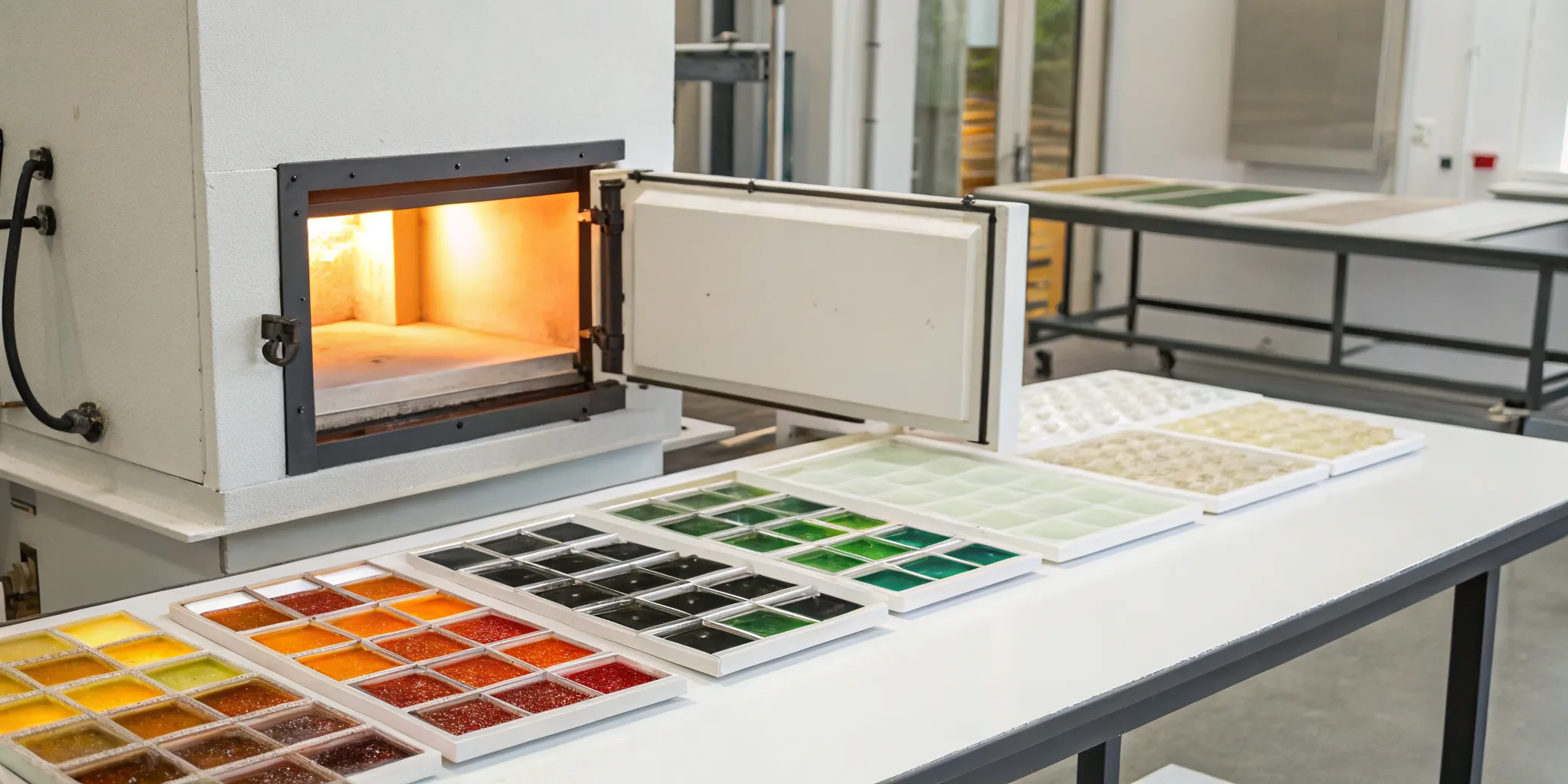
Opening a cooled kiln is one of my favorite moments. Seeing a dry, painted surface transform into a permanent, glossy part of the glass is just so satisfying. But that change isn’t random. It’s a predictable result of temperature and time, and you are in complete control. Understanding how Glassline paints fire is your key to consistency. A well-planned firing schedule is the roadmap that takes the guesswork out of the process. We’ll explore how to prevent bubbles, achieve vibrant colors, and ensure your beautiful linework fuses flawlessly into your glass projects.
Key Takeaways
- Fire hot for a glossy finish: To achieve a smooth, professional shine, you need to fire your piece to a full fuse, typically between 1450°F and 1500°F. Firing at lower temperatures will leave your paint with a matte, textured appearance.
- Vent your kiln to avoid bubbles: Keep your kiln propped open or vented until it reaches 1200°F. This allows the paint’s binders to burn off completely, which is the secret to preventing frustrating bubbles, blisters, and cloudy colors.
- Adjust your schedule for your project: A standard firing schedule is just a starting point. Always consider factors like glass thickness, your kiln’s specific behavior, and the colors you are using, and be prepared to make small adjustments for consistent results.
What Are Glassline Paints?
If you’ve ever wanted to draw or paint directly onto your glass projects, Glassline paints are about to become your new best friend. Think of them as a special type of liquid glass, formulated to be applied to a glass surface before firing. They come in a range of vibrant colors and are often packaged in bottles with a fine-tipped applicator, making it easy to create detailed lines, shading, and intricate designs.
What really sets them apart is that they are specifically designed for high temperatures. Glassline paints are meant for full-fusing, typically firing to a beautiful glossy finish between 1450°F and 1500°F. This means they fully integrate with your base glass, becoming a permanent part of your finished piece. Whether you work with COE 90 glass or prefer COE 96 glass, these paints are compatible and reliable. They give you the freedom to add a personal, artistic touch to your work that goes beyond just cutting and layering glass. From signing your name to drawing complex patterns, they open up a whole new world of creative possibilities.
What Makes Glassline Paints So Special?
One of the most unique things about Glassline paints is how they transform in the kiln. When you first apply the paint, it looks solid and opaque as it dries. But don’t be fooled by its initial appearance. After firing, thin layers can become transparent or even seem to disappear completely. This quality gives you incredible control over shading and depth. A thick, heavy line will remain bold and opaque, while a thinner application can create a delicate, watercolor-like effect.
Another key detail is the importance of proper venting. You’ll need to keep your kiln vented up to 1200°F. This step is crucial because it allows the binding medium in the paint to burn off cleanly, which is especially important for achieving true, vibrant red colors.
Are Glassline Paints Food Safe? (And What to Know About Shipping)
Food Safety After Firing
This is a question I get all the time, especially from artists creating beautiful plates, platters, and bowls. The short answer is yes, Glassline paints are food-safe after they have been properly fired. During the firing process, the binders in the paint burn away, and the colorants fuse permanently into the glass. Once cooled, the resulting surface is lead-free and completely inert, making it safe for contact with food. This means you can confidently design functional art for your kitchen or to sell to customers. Just be sure to follow a complete firing schedule to ensure the paint has fully matured and bonded with the glass.
Important Shipping Information
Here’s a quick logistical tip to keep in mind when you’re stocking up on Glassline paints. Because of their chemical composition, these paints are sometimes classified as “Other Regulated Materials” or even “Hazardous Materials” for shipping purposes. This is a standard industry regulation and isn’t a cause for concern about the product’s safety in your studio. However, it can mean that your paint order might be subject to special shipping rules or additional fees. It’s just something to be aware of so you aren’t surprised during checkout. We always aim to make the process as clear as possible when you order.
What Glass Can You Use Glassline Paints On?
Glass Compatibility: COE90, COE96, and Float Glass
One of the best features of Glassline paints is their incredible versatility. You don’t have to worry about matching your paints to a specific type of glass, because they are designed to be compatible with most glass used in fusing. Whether your studio is stocked with COE90 glass for a Bullseye project or you prefer the flow of COE96 glass, you can use the same set of paints with confidence. They even work on standard float glass (window glass). This compatibility simplifies your creative process, allowing you to focus on your design rather than worrying about technical mismatches. It’s a relief to know one product can handle nearly any fusing project you dream up.
Exploring the Glassline Color Palette
The colors in the Glassline family are known for being incredibly rich and concentrated. A little bit of paint goes a long way, and the hues stay bright and true even after firing. But the real fun begins when you start mixing. The entire line of paints is intermixable, allowing you to create an endless spectrum of custom shades. Want a specific teal or a unique coral? Just blend a few base colors together until you get it right. This gives you complete artistic control over your palette. Remember that the colors are very strong, so start with small amounts when mixing to avoid wasting paint.
How Does Glassline Compare to Other Paints?
So, how do Glassline paints stack up against other options? A major advantage is that Glassline paints can be treated just like regular glass when you fire them. They fuse seamlessly into your project without any special considerations, making them incredibly user-friendly.
This is different from some other products on the market. For example, certain enamels or paints show their best color when fired on the very top layer of the glass. In contrast, Glassline paints are fantastic for layering. They can maintain their vibrancy even when capped with a layer of clear glass, as long as you fire them correctly. This makes them the perfect choice for creating pieces with incredible depth and dimension.
How to Apply Glassline Paints for Best Results
Getting those crisp lines and vibrant, glossy colors you’re aiming for is all about technique. From the moment you open the bottle to the way you combine it with other materials, a few simple steps can make a huge difference in your final piece. Let’s walk through how to prep and apply Glassline paints to ensure your creative vision translates perfectly from your workbench to the finished, fired artwork.
Prepping Your Paints: Stirring and Adjusting Consistency
Before you even think about touching paint to glass, give your Glassline bottle a thorough stir. The color pigments can settle over time, so mixing them back in is crucial for achieving a true, consistent hue. A bamboo skewer works perfectly for this. Once stirred, check the consistency. For fine linework using the bottle’s tip, you want a smooth flow that’s not too thick or too watery. If it feels a bit goopy, you can add a single drop of water and stir again. Getting the consistency right ensures the paint applies evenly, which helps it fire to that gorgeous, glossy finish when you fire your project to a full fuse.
More Than a Brush: Other Ways to Apply Glassline
While the fine-tipped applicator on the bottle is perfect for drawing and writing, it’s just one of many ways to use Glassline paints. Don’t be afraid to get creative with your application tools. You can pour the paint into a palette and use traditional paintbrushes for broader strokes or more painterly effects. Remember how thin layers of Glassline can become transparent after firing? This quality is fantastic for creating soft, watercolor-like washes with a brush. By varying your application method, you can achieve a wide range of visual effects, from bold, opaque lines to delicate, see-through layers of color.
Using Airbrushing, Stamping, and Screen Printing
To take your application techniques even further, consider tools like airbrushes, stamps, or screens. For airbrushing, you’ll need to thin the paint with water until it creates a fine, even spray. This is perfect for creating smooth gradients or covering large areas with a soft coat of color. You can also use rubber stamps to apply consistent, repeatable patterns onto your glass. Simply dip the stamp into a shallow pool of paint and press it firmly onto the surface. For highly detailed and replicable designs, screen printing with Glassline paints is another excellent option that opens up even more creative doors.
Creating Texture with Sgraffito and Frit
Glassline paints are not just for creating flat, two-dimensional designs. You can easily incorporate texture into your work by manipulating the paint itself or by combining it with other glass materials. Two of the most effective techniques for adding depth and tactile quality to your pieces are sgraffito and layering with glass frit. These methods allow you to move beyond simple linework and start treating the paint as a sculptural element, giving your finished art a dynamic and professional feel. Both techniques are surprisingly simple and rely on the unique way Glassline behaves before and during firing.
How to Use the Sgraffito Technique
Sgraffito is a classic technique that involves scratching through a layer of material to reveal what’s underneath. With Glassline, you apply a solid coat of paint, let it dry completely, and then use a sharp tool—like a needle tool or even a toothpick—to scratch your design into the paint. This removes the paint and exposes the bare COE90 glass below. When fired, your scratched lines will be perfectly preserved, creating a striking contrast between the glossy paint and the clear or colored glass base. It’s an incredibly effective way to add fine details, lettering, or intricate patterns to your work.
Layering Paint with Glass Frit
Because Glassline paint behaves just like glass in the kiln, it works beautifully with other fusible materials. One of the best ways to add texture and dimension is by layering it with glass frit. You can sprinkle fine or medium frit over a layer of wet paint; the paint will act as an adhesive and fuse the frit into place during firing. Alternatively, you can lay down a bed of frit and then paint your design on top of it. This allows you to combine the organic, granular texture of frit with the precision of painted lines, creating a piece with incredible visual depth and complexity.
The Perfect Firing Schedule for Glassline Paints
Nailing your firing schedule is the secret to turning your painted glass into a masterpiece. Think of it as the final, most important step in the creative process. While every kiln has its own personality, having a reliable schedule is the best way to get consistent, beautiful results. This guide will walk you through a standard full-fuse schedule that works wonderfully for Glassline paints, giving you a great starting point for your own projects.
What Temperatures and Hold Times Do You Need?
Glassline paints are formulated to mature at full-fusing temperatures. To get that beautiful, glossy finish you’re looking for, you’ll want to fire your piece somewhere between 1450°F and 1500°F. This temperature range is the sweet spot for most projects on both COE 90 and COE 96 glass. Hitting this target ensures the paint properly bonds with the glass, creating a durable and vibrant design that will last. Firing too low can result in a matte finish, while firing too high can cause colors to lose their intensity.
Firing Glassline Paints: A Step-by-Step Guide
Ready for a go-to schedule? This full-fuse firing guide is a fantastic starting point for a standard 6mm (about 1/4 inch) thick piece. Remember to always test a small piece first if you can, but this schedule is a reliable workhorse for many artists.
- Segment 1: Heat at 400°F per hour up to 1000°F. Hold for 30 minutes and keep the kiln vented.
- Segment 2: Heat at 60°F per hour up to 1225°F. Hold for 60 minutes.
- Segment 3: Heat at 600°F per hour up to 1505°F. Hold for 12 minutes.
- Segment 4: Cool as fast as possible down to 900°F.
- Segment 5: Cool at 100°F per hour down to 700°F with no hold.
Why Venting Before 1200°F is Crucial
Don’t skip the venting step. It’s incredibly important for getting a clean, professional finish. You should keep your kiln vented until it reaches about 1200°F. This allows the binders and organic materials in the paint to burn off and escape. If you close the kiln too early, those gases can get trapped, potentially causing bubbles, cloudiness, or discoloration in your final piece. This is especially critical for red and orange shades, which can be a bit more sensitive during the firing process.
What Affects Your Glassline Firing Schedule?
A good firing schedule is your roadmap to a beautiful finished piece, but it’s not set in stone. Think of it more like a starting recipe that you’ll need to tweak based on your specific ingredients. Your glass, your paint colors, and even your kiln all play a part in the final outcome. Getting familiar with these variables will help you fine-tune your schedule and get predictable, amazing results every time. Let’s look at the three main factors you’ll want to consider before you press “start.”
How to Adjust for Glass Thickness and COE
First, let’s talk about the glass itself. The thickness of your glass is a major player. A delicate, thin piece will heat up much faster than a thick, heavy one. As one expert notes, “Thicker glass or glass with big differences in thickness needs a slower firing schedule.” Rushing the process with thick glass can lead to thermal shock and cracks. You also need to consider the Coefficient of Expansion (COE). For a full fuse, always use glass with a compatible COE, like all COE90 or all COE96 glass. If you are only doing a low-temperature fire just to cure the paint, you can mix COEs, but they can’t be fused together.
Does Paint Color Affect How You Fire?
Believe it or not, the colors you choose can also influence your firing schedule. While all Glassline paints are designed to mature in a similar range, your target temperature determines the final finish. If you want a smooth, glossy look, you’ll need to fire to full fuse temperatures. According to the manufacturer, Glassline “will work (cure) at around 1350F, but will retain a matte finish if fired at lower temperatures.” Some artists find that certain colors, especially reds and oranges, benefit from slightly different holds to reach their full vibrancy. It’s always a great idea to run a small test tile with new colors to see how they behave in your kiln.
Adjusting Your Schedule for Your Kiln’s Size and Type
Finally, every kiln has its own personality. The size, shape, and heating element placement in your specific model will affect how it heats and cools. Smaller kilns tend to heat up and cool down faster than larger ones, which might require you to adjust your ramp rates. It’s also important to know where the hot and cold spots are in your kiln. As you get more familiar with your equipment, you’ll learn how to place your projects for the most even heating. Remember, a schedule that works perfectly in one kiln might need a few small adjustments to work in another.
How Firing Temperature Changes Your Final Piece
The temperature inside your kiln is your primary tool for controlling the final look of your Glassline paint designs. Think of your firing schedule as a recipe where temperature is the key ingredient. A few degrees can mean the difference between a glossy, vibrant piece and a dull, matte one. By understanding how different heat levels affect the paint, you can fine-tune your firing process to get the exact results you want. This control allows you to achieve specific artistic effects while ensuring your artwork is strong and durable. Let’s explore how temperature influences the finish, color, and adhesion.
How to Achieve a Glossy vs. Matte Finish
The final surface of your glass piece comes down to your peak firing temperature. If you’re aiming for a high-gloss, reflective finish, you’ll need to fire your piece hot, typically at or above 1450°F. This higher temperature allows the paint and glass surface to become molten enough to smooth out completely, creating a classic, polished look. On the other hand, if you prefer a more subtle, matte finish with some texture, you can achieve it by firing at a lower temperature. This approach leaves a softer, non-reflective appearance that can add beautiful depth to your designs.
How Temperature Impacts Color and Vibrancy
Temperature is what truly brings Glassline paint colors to life. When you fire your piece below about 1440°F, you might notice the colors appear dull, flat, or not as vibrant as you had hoped. The right amount of heat is necessary to develop the full richness of the pigments. It’s also important to know that thin layers of paint can become transparent or even disappear after firing, especially on a clear base of COE90 glass. If your lines are fading, try applying the paint a little thicker to ensure the colors mature properly and remain bold.
Tips for Strong Adhesion and Durability
For your painted design to become a permanent part of the glass, it needs to fuse correctly. This requires firing at a full fuse temperature, which ensures the paint bonds completely with the glass surface. While Glassline paints will cure at lower temperatures around 1350°F, the bond won’t be as strong, and the paint may retain a raised texture. Firing to a full fuse creates a durable piece that won’t chip or flake and helps flatten the paint for a smooth finish. Having a reliable kiln that holds temperature accurately is key to creating professional, long-lasting art.
Common Glassline Firing Mistakes to Avoid
Even the most experienced artists run into issues in the kiln. Think of it as part of the learning process. When your piece doesn’t turn out quite right, it’s usually due to a small, fixable detail in your firing schedule or application. Let’s walk through some of the most common hiccups with Glassline paints and, more importantly, how to solve them so you can get the beautiful results you’re looking for. Most problems can be traced back to temperature, timing, or venting, so a few simple adjustments can make all the difference.
How to Prevent Bubbles and Blisters
Nothing is more frustrating than pulling a piece from the kiln only to find it covered in tiny bubbles or blisters. This almost always happens when the binders in the paint get trapped and can’t escape before the glass starts to fuse. The solution is simple: give those binders a clear exit path. You can do this by venting your kiln and using a slow ramp rate in the initial heat-up phase. Make sure to keep the kiln propped open until it reaches at least 1000°F. This slow, ventilated climb gives the binders plenty of time to burn off completely, leaving you with a smooth, clear surface.
The Best Placement for Your Paint
Where you place your paint is another key decision that affects your final piece. Glassline paints are incredibly versatile, so you have a few options. You can paint directly on the top surface of your glass or place your design between layers. Painting on top is the most straightforward method and gives you a design that sits right on the surface. However, many artists love the depth created by “capping,” which involves painting on a base layer and then covering it with another piece of glass, often clear. This technique can be tricky, as it’s known to sometimes cause bubbles when the paint’s binders get trapped between the glass layers.
To prevent this, make sure your paint is bone-dry before adding the top layer, and stick to a slow, well-vented firing schedule. When done correctly, capping protects your design and allows you to create beautiful, layered effects, even combining paint with materials like frit. You can paint on a base of COE90 glass, add your design, and then cap it with clear glass for a stunning, dimensional result. This flexibility is what makes Glassline so great for creating complex and personal artwork.
How to Fix Color Bleeding and Uneven Coverage
Have your carefully drawn lines started to bleed into each other, creating a muddled look? This is often a sign that you’re firing a bit too fast. Slowing down your firing schedule can help keep the paint’s surface intact and prevent the colors from running. Another common issue is coverage, especially when combining Glassline with other materials. If you sprinkle powdered frit over a thin layer of Glassline paint, for example, the frit can completely hide the paint underneath. When layering, always consider how the materials will interact as they melt into your COE90 glass. A thicker paint application can often hold its own against a light dusting of frit.
How to Set the Perfect Ramp Rate
Your ramp rate, or how quickly your kiln heats up, is the key to controlling your final finish. While Glassline paints will cure and become permanent around 1350°F, they’ll likely have a matte or textured appearance at that temperature. If you want that classic flat and glossy look, you need to fire to full fuse temperatures. Don’t be afraid to take the temperature higher. If your paint looks dull or un-fused, your schedule probably didn’t get hot enough or hold the temperature long enough. Adjusting your ramp rate and peak temperature is essential for getting the exact finish you want for your stained glass projects.
How to Get a Flawless Glossy Finish
There’s nothing quite like pulling a piece from the kiln and seeing that perfectly smooth, glossy surface. It’s the professional touch that makes your designs pop. While a matte finish has its own unique charm, sometimes you just want that high-shine look. Achieving it with Glassline paints isn’t about luck; it’s about technique. The secret lies in your firing schedule and a few simple tricks. It’s a combination of firing at the right temperature, knowing when to add a little something extra, and occasionally using a two-step process to protect your design. Let’s walk through the steps to make your Glassline paint projects gleam.
When to Fire Hot for a High-Gloss Look
If you want your Glassline paints to be flat and glossy, you need to fire them to full fuse temperatures. While the paints will cure around 1350°F, they’ll keep a matte finish. To get that sought-after shine, you need to go hotter. Firing your piece to a full fuse, typically between 1480°F and 1500°F, allows the paint to fully melt into the glass, creating a smooth, integrated surface. This high heat transforms the paint from a textured layer into a sleek part of your final piece. Always adjust your schedule based on your specific COE90 glass and kiln.
How to Use Clear Powder for Extra Shine
For an extra layer of brilliance, try sifting a very thin layer of clear powdered glass over your painted design before firing. This technique acts like a clear topcoat, adding depth and a beautiful sheen to your work. The key is to apply a light, even dusting. If you use too much powder, you risk obscuring the fine details of your design. When done correctly, this simple step can enhance the glossiness and give your piece a more finished, professional look without compromising your artwork. It’s a fantastic way to add that final touch of sparkle.
When Should You Use a Two-Stage Firing Process?
Sometimes, a two-stage firing process is your best bet, especially when capping your painted design with another piece of glass. For this method, you’ll first fire the paint on your base glass to about 1500°F. This initial firing sets the paint permanently. Then, in a second firing, you can add a clear cap and full fuse the entire piece. This approach helps maintain the vibrancy and sharpness of your painted lines, preventing them from blurring when the top layer of glass is added. It’s an extra step, but it’s worth it for preserving crisp details in your kiln.
Why You Should Tack Fuse Painted Pieces First
Think of tack fusing as a crucial first step to lock in your beautiful painted designs. For the best results, it’s a great practice to tack fuse your painted glass before moving on to a full fuse. This initial, lower-temperature firing essentially “sets” the paint, ensuring your crisp lines and intricate details adhere properly without bleeding or losing their definition. This is especially important if you’re layering multiple pieces or plan to slump your project into one of our molds in a subsequent firing. By tack fusing first, you create a strong, preliminary bond that prepares your artwork for the higher heat of a full fuse, giving you more control over the final outcome and preserving the integrity of your design.
Why Venting Your Kiln Is So Important
Getting the hang of venting your kiln is a game-changer for working with Glassline paints. It might sound technical, but the concept is simple: you’re controlling the airflow to make sure fumes from the paint can escape at the right time. Those smooth, easy-to-use paints contain organic binders that need to burn off completely during the firing process. If they don’t have a clear exit path, those fumes get trapped within the glass as it softens and fuses.
This is where problems start. Trapped gases are the main culprit behind frustrating issues like bubbles, blisters, and cloudy patches on your finished piece. It can even affect your colors, turning a vibrant red into a muddy brown. Proper venting ensures a clean burn-off, which is the secret to achieving that professional, flawless finish we’re all after. It’s not about leaving the lid wide open for the whole cycle. Instead, it’s a strategic process of opening vents or propping the lid slightly during the initial heat-up and then sealing everything tight for a slow, controlled cool-down. Mastering this will give you more consistent results and help you bring your creative vision to life, firing after firing.
Why You Should Vent During the Initial Heat-Up
As your kiln begins to heat up, the binders and other organic compounds in the Glassline paints start to burn away. To make sure these fumes have a clear exit path, you should keep your kiln vented until it reaches about 1200°F (650°C). Propping the lid open just a tiny bit or using the vent holes is usually enough. This step is especially important if you’re working with reds, oranges, or pinks, as proper venting helps these colors develop their full vibrancy. Without a way to escape, the trapped fumes can get stuck in the glass, creating a cloudy or muddy appearance in your final piece.
How to Safely Burn Off Paint Binders
The binders in Glassline paints are what make them smooth and easy to apply, but they must be completely gone before the glass starts to fuse. To give them enough time to burn off, it’s best to use a slow ramp rate while venting up to at least 1000°F. If you heat the kiln too quickly, the top layer of glass can soften and trap the binder fumes underneath. This is a common cause of pesky bubbles and blisters that can ruin an otherwise perfect design. A slow, steady, and well-ventilated climb in temperature ensures a clean burn-off and a smooth surface.
Tips for Proper Cooling and Venting
Once your project has reached its top temperature and the firing cycle is complete, your work isn’t finished. The cooling phase is just as important, and when it comes to venting, the rule is simple: hands off. Do not open the kiln vent or the lid while it’s cooling down. Your glass needs to cool slowly and evenly to prevent thermal shock, which can cause cracks. Keeping the kiln sealed traps the heat, allowing for a gradual temperature drop that properly anneals the glass, making it strong and stable. So, resist the urge to peek, and let your kiln do its work until it’s back to room temperature.
How to Troubleshoot Common Glassline Issues
Even the most seasoned glass artist can open a kiln to an unexpected result. When you’re working with Glassline paints, a few common issues can pop up, from dull colors to a finish that isn’t quite right. The good news is that most of these problems are easy to fix with a few adjustments to your application or firing process. This guide will help you solve those frustrating hiccups. We’ll walk through how to get better coverage, ensure your paint adheres perfectly, and mix colors with confidence so you can get back to creating.
How to Fix Application and Coverage Problems
If your fired Glassline paint looks thin or less vibrant than you hoped, the solution is often as simple as applying a second coat. Don’t hesitate to layer the paint to achieve a stronger, more opaque color. This is especially important if you plan to add other elements on top, like powdered frit, which can easily overwhelm a thin layer of paint. A thicker base coat will ensure your design shines through. Getting the right application is key to making your designs pop on any stained glass project.
What to Do About Poor Adhesion or Burn-Out
When Glassline paint doesn’t stick properly or seems to have “burned out,” the culprit is almost always the firing temperature. For a flat, glossy finish, Glassline needs to reach full fuse temperatures. While the paint can cure around 1350°F, this will leave you with a matte, chalky finish that might not be fully bonded to the glass. If you want that beautiful, shiny look, you have to fire it hot. Before you worry that your paint is defective, double-check your kiln’s firing schedule. A small temperature adjustment can make all the difference.
How to Get Consistent Colors Every Time
One of the best things about Glassline is creating your own custom colors. The mixing process is predictable, just like with regular paints: red and blue will reliably make purple. If the paint is too thick straight from the bottle, add a small amount of Glassline Thinner and shake it vigorously until you get the right consistency. This ensures your colors blend smoothly and apply evenly, whether you’re painting on COE90 glass or another compatible type. A smooth consistency is the first step to achieving clean lines and beautiful color.
What to Do If You’re Still Having Trouble
Sometimes, even after you’ve tweaked your firing schedule, adjusted your application, and vented your kiln perfectly, you might still face challenges. It’s a normal part of the creative process, and it doesn’t mean you’ve failed. When you’ve tried all the standard fixes and are still not getting the results you want, it might be time to look for answers outside your own studio. There are a couple of great next steps you can take. You can either explore different products that might be a better fit for your style or go straight to the source and ask the experts for advice.
Exploring Alternative Products
If you consistently find Glassline paints tricky to work with, remember that they are just one of many tools available to glass artists. Every artist has their own unique workflow and preferences, and it’s perfectly fine if a particular product doesn’t click with yours. Some artists, for example, prefer working with enamels for certain effects. The journey of finding the right materials is part of growing as an artist. Don’t be afraid to experiment with different types of glass paints or powders to discover what gives you the control and final look you’re aiming for. Your studio time should be enjoyable, so find the products that make you feel creative and confident.
Contacting the Manufacturer for Support
When you’re stuck on a specific problem, like persistent bubbles or colors that just won’t fire correctly, one of the best things you can do is reach out for help. The people who make the products are the ultimate experts on how they perform. The Glassline paint company has a vested interest in your success and can often provide tailored advice for your exact situation. If you’re not sure where to start, you can always contact our team. We’re happy to help you troubleshoot or point you in the right direction. Getting direct support can save you a lot of time and frustration, turning a persistent issue into a valuable learning experience.
Related Articles
- The Best Paint for Glass and How to Use It – ArtGlassSupplies
- Best Paints for Glass Art: From Windows to Decorative Pieces
- 5 Fun Glass Painting Ideas to Try at Home – ArtGlassSupplies
- Glass Painting History: A Journey Through Time – ArtGlassSupplies
Frequently Asked Questions
Why did my Glassline colors look faded or disappear after firing? This is a common issue that usually comes down to two things: application thickness or firing temperature. If you apply the paint too thinly, it can become transparent or seem to vanish, especially on a clear glass base. Try applying a second coat for a more opaque result. Also, if you don’t fire the piece hot enough, the colors won’t mature to their full, vibrant potential. Make sure you’re reaching a full fuse temperature to really make those colors pop.
What’s the difference between a matte and a glossy finish, and how do I get the one I want? The finish of your piece is all about the peak temperature you reach in the kiln. If you want a subtle, textured matte look, you can fire at a lower temperature, around 1350°F. For that classic, shiny finish, you need to go hotter. Firing to a full fuse, typically between 1450°F and 1500°F, allows the paint to melt completely into the glass, creating a smooth and glossy surface.
I found bubbles in my finished piece. How can I prevent this next time? Bubbles are almost always caused by trapped gases from the paint’s binders. To fix this, you need to give those gases an escape route. The solution is to vent your kiln by propping the lid open slightly during the first part of the firing schedule, up to about 1200°F. Using a slower heating rate at the beginning also gives the binders more time to burn off cleanly, leaving you with a perfectly smooth surface.
Can I use Glassline paints on any glass I have? For projects that will be fused together, it is critical that all your glass has a compatible COE (Coefficient of Expansion). This means you should use all COE 90 glass or all COE 96 glass for a single fused piece. Mixing COEs will cause stress as the glass cools, leading to cracks. The paints themselves are compatible with different COEs, but the glass you paint on and layer with must match.
Is it possible to layer Glassline paints with other glass, like frit or a clear cap? Absolutely. Glassline paints are fantastic for layering. If you want to place a clear piece of glass on top of your design (called capping), the colors will maintain their vibrancy beautifully. For the sharpest details, you might consider a two-step firing process. If you’re sprinkling frit over your paint, just be sure your paint layer is thick enough so the design doesn’t get lost underneath the frit as it melts.