





ARTGLASSSUPPLIES.COM
ArtGlassSupplies.com28 Daniel Plummer Rd, Unit 5
Goffstown, NH 03045, USA
(888) 213-8588 or(888) 213-8588 or
(518) 618-0812(518) 618-0812
Show
Sort by
Pot melts and screen melts are kiln techniques that turn fusible scrap glass into one of a kind swirled rounds. Glass is stacked above the kiln shelf, taken well past full fuse temperature, and allowed to flow downward, where the colors stretch and blend into marbled patterns no hand layout can copy. This category holds the melt hardware itself: screen melt sets and mini melt sets for COE compatible scrap.
In a pot melt, scrap glass is loaded into a vessel suspended above the shelf; as it liquefies it flows out and pools into a slab of swirled color. In a screen melt, the glass sits on a metal mesh instead, so it drips through in many fine streams that stack into tighter, more intricate marbling. Both start from the same ingredients: scrap glass of a single COE, a kiln that can hold a high temperature soak, kiln posts to elevate the set, and ceramic fiber paper or a prepared surface below to catch the melt.
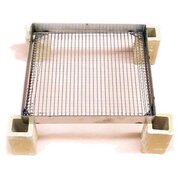
The 8 inch square and 8 inch round Screen Melt Sets pair a heavy gauge stainless steel ring with a mesh screen; set the frame on kiln posts, lay fiber paper underneath, pile on scrap, and fire (kiln posts sold separately). The 6 inch and 8 inch Mini Melt Sets use a bowl seated on a ring, standing about 4.5 and 5.75 inches tall when stacked, for smaller marbled melts; the bowl and ring are sold as separate components, so add both to your cart for a complete set.
Keep every scrap in the load the same COE, since the finished melt behaves as one piece of glass. Melts fire hotter and longer than a standard full fuse, so plan a slow anneal for the thick result. The finished rounds can be sliced and cold worked into tiles and cabochons, or re-fired and slumped into platters and bowls.
Do you love saving Money? We love helping you.
Sign up for our newsletter to find out about our weekly specials.
We will send you fusing tips and useful industry information too.


